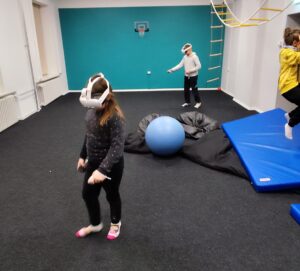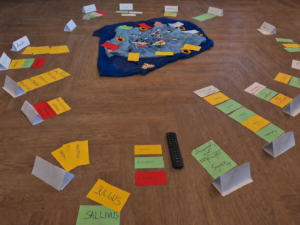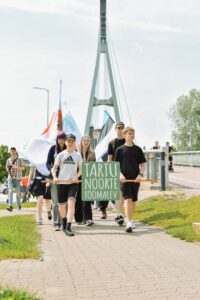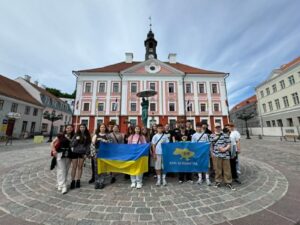

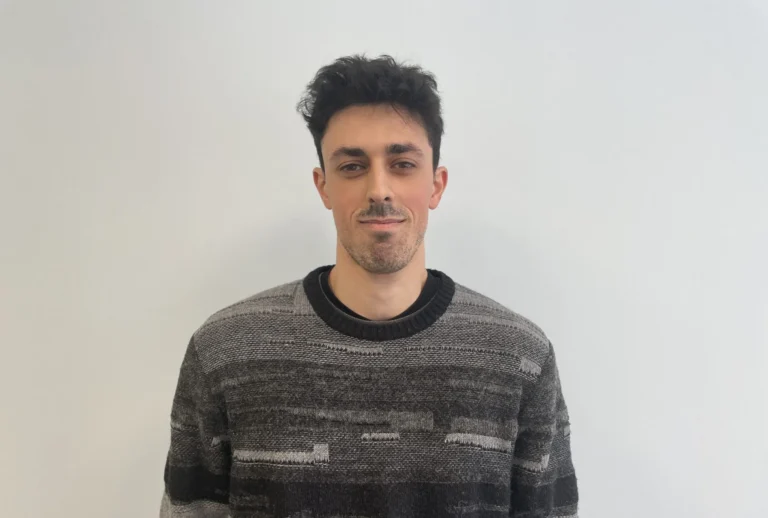
Tartu Noorsootöö keskuse vabatahtlik Manuel kirjeldab meile lähemalt, miks ta peab vabatahtlikku tööd oluliseks.
So, you want to work as a volunteer, huh? That’s great! But what can you actually do? Hmm, maybe you could work in an animal shelter, that sounds awesome. You could even try and join an anti-food waste organization, collecting food that otherwise would be gone to the trash and deliver it to people who need it but don’t have the resources to get it. Sounds noble, right? Or even volunteer at a youth center and inspire the youth as they are growing and beginning to know themselves and others. These are all great options! Then the question is where? Where can you do it? In your town/city there might be great opportunities to do so, it can be your starting point. You do it for a while and you like it, but you also have this itch for adventure. That’s how I came to start considering international volunteering.
Having volunteered for almost a year in an organization in Portugal called Refood and taking a liking to it (as it allowed me to put myself out of my comfort zone and to meet a group of great individuals who taught me a lot), I knew that there could be things out there for me. So, I began to look for stuff to do in other countries. “I could engage in a new experience” – I thought, “a worthwhile one in a place whose goals and objectives were similar to mine”. I could also live abroad and experience the adventure of a lifetime as I’ve been living in Portugal my whole life. That’s how I found “Tartu Noorsootöö Keskus” an organization whose name I still can’t correctly pronounce but I intend on doing so soon! Most important than that, an organization that made me feel like this is the right step for me to take.
So, now that I’m in Tartu, what are my thoughts on the subject? Speaking from my own personal experience, at first it feels like you have no idea what’s going on. Really, you don’t! Coming from Portugal to Estonia isn’t the smoothest of transitions, even if we’re talking about two European countries, since the culture (and most of all the language!!) are quite disparate. The first days I felt very disorientated, I still do, even though I finally have a sense of what is going on and what I can do. Everyone has been great, such is the nature of those working in a youth center and since we’re talking about youth, that is precisely what is at stake here. Working with the youth can be challenging, as kids and teenagers are a challenge to themselves let alone to others. However, they also have this outstanding ability to impress you with deep thoughts and complex concerns, something that most adults don’t even allow themselves to do. They bring you ideas that might have never crossed your mind and they test you as you’re both a friend and a guiding force. Working with youth is also quite similar regardless of the country you’re at, which really just proves how humanity is the same at its core and the basic human values are present everywhere. Well, maybe the language is the biggest differentiating factor, but something has to be different, right? If there was nothing to rock the boat, where would the fun of it be at?
But I believe there was a question right there on the title. Oh yeah, why does international volunteering matter? So, having arrived in Estonia, having lived here for a few days, having finally understood what is like dealing with snow daily and having worked already and gotten engaged in what the project is all about I think I’ve had enough time to start formulating ideas on the subject. At a very embryonic stage of course, but ideas are ideas. Volunteering, as in just the word “volunteering”, matters simply because you’re putting yourself out there to do something that quite simply will have a positive impact on the life of others whether they’re on the younger or older side of life. Not only people, maybe animals, maybe plants or a whole ecosystem. Simply put, volunteering gives you the chance to escape from this bubble you live (for some people it is already big as it is, for others it is small and there is a lot more to explore out there) and you learn new crafts, you understand how to communicate with others, you get this sense of what teamwork is all about, the word respect is important here as it regulates every single one of these points. And all of this is brought into international volunteering, both maintaining its core teachings but also gaining a new dimension. You get to acknowledge what international cooperation is all about in a smaller environment. Understanding things in small parts is the first step to understand what they mean in the large dynamics of the world. You also get to see and learn more about your culture. When you’re surrounded by those who belong to the same national identity as you, sometimes you don’t really grasp what makes your nationality unique. When you are confronted by a different culture, you start to realize the beauty of your own country, language and culture while still appreciating the same aspects of a different country. You appreciate both what is “yours” and what is “foreign” (foreign for the time being of course). You also discover new ways to communicate. Your brain might be wired in Portuguese while a small part of it is wired in English. Others’ brains are wired in Estonian, and they also have that small part of it that is coded in English and idioms gain a whole new meaning. You improve your speaking abilities, and you get to engage in the ever-constant learning process of verbal and non-verbal communication because gestures do become a huge part of your life. And I mean it! Bring your a-game, Italian style. And of course, the whole challenge of volunteering is naturally aggravated (in a good sense of course). You understand how to deal with people who are going to go on some kind of trouble but at a higher/more troublesome level because, as noted before, communication has its many slight differences and the slightest of miscommunications can change how a whole conversation goes. If you can’t properly communicate, your work will be hindered, so you must adapt to the new situation. And of course, living abroad has all kinds of pros and cons, the kind of things that I’ve only experienced in a small fraction and I’m hoping to gain more knowledge about in the coming weeks. All that I can say is that it excites me.
So, do I consider it a positive thing? This whole international volunteering subject I mean. The simple answer and the one I honestly believe in is yes. The simple fact I’m writing this might have served as an indication of such, but having had the time to reflect on the subject and looking back I can definitely say that I find it positive. Was I scared at first? I was, and I think everyone is when they do something completely new (let alone in a new country), but that is the beauty of life, when we allow ourselves to grow. And I do hope to continue to do my best at “Tartu Noorsootöö Keskus” and that this small testimony might inspire someone to do something new they never thought of doing before. Maybe volunteering is the thing that might just do wonders for you.