
Change, Learning, and Development at the Tartu Youth Work Center
A New Beginning in a New Place
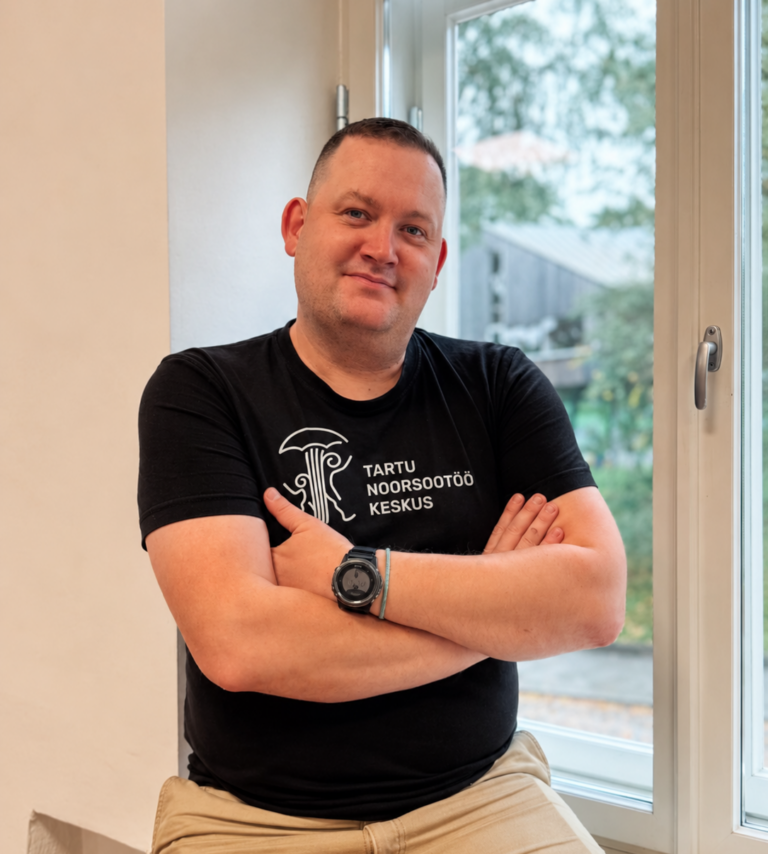
A while ago, a new chapter began in my professional life. I started working as a senior youth worker at the Tartu Youth Work Center. This brought with it a new work environment, new people, and greater responsibility, but also the opportunity to view youth work from a slightly different perspective than before.
Starting a new job always means adjusting. Even if the field is familiar, you have to get to know new people, the workflow, and how the organization operates. I wanted to write down my experiences so far to reflect on how I’ve adapted to my new role, what has brought me joy, what has challenged me, and what I’ve learned along the way.
How did my journey in youth work begin?
My journey into working with young people began in the field of education. I studied humanities and educational science at the Faculty of Education at the University of Tartu, and after graduating, I worked for a while as a humanities teacher.
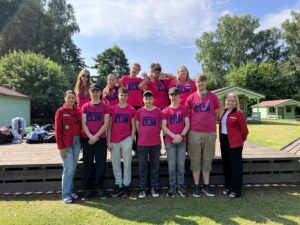
At one point, an opportunity arose to try something new. In Luunja, they were looking for volunteers to help out with the student work brigade and camp, and I got to put myself to the test in the roles of group leader and counselor. That experience gave me the chance to learn about working with young people from a different perspective and opened the door to a field that would become an important part of my professional life.
When they were looking for a youth worker in Luunja, it seemed like a good challenge to me. I decided to apply and was selected. That’s how my journey as a youth worker began.
Since I also have a coaching certification, I combined the two roles for a while: I worked part-time as a youth worker and spent the other half of my time coaching basketball to young people. This is how education, youth work, and sports became intertwined in my work—three fields through which I was able to contribute to young people’s development in various ways.
When youth work became my main focus
At some point in my career, I had to make a choice: I had to decide whether to continue as a basketball coach or devote more time to youth work. When I was offered the opportunity to take on a part-time position at the second youth center in Luunja, I decided to stay committed to youth work.
Working at two youth centers gave me the opportunity to interact with different young people, environments, and work structures, and to further develop my knowledge and experience.
Over time, the way work was organized in Luunja also changed. These changes made me think about my future opportunities and professional development. That’s how I ended up applying for the position of lead youth worker at the Tartu Youth Work Center. My application was successful, and this became yet another new and exciting challenge for me—an opportunity to continue working in a familiar field while also taking the next step and assuming a different set of responsibilities.
A new environment—like a country boy in the big city
When I started working at the Tartu Youth Work Center, I had high expectations. It is Estonia’s largest youth work organization, and naturally, I wondered whether I would be able to handle everything in this new environment, which was very different from anything I had experienced before. Almost everything was new: the people, the opportunities, the budget, the organizational structure, and the way work was organized.
Looking back, I can say that my onboarding was made as smooth as possible. I was welcomed by a very friendly and supportive team that I’ve been able to rely on and that has helped me in every way. The work environment is good, and the way work is organized is systematic and professional. This has given me the confidence that I’m in the right place.
Sometimes I’ve felt like a country boy who’s ended up in the city—I’m constantly marveling at just how many opportunities there are here. There are significantly more young people at this new location, and the youth center’s clientele is also more multicultural compared to Luunja. This has given me a new perspective on youth work and shown me how this work can be done in such a variety of settings.
At first, of course, I had my doubts about whether I would be able to adapt quickly enough to everything new and handle the role of lead youth worker. By now, I feel that I’ve settled in well and have been able to handle my responsibilities. A large part of that is certainly due to my colleagues, whose support has been very important.
More Responsibility, More Meaning
The job of a senior youth worker has been pretty much what I imagined it would be. My day-to-day work involves more organizing, planning, teamwork, and responsibility than my previous positions. At the same time, it gives me the opportunity to look at youth work from a broader perspective and think more about why and how we do things.
One of the most important things I’ve learned in this new environment is to reflect more consciously on our activities. I believe it’s important that what happens at the youth center isn’t just about organizing activities for the sake of activities. Every activity should have its own purpose, goal, and value for the young people. After an activity, it’s worth thinking about how it went, what the young people got out of it, and what could be done differently or better next time.
I didn’t take on this new position with grand plans for change or a desire to reorganize everything right away. For me, the top priority was first to settle in and get to know the organization, its work processes, and the people. Only then can one assess whether and where changes are needed or where further development is required.
Since I, too, am a learner in this new system, I consider my own continuous development to be important. I would like to apply my previous experience, share my knowledge, and contribute to the team’s collaborative efforts.
Nothing new happens overnight
As a lead youth worker, it is no longer enough to simply get your own tasks done. It is important to see the bigger picture, keep things running smoothly, support the team, and take responsibility for achieving shared goals. Leading people and organizing teamwork are skills that develop primarily through experience.
For me, the biggest challenges so far have been organizing the team’s work, managing people, and getting to know the new system and organization. You can’t figure everything out in a single day. I try to take the time to understand how things work, listen to my colleagues, and learn from every experience myself.
I believe that good leadership begins with listening, collaboration, and a willingness to keep learning myself. Since I am still adjusting to this new organization, I don’t think it’s necessary to rush to conclusions or make changes.
Continuing to Learn and Grow
Looking back, I can say that my new job has offered me much more than just a new job title. It has given me the opportunity to challenge myself, get to know a different kind of youth work environment, grow as a leader, and gain a deeper understanding of my work with young people.
I don’t think I’ve already learned everything or that I have a ready-made solution for every situation. Rather, I see it as a journey where every day and every experience adds something new. I want to continue growing both as a youth worker and as a leader, and to do my part to ensure that the youth center is a place where young people feel comfortable, gain new experiences, and want to come back.
As a youth worker, you don't always have to have all the answers, but you must have the desire to grow and create an environment for young people where they want to come back.