
image

Opinion Piece by a Youth Worker: The Importance of Imagination in Youth Work

At the Lillekese Youth Center, we have always supported young people’s desire and interest in playing fantasy-themed games in a physical environment. During our first year of operation, one of our most popular activities was playing “café”—the café had its own menu, meal times, and waitstaff. An entire room at the youth center was transformed into one big dining area. One of the youth’s biggest favorites this year has been playing “apocalypse.” They have their own bases, rules, and hierarchy within the game. As an outside observer, you might get the impression that they’re just running aimlessly around the room and falling down, but in reality, behind this chaos lies a carefully thought-out and agreed-upon role-playing game. Why do young people like to play out a world they haven’t experienced? The simple answer would be that they want to. But that…
image

So what to do with all this free time—the joys and worries of summer break

Summer is in full swing. Temperatures are climbing steadily, and there’s more and more time to spend at the beach chasing the waves. Summer is a great time to really slow down, put your feet up, and take a few pleasant, leisurely breaths. In everyday life and in a society where so much emphasis is placed on productivity and rushing around, the importance of rest tends to slip our minds. But rest is just as essential to a fulfilling life as good soccer is to the World Cup.However, one interesting thing may become apparent when it comes to summer relaxation. Although rushing through the school or work routine can be quite exhausting, it’s often also quite routine. Routine and a predictable daily rhythm have a reassuring effect on human nature. When you know in advance what…
image

A Youth Worker's Story: The Best Training of My Life—How I Developed My Creativity in Norway

SALTO-YOUTH.net is a real treasure trove. For those who haven’t come across it yet—simply put, it’s a pan-European network for supporting and developing youth work, which offers non-formal learning materials to youth workers and youth leaders and organizes training sessions and networking activities as part of the European Commission’s training strategy.  I found a training course titled “Creative Self – Art Practices for Youth Empowerment” on the SALTO training calendar and immediately knew I simply had to attend. And I did. The training took place May 20–29 in Norway, in the picturesque town of Balestrand, home to one of Europe’s most renowned artist residencies. In addition to me, 18 other creative souls from the Netherlands, Ireland, Italy, Portugal, the Czech Republic, Bulgaria, Romania, Lithuania, Ukraine, Georgia, and Serbia took part in the training…
image

Do digital environments bring us together or make us more lonely?

Have you ever had a day where you’ve been chatting with friends on Snapchat, Instagram, or Discord all day long, but still feel lonely in the evening? It might seem strange—how can we feel lonely when we’re connected to others almost all the time? Loneliness is a topic that’s being discussed more and more. According to the World Health Organization, about one in six people experience loneliness, and young people experience it the most (WHO, 2025). At the same time, loneliness doesn’t simply mean a lack of friends; rather, it’s a feeling that arises when our relationships don’t meet our needs or expectations (Alberti, 2019). So it can happen that even though we have many friends, we still feel lonely.…
image

Philosophizing with Children and Youth

Many 21st-century skills are closely linked to thinking skills. These include, for example, creative and critical thinking, as well as a collaborative and caring mindset. These skills can also be developed in youth work through philosophical discussions with children and young people. Philosophical discussions create more space for deliberation and help participants become more skilled at articulating their opinions, listening to others, making decisions and choices, and solving problems. Through this practical activity, participants can develop their argumentation and analytical skills, critical thinking, and communication skills. This is an activity that does not require the use of the term “philosophy” or the discussion of philosophical theories. Rather, it is important to create a space for questions, reflection and further thought, making connections, and questioning. Such a conversation helps students practice reasoning, drawing conclusions, comparing, …
image

The Tartu Youth Work Brigade’s anniversary summer kicks off with a parade and an evening of work brigade songs

Today, June 15, Tartu will kick off the 30th summer of the Tartu Youth Work Camp, which will bring together 238 young people this year. The opening event of this anniversary year begins at 4:30 p.m. in the courtyard of the Anne Youth Center and proceeds with a parade to Town Hall Square, where the start of the work camp season will be celebrated with a speech by Mayor Urmas Klaas and the taking of the work camp oath. The opening ceremony will be followed at 7:00 p.m. by an evening of work camp songs in the courtyard of the Tartu City Museum.“This year’s opening of the work camp season is more special than ever before. We are celebrating our 30th anniversary, which gives us the opportunity to look back on the history of the Tartu Youth Work Camp, and at the same time, the evening of work camp songs creates a unique moment where different generations come together to spend time together, share memories, and exchange experiences,” said Margit, director of the Tartu Youth Work Center…
image

Ukrainian Youth in Tartu: A Week That Left a Lasting Impression

In early June, from June 8 to 14, the Tartu Youth Work Center had the extraordinary honor and pleasure of hosting young people from Ukraine—young people whose lives have been completely turned upside down by the war. The camp was made possible thanks to financial support from the City of Tartu, and the Tartu Youth Work Center wholeheartedly took on the task of organizing the program. The week began on a creative note—in a stenciling workshop, the young people got to experiment with creating patterns using paints and stencils. It was a great start to a week where their hands and eyes were constantly busy.In Setumaa, the young people got a sense of how Estonians used to live—they tasted authentic Estonian food and felt the warmth of the old culture. In the Piusa caves, they learned about Estonian nature and geology, and each young person got to make their own…
image

A Children's Day bursting with joy and youthful energy!

The theme of this year’s Child Protection Day was the question: “A young person speaks—are you listening?” The need to be seen, heard, and truly listened to became clear right from the first preparatory meeting, where young volunteers shared the issues they consider important in the daily lives of children and youth. Almost without exception, all participants highlighted today’s fast-paced lifestyle—home, school, friends, relationships, and the information world are spinning at an ever-faster pace. In the midst of it all, however, young people often feel that there is no one who truly pays attention to them or takes the time for them. This is especially true in a situation where high external expectations and mental health concerns make it even more difficult to connect with others. Based on this, the following emerged…
image

A mobile youth center will be on the move in Tartu this summer

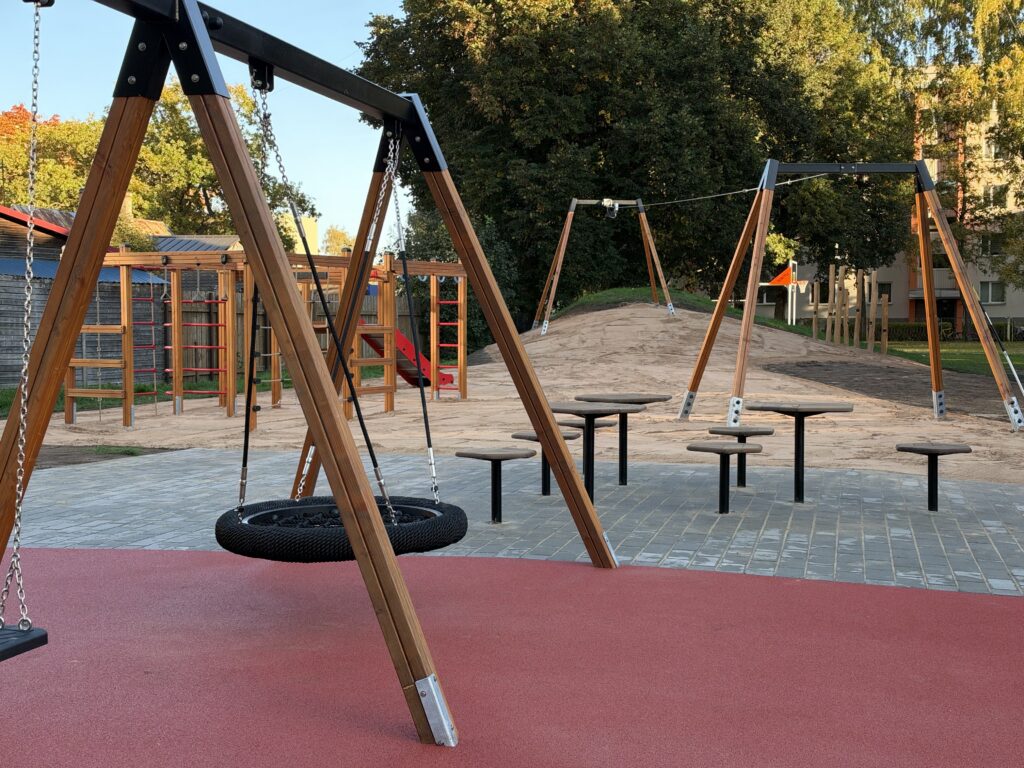
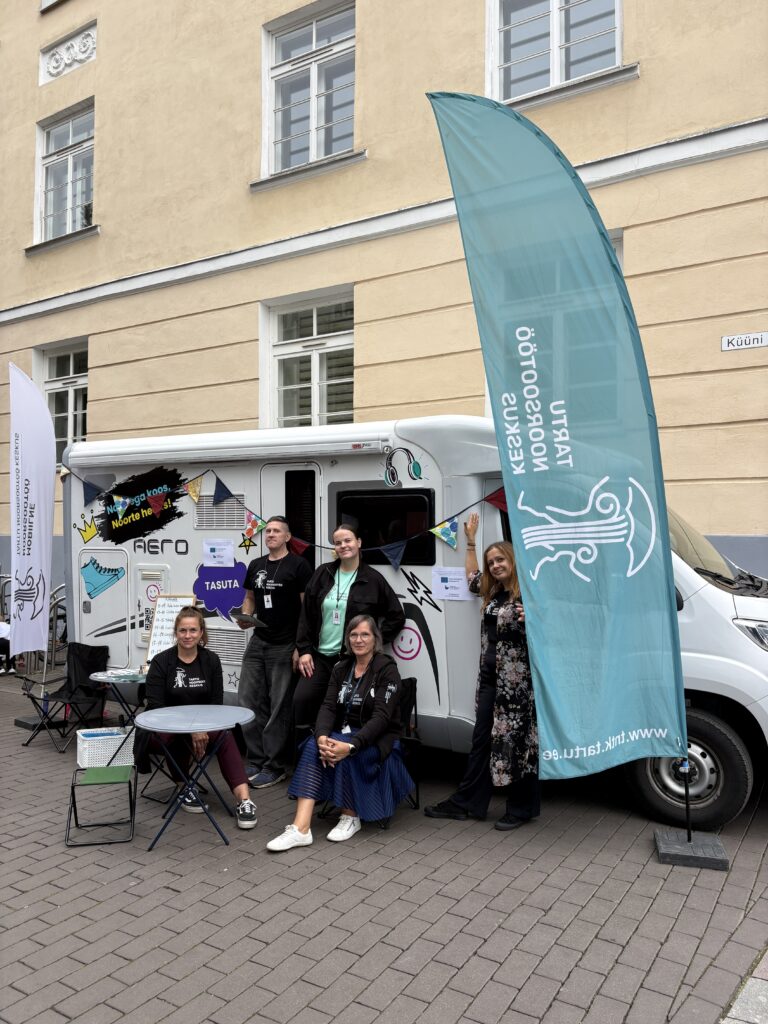
From June 1 to September 1, the Tartu Youth Work Center is launching the MoNo bus—a youth center on wheels—as part of a pilot project, bringing youth services to young people at their everyday gathering places. It is a specially adapted van designed to provide young people with a safe and supportive environment in areas where youth services are currently unavailable or where young people cannot easily access them on a daily basis.The MoNo bus travels through various areas of Tartu and stops at parks, playgrounds, near schools, and other places where young people gather. The bus is open to young people Monday through Sunday from 3:00 PM to 7:00 PM. You can find the bus stops on our website’s MoNo subpage and on the MoNo Instagram page @mono.tartu. On and around the MoNo bus, young people can play board games, outdoor games, use game consoles and craft supplies, and spend time…