
See which projects we are currently working on and which have already been implemented. Each project supports youth development and community strengthening.
Project "KA2 Youth Work 360° - Mobile, digital, inclusive and accessible" is an international Erasmus+ cooperation project led by Tartu Youth Work Centre in cooperation with the Italian partner organization Vedogiovane. The project focuses on the development of mobile youth work.
The objectives of the project are:
To train 30 youth workers to provide support in diverse environments, including on the street and online.
To pilot the position of a digital youth worker for one year to reach young people with limited access to traditional youth work, including NEET youth and young people with mobility or socio-economic difficulties in both Estonia and Italy.
To pilot a mobile youth work bus for 3 months to offer pop-up youth centers in different areas of Tartu (Estonia) and Eastern Piedmont (Italy), providing accessible and inclusive activities.
📅 The project lasts 01.09.2025 – 28.02.2027 (total 18 months). During this time, several exciting and developmental activities will take place:
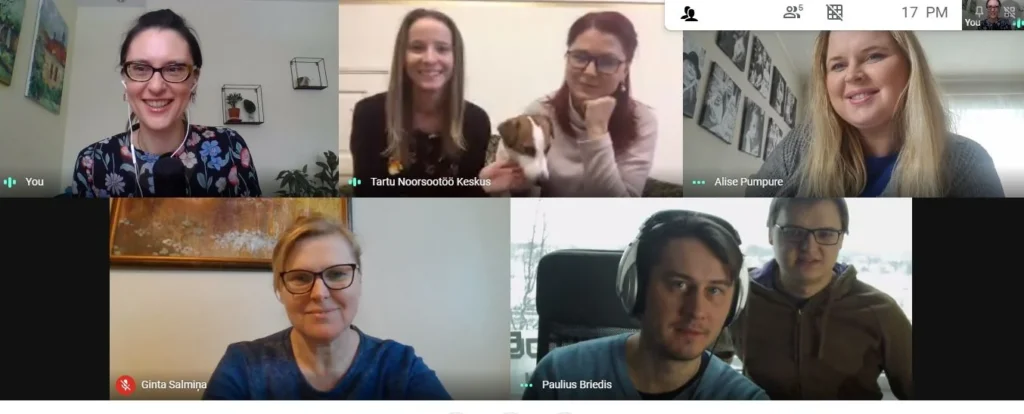
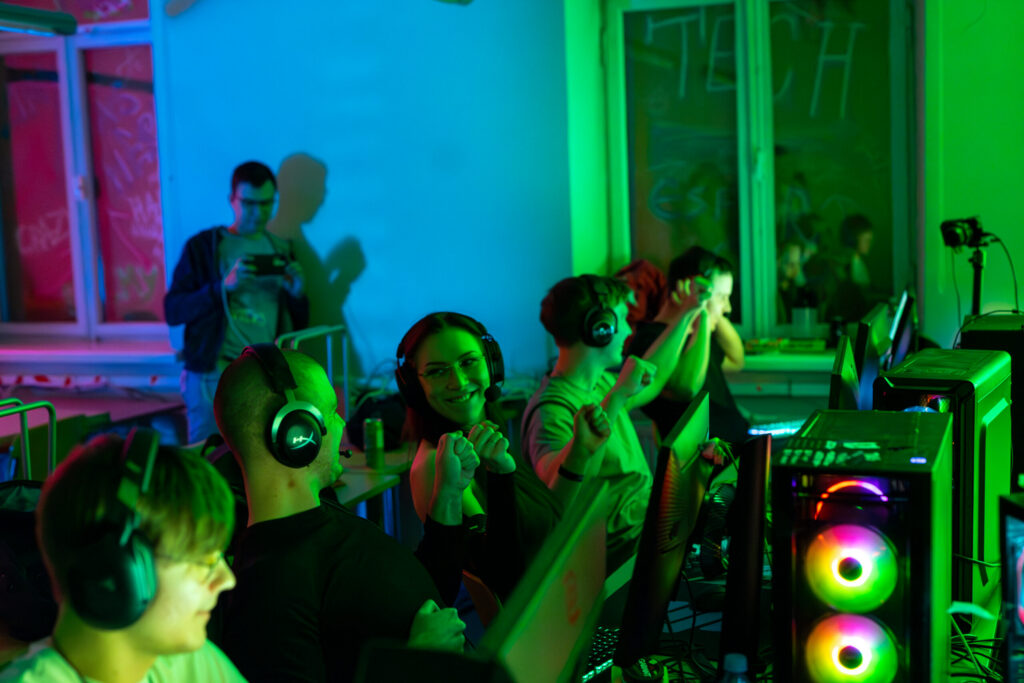
The project “Ambition, Collaboration, and E-sports Development” (ACE for short) is an international Erasmus+ cooperation project led by Tartu Youth Work Centre in cooperation with the Lithuanian partner organization Robotikos Mokykla. The project focuses on e-sports as a youth work tool – with the aim of making computer gaming more meaningful and supporting the development of young people through playful and practical experience.
🎯 The aim of the project is:
📅 The project lasts 01.01.2025 – 31.03.2026 (total 15 months). During this time, several exciting and developmental activities will take place:
Additional information:
Siim Vares
siim.vares@tartu.ee
The project is supported by the Erasmus+ program.
Erasmus+ KA2 project “Preventing Youth Violence”
The aim was to strengthen youth workers' knowledge and skills in violence prevention and to move from mere awareness-raising campaigns to practical daily action. To this end, a toolkit was developed for youth workers, offering violence prevention methods, practical action models, and guidelines for their implementation in daily youth work practice.
Within the framework of the project, two international training sessions took place – one in Tartu, Estonia and the other in Lublin, Poland.
The training sessions focused on increasing participants' competence and understanding of youth violence and its impact on youth relationships.
various forms of violence (physical, mental, digital violence, etc.),
on the role of social media in influencing, grooming, and intimidating young people,
to gender, masculinity, and sexuality norms, and their connection to violence,
the importance of equality and a respectful communication culture,
to the development of competencies related to the prevention of sexual violence.
Erasmus + project “ESTEEM”
..is a two-year international cooperation project focusing on youth well-being. The project is implemented between five organizations from Latvia, Estonia, Bulgaria, and Spain. The project's main goal is to draw attention to youth mental health and psychological well-being.
Project period: 01.04.2022 – 01.04.2024
Participating organizations in the project: Association of Educational games and method (lead partner, from Latvia), Tartu Youth Work Center (from Estonia), Child and adolescent resource centre (from Latvia), AC Amics de la Biblioteca de la Fonteta (from Spain), CVS BULGARIA SDRUZHENIE (from Bulgaria).
– To improve the quality of youth work in a post-pandemic world.
– To raise youth workers' awareness of youth mental health.
– To develop innovative mental health solutions for informal use with young people.
– Activities related to project management, communication, and dissemination
– Development of intellectual outputs
– International meetings
– Youth training and app testing
– Youth workers' training
– Local events
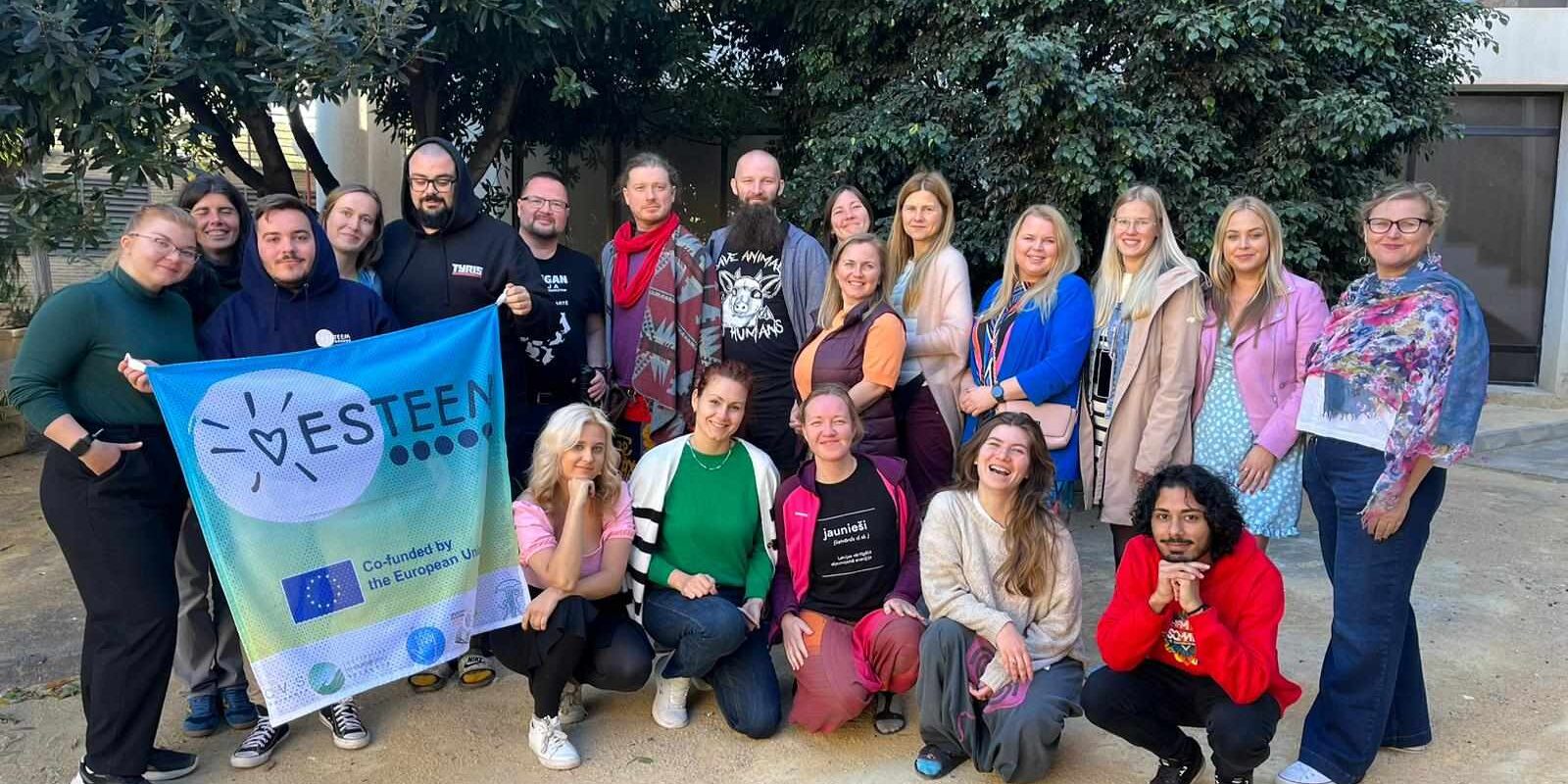
Tartu Youth Work Centre staff Kristina, Aveli, Liisa, and Helen participated from November 21-26 in sunny Alicante, Spain, in connection with the well-being project aimed at young people, “ESTEEM – Youth work responses to young people well-being.” The project involved…
Erasmus + project “ESTEEM” is a two-year international cooperation project focusing on youth well-being. The project is implemented by five organizations from Latvia, Estonia, Bulgaria, and Spain. The main goal of the project is to draw attention to youth mental…
The Erasmus+ project 'Inclusion is On 2021-2024' collected best practices and updated tools to promote accessibility, social inclusion, and youth participation in leisure activities.
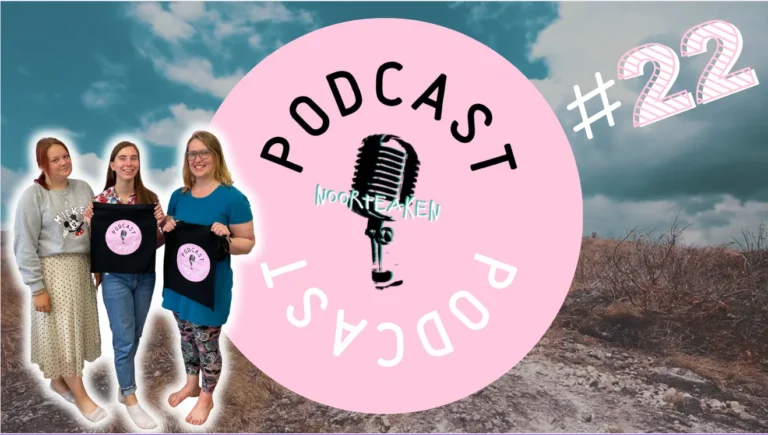
Good practices and new tools were compiled into a guide, based on which a training model and a podcast were developed.
During the project, five international training events were organized for project partners and local youth workers in the target country. The training introduced local youth work and addressed the project's theme through guest lecturers and practical methods. The project culminated in an international final seminar for Italian youth workers at the beginning of 2024 and national final events organized in partner countries in the spring of 2024.
The project was implemented with European Union Erasmus+ funding from 2021–2024 and involved partner organizations from six different countries.
Project partners:
Nuorten Akatemia, Finland
Nuorisoseurat, The Finnish Youth Association, Finland
Radio- R, CzechRepublic
Federation of Children's and Youth Municipal Councils,Hungary
Le Discipline,Italy
Croatian Office for Creativity and Innovation,Croatia
Toolkit
The toolkit is a collection of best practices, tools, and tips gathered and/or created during the project to promote social inclusion in youth leisure activities:
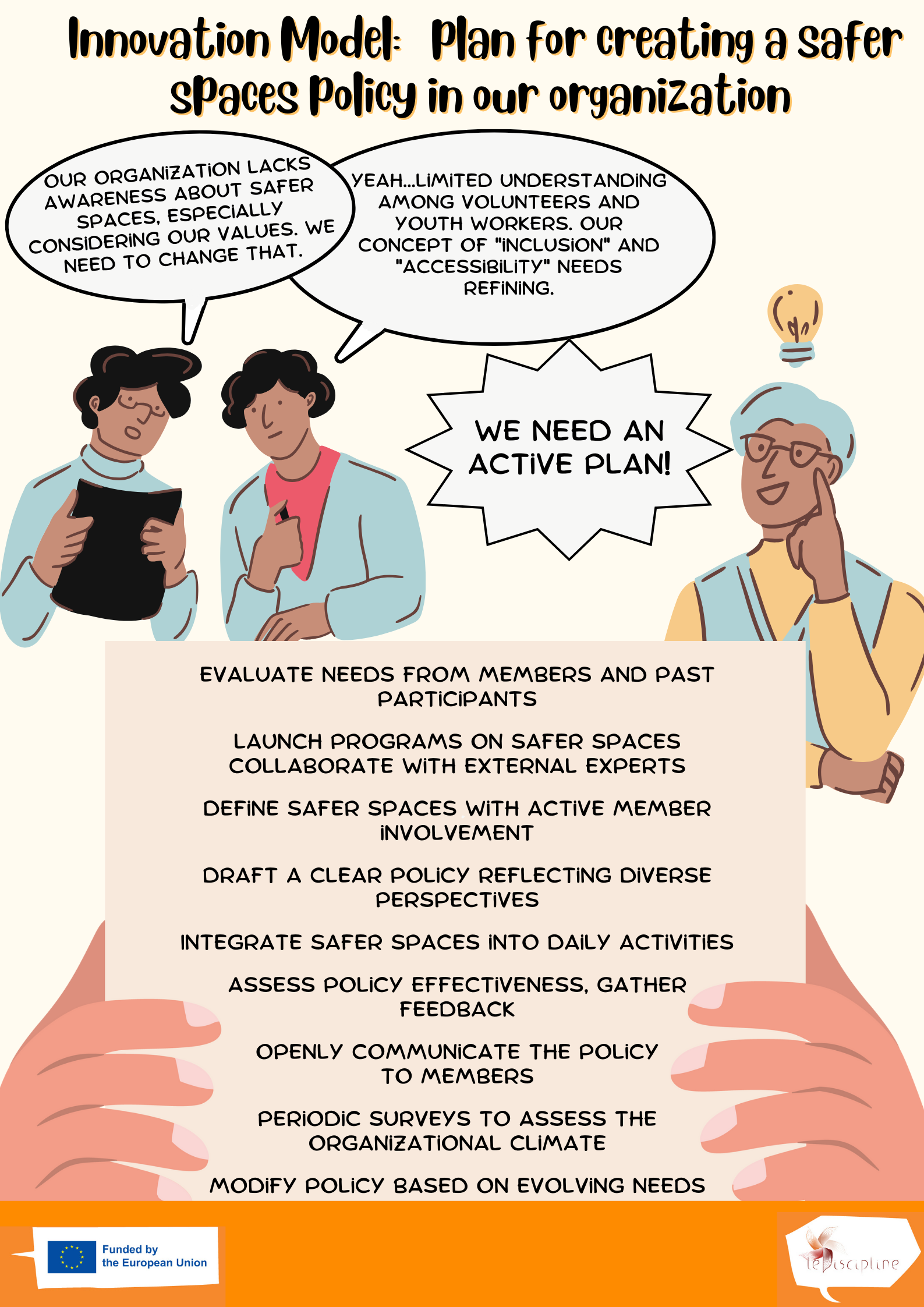
Innovation Model
The Innovation Model is a collection of methods that offers a systematic approach and a structured framework for problem-solving. It can be used to create tools for promoting social inclusion and accessibility. The model consists of four stages, utilizing a collaborative approach and ideally real data from beneficiaries. It can be used as a whole or its steps can be applied separately for different needs. The model can also be applied to other topics. The Innovation Model is available in several languages:
IncOn_innovation model_English
IncOn_innovation model_Finnish
IncOn_innovation model_Estonian
IncOn_innovation model_Czech
IncOn_innovation model_Italian
IncOn_innovation model_Hungarian
IncOn_innovation model_Croatian
Podcast series
“Inclusion is not an illusion” is a podcast series covering the main themes of the IncOn project and the experiences of partner organizations. The series consists of four episodes and is available on Spotify:
IncOn_podcast_English (Spotify)
Materials from the International Final Seminar
Materials from the final seminar presentation held in Italy in January 2024:
Materials for the youth worker training model
The training model consists of several parts, based on the content of the toolkit produced as part of the “Inclusion is On” project. Different parts of the training model can be applied separately or together to create a training based on preferences and available time. The model is suitable for both face-to-face and online training and provides facilitating instructions for each part. The youth worker training model is available in several languages:
IncOn_youth workers training model_English
IncOn_youth workers training model_Finnish
IncOn_youth workers training model_Estonian
IncOn_youth workers training model_Czech
IncOn_youth workers training model_Italian
IncOn_youth workers training model_Hungarian
IncOn_youth workers training model_Croatian
Good practices and tools:
IncOn_toolpack_goodpracticesandtools_English
Short versions (posters) of partner organizations/good practices and tools:
IncOn_good practice poster_Youth Academy
IncOn_good practice poster_Finnish Youth Association
IncOn_tool poster_Finnish Youth Association
IncOn_good practice poster_Tartu Youth Work Center
Video: Essential rules for communicating with deaf or hard-of-hearing people
IncOn_tool poster_Tartu Youth Work Center
IncOn_good practice poster_Radio R
IncOn_tool poster_Radio R
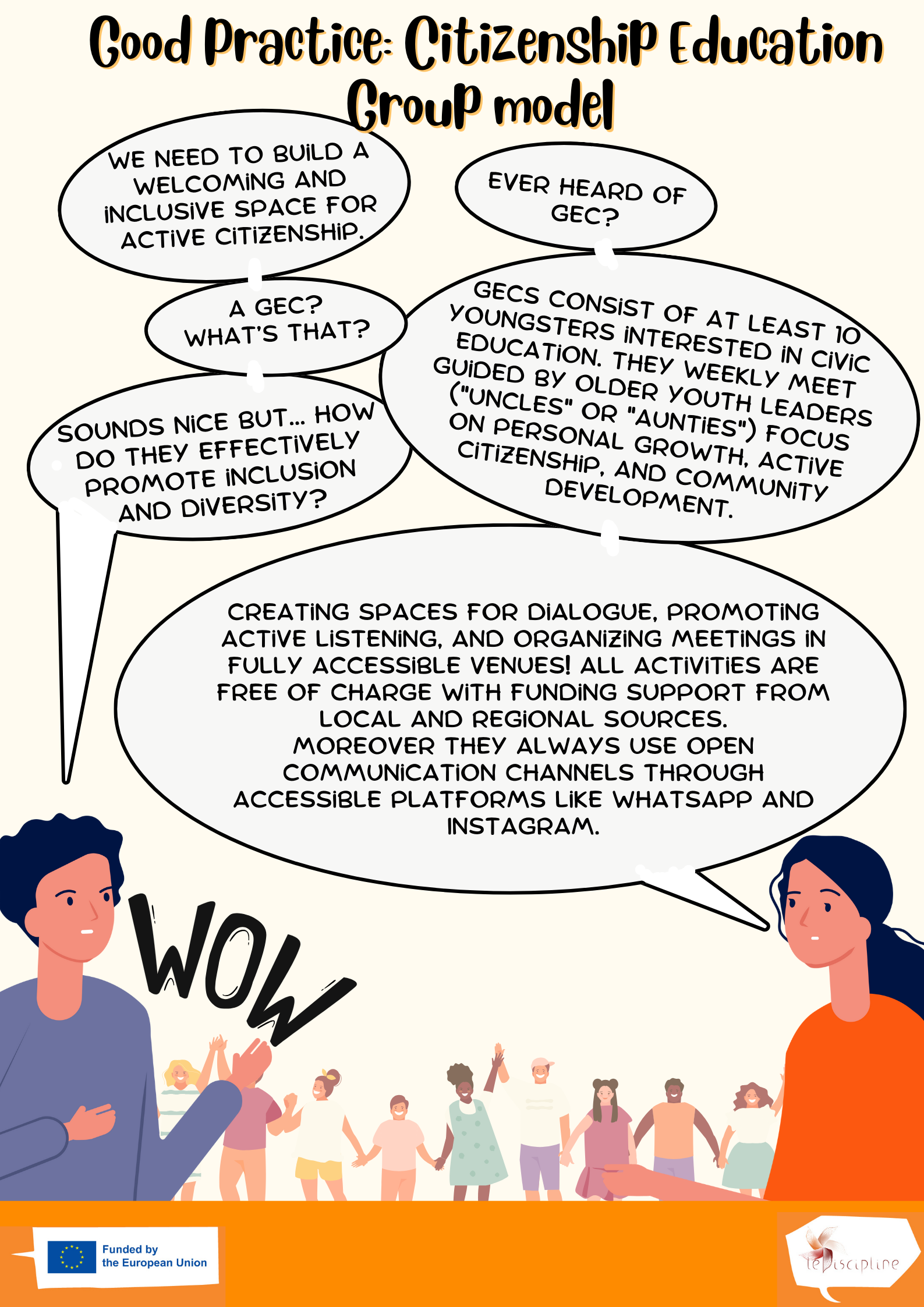
IncOn_good practice poster_Le Discipline
IncOn_tool poster_Le Discipline
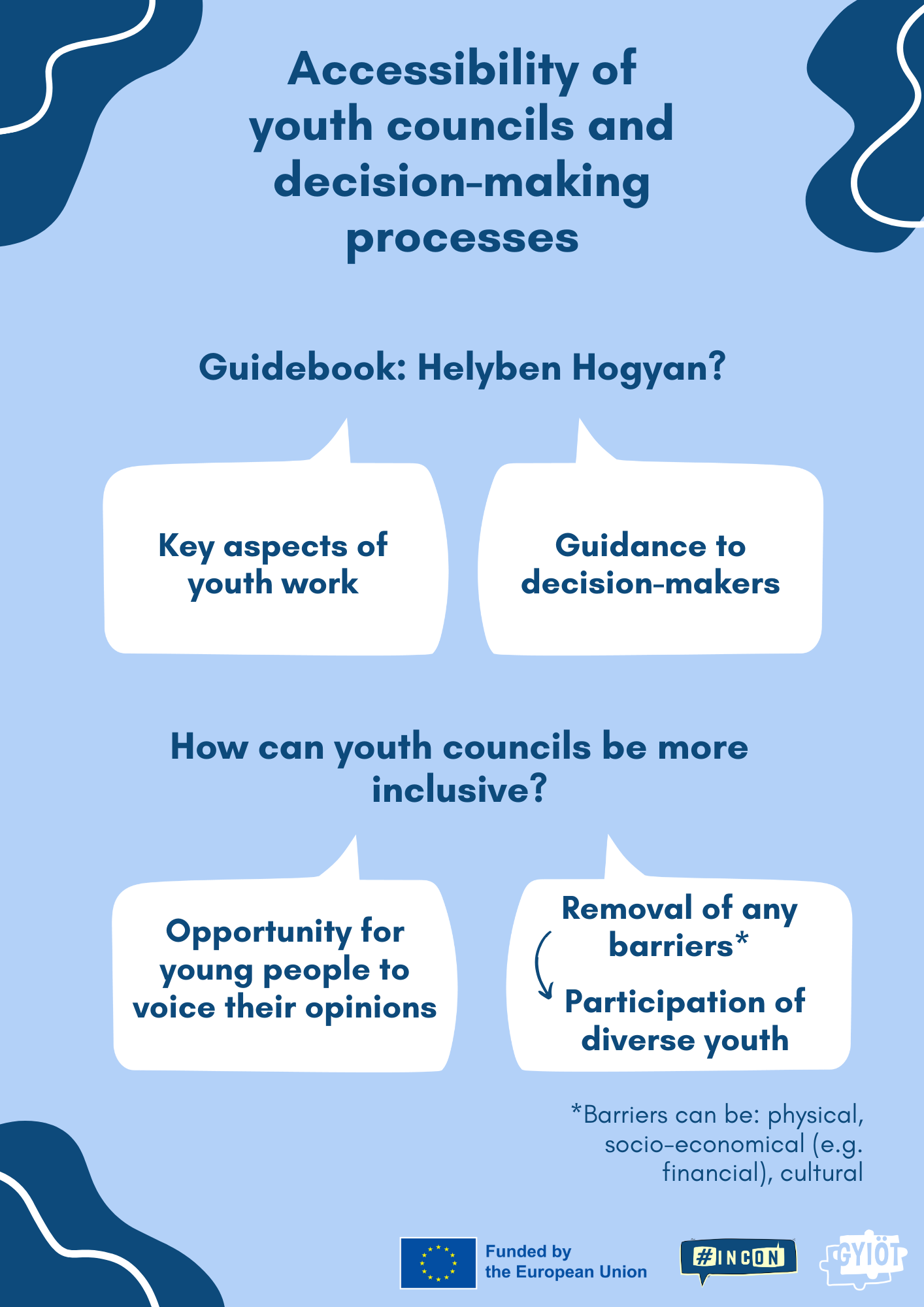
IncOn_good practice poster_GYIÖT
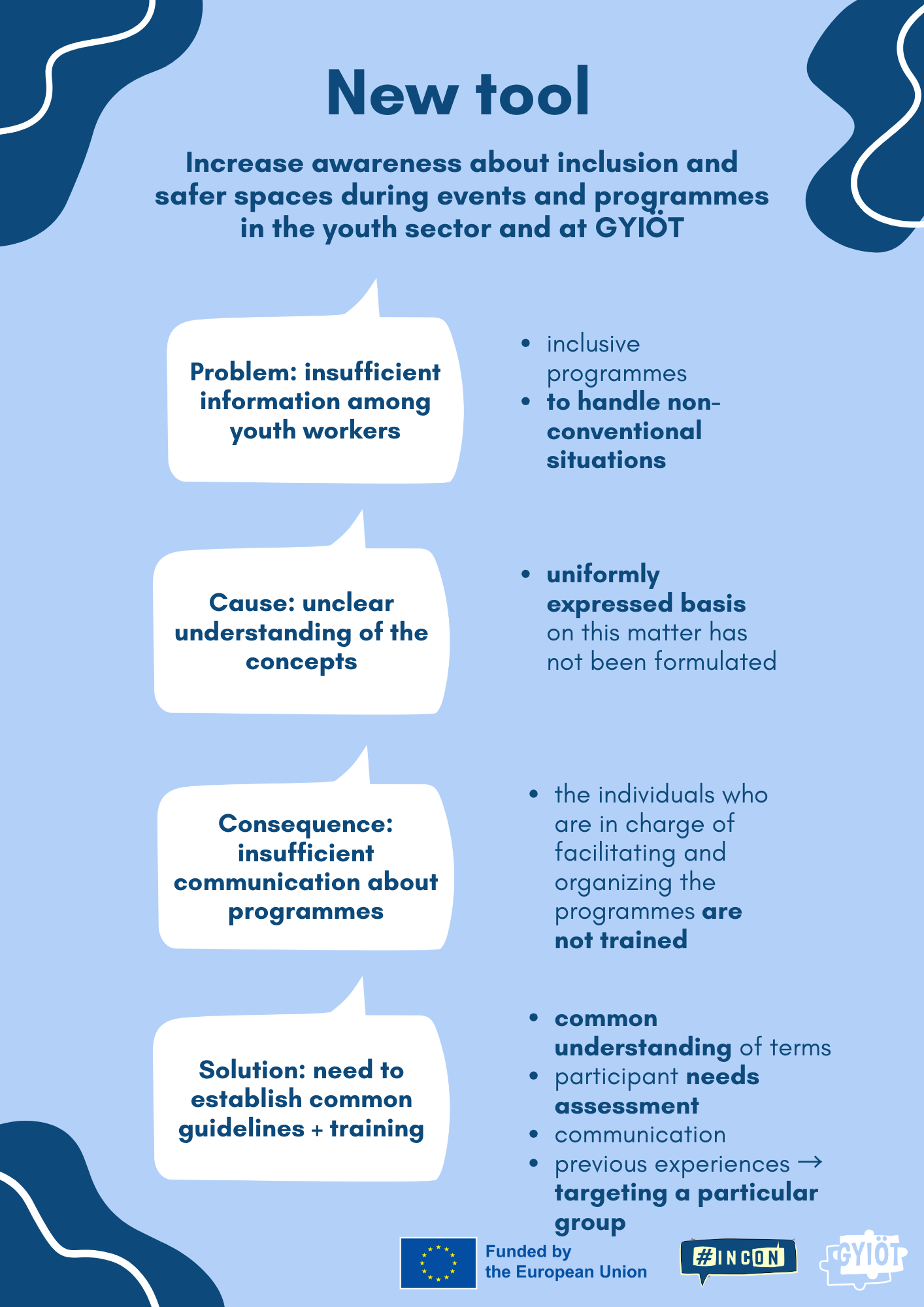
IncOn_tool poster_GYIÖT

![]()
Engagement of international volunteers in the activities of Tartu youth centers during the period autumn 2024 – winter 2025
The aim of the project is to enrich youth work activities by involving foreign volunteers in the daily activities of youth centers and to make the activities of youth centers more diverse, with an important focus on promoting solidarity and tolerance in society. Young people have the opportunity to get acquainted with different cultures and practice foreign languages. Volunteers also gain their first experience in youth work.
Within the framework of the European Solidarity Corps program, 2 foreign volunteers work for 12 months at the Tartu Youth Work Centre. The volunteers carry out various activities and workshops based on the focus area and organize major events.
The project will take place from 01.10.2024 to 31.12.2025.
Hello, I am Burak! I am from Türkiye, 29 years old, and studying for a master’s degree in the humanities in Italy. In my free time, I mostly do drawings...
Manuel, a volunteer at the Tartu Youth Work Centre, describes to us in more detail why he considers volunteer work important. So, you want to work as a volunteer, huh? That’s great! But what can you actually…
It’s hard to realize that my volunteering project is going to the end. Before my coming, I’ve thought that 8 months is quite long period of time. But when I…
Erasmus+ KA2 project “Preventing Youth Violence”
The aim was to strengthen youth workers' knowledge and skills in violence prevention and to move from mere awareness-raising campaigns to practical daily action. To this end, a toolkit was developed for youth workers, offering violence prevention methods, practical action models, and guidelines for their implementation in daily youth work practice.
Within the framework of the project, two international training sessions took place – one in Tartu, Estonia and the other in Lublin, Poland.
The training sessions focused on increasing participants' competence and understanding of youth violence and its impact on youth relationships.
various forms of violence (physical, mental, digital violence, etc.),
on the role of social media in influencing, grooming, and intimidating young people,
to gender, masculinity, and sexuality norms, and their connection to violence,
the importance of equality and a respectful communication culture,
to the development of competencies related to the prevention of sexual violence.
Erasmus + project “ESTEEM”
..is a two-year international cooperation project focusing on youth well-being. The project is implemented between five organizations from Latvia, Estonia, Bulgaria, and Spain. The project's main goal is to draw attention to youth mental health and psychological well-being.
Project period: 01.04.2022 – 01.04.2024
Participating organizations in the project: Association of Educational games and method (lead partner, from Latvia), Tartu Youth Work Center (from Estonia), Child and adolescent resource centre (from Latvia), AC Amics de la Biblioteca de la Fonteta (from Spain), CVS BULGARIA SDRUZHENIE (from Bulgaria).
From April 20-22, the second training meeting of the Erasmus+ project “Diggiloo – Digital Cultural Production from Youth to Youth” took place in Amstelveen, with Margit, Liisa, and Eeva participating as representatives of the Tartu Youth Work Center. Topics covered in the training…
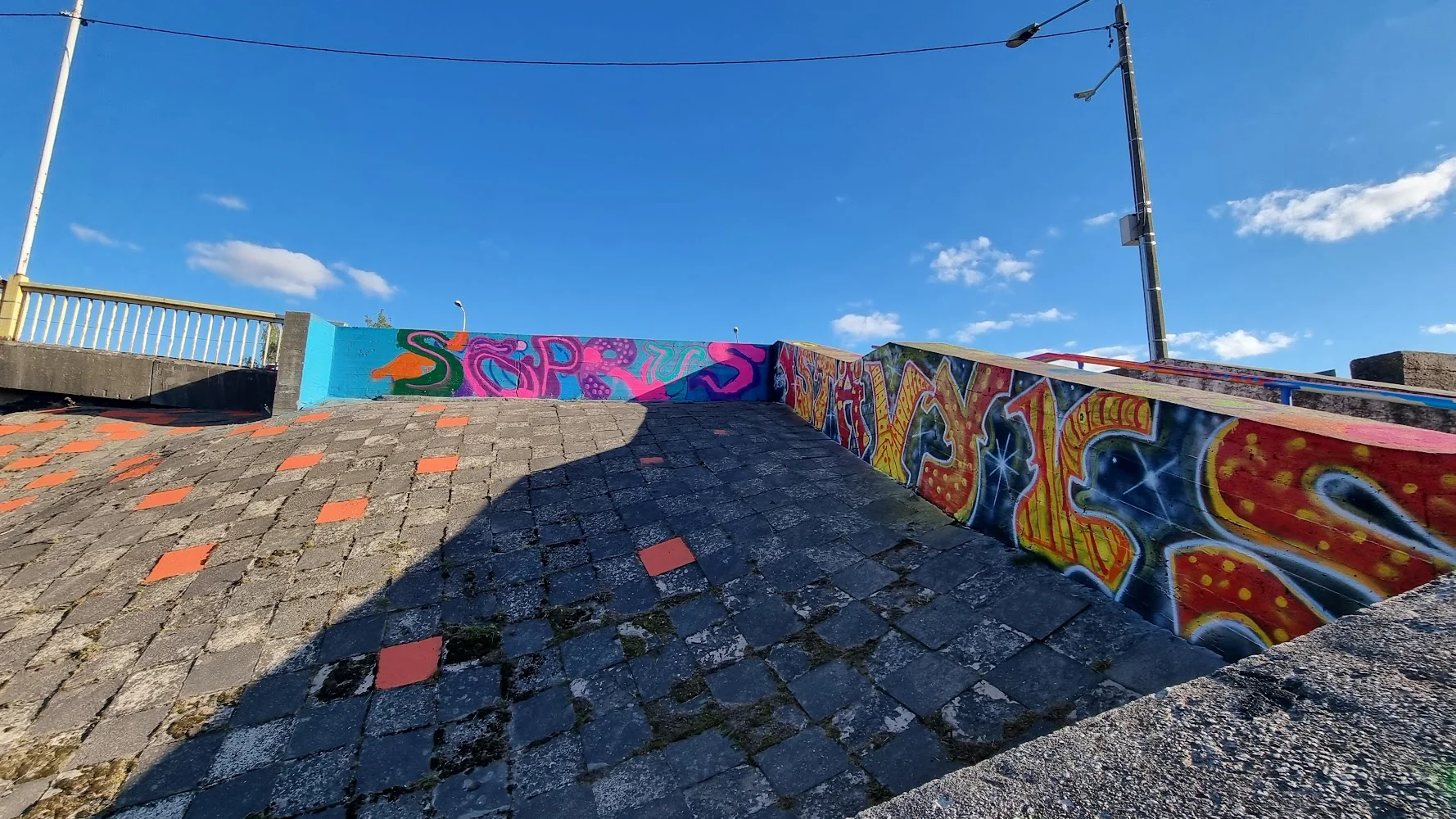
In September a cooperation project between Estonia and Finland took place in Tartu, within the framework of which a large interactive graffiti was made under the Friendship Bridge. The implementation…
From September 5th to 9th, there was a lot of activity under the Sõprus Bridge. Specifically, a large mural, or rather murals, were created there in cooperation with Estonian and Finnish street artists and young people, covering several...
"The ABCs of Street Youth Work"is an Erasmus+ cooperation project initiated by organizations from two countries: Estonia (Tartu Youth Work Center) and Latvia (Baltijas Reģionālais fonds). The project will last for 12 months and the project activities will be carried out from November 1, 2021, to October 31, 2022.
The need for street youth work is growing in Estonia and elsewhere in Europe. Street youth work is a very specific part of the youth work field that many youth workers have not encountered in practice, and starting it without prior preparation and knowledge is not possible. Street work involves many different situations that do not often arise in open youth work, and therefore, youth workers may have competency gaps for conducting street youth work. This project was created for this purpose, and its results are being implemented.
In this regard, the project's main goal is to prevent risky behavior among young people in Tartu through street youth work.
The sub-objectives of the project are as follows:
1. Increasing the competence of youth workers in the daily implementation of street-based youth work at the local level.
2. Developing and sharing new and innovative street-based youth work training and support modules among professionals working with young people.
3. Increasing the involvement of young people at risk in youth work activities and thereby preventing risky behaviour at the local level.
As a result of the project, a guide document will be created for aspiring street youth workers and three mini-training videos on mobile youth work.
.. is a project of the Tartu Youth Work Center to enrich youth work through international opportunities. During the project, two international youth exchanges and one international training course will take place, and its main goal is to enrich youth work activities through international Erasmus+ opportunities.
During the project, 2 international youth exchanges for young people and 1 international training for youth workers will be organized, as a result of which young people and youth workers will have gained international experience and developed their competencies in the respective thematic areas covered during the project.
The initial period of the project was 01.08.2021 – 31.10.2022, but due to the coronavirus pandemic and movement restrictions, it was extended until the second half of 2023.
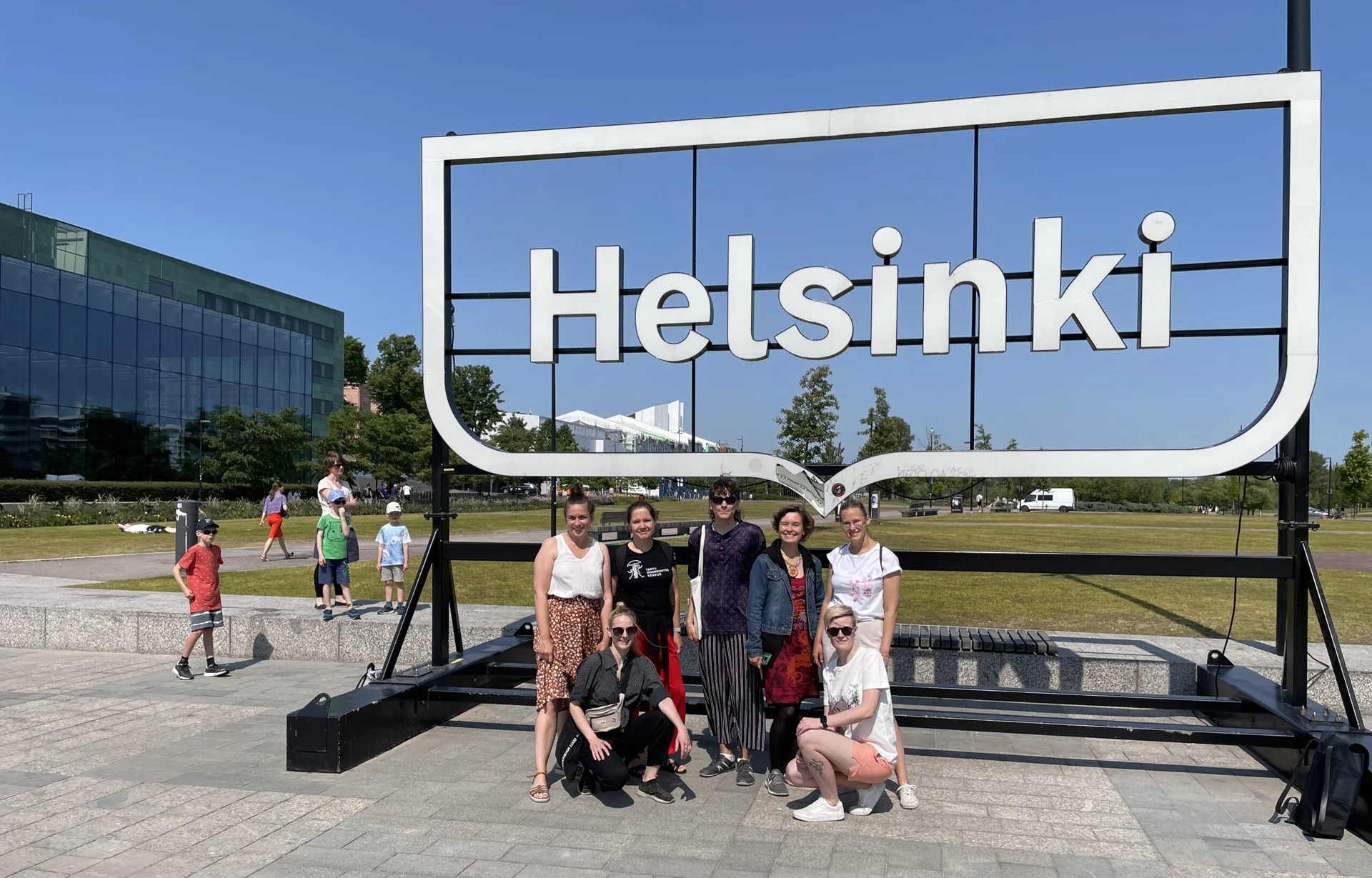
In June, our youth workers went on a study trip to Helsinki, Finland, focusing on street youth work and generally getting acquainted with Helsinki's youth work. In the first part of the week, Aseman Lapset provided us with street mediation training. Street mediation is a conflict resolution method based on Restorative…
Digital Tools for Youth Workis an Erasmus+ cooperation project initiated by organizations from four countries: Estonia, Armenia, Poland, and Lithuania. The project will last for 20 months and will be implemented between March 1, 2021, and October 31, 2022.
The project's goal is to develop, as a result of collaboration, digital tools that facilitate and support youth work.
The project's sub-objectives are as follows:
Project website: https://digitaltools.gaminu.eu
The project is supported by the Erasmus+ and European Solidarity Corps Agency from the Erasmus+ program.
“Digital Tools for Youth Work”is an Erasmus+ KA2 project initiated by organizations from four countries: Estonia, Armenia, Poland, and Lithuania. The project will last 20 months and will be implemented between March 1, 2021, and October 31, 2022.
The aim of the project is to develop digital tools that facilitate and support youth work.
The sub-objectives of the project are:
Project homepage: https://digitaltools.gaminu.eu
This project has been funded with support from the European Commission Erasmus+ programme.
"Gamification tools for youth learning"is a long-term Erasmus+ strategic cooperation project initiated by organizations from four countries: Poland, Estonia, Hungary, and North Macedonia.
The project brings together youth work organizations from three countries to jointly develop digital tools for improved youth work.
Goals:
– create opportunities for youth workers to implement digital tools in their work
– create new digital tools for youth work
– offer young people opportunities to acquire skills and knowledge for self-development using digital tools.
– motivate young people to participate more actively in society
– offer online-learning opportunities for both young people and youth workers
Partners: Europejska Fundacja Rozwoju Człowieka (EuroFRC), Centre for youth activism KRIK, Gyermek- és Ifjúsági Önkormányzati Társaság and Tartu Youth Work Center.
The project results will be reflected on the website in the future: www.gamificationtools.eu/
The project is supported by the European Commission from the Erasmus+ program.
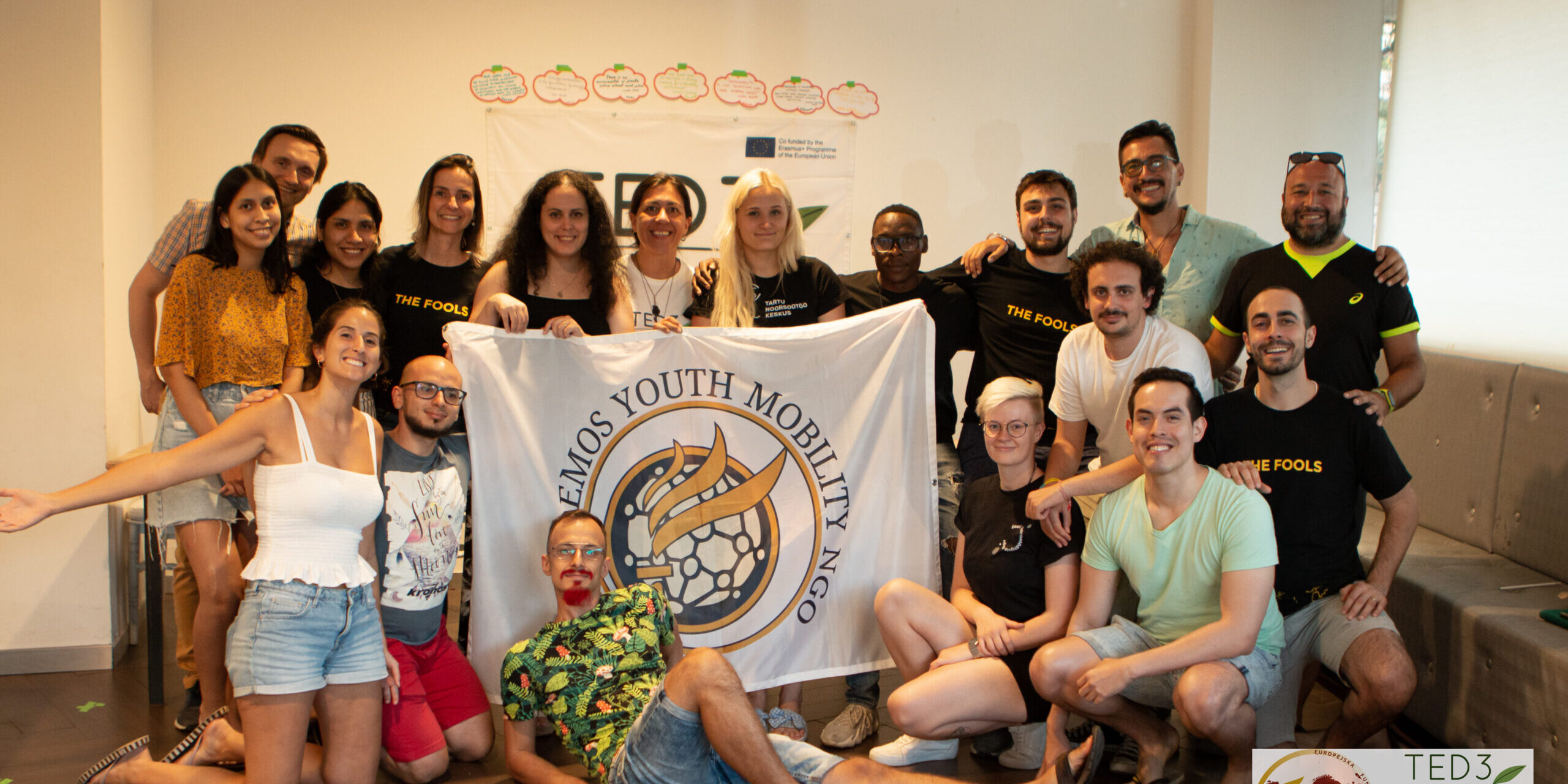
.. the project was an international environmental cooperation project, in which the Tartu Youth Work Center was involved as an organization in the youth work sector. The project was created to contribute to supporting sustainable development. The project, which started in mid-December 2018, was planned to last until mid-June 2020 (15.12.2018 – 15.06.2020), but due to the coronavirus pandemic and the international diversity of the project, it was only completed in the autumn of 2022.
The project was led by the Polish organizationEuropejska Fundacja Rozwoju Czlowieka, with participation fromEuroDemos Youth Mobility NGO,Global Unity – Sumak Kausay, Associació Cultural Tabalà,Centro Urbes, The Fools, andTartu Youth Work Center.
The aim of the project was to focus on socio-economic development and to equip youth work with the necessary methods to promote an environmentally friendly mindset and behavior.
The sub-objectives of the project included, for example:
– developing cross-sectoral cooperation
– sharing practices, ideas, and experiences
– raising awareness among young people and youth workers
Activities carried out within the project:
Kick-off Meeting in Poland
Trainers' Training in Mexico
Job Shadowing Visit to Peru
Job Shadowing Visit to Estonia
Job Shadowing Visit to Spain
Job Shadowing Visit to Poland
Job Shadowing Visit to Brazil
Job Shadowing Visit to Italy
Local Workshops in Estonia
Local Workshops in Poland
Local Workshops in Peru
Youth Workers' Training in Brazil
Final Conference in Italy
The project resulted in the creation of:
1. Green-Lab InKubator
2. Youth work information bank
3. Several webinars, which can be found on YouTube
4.A toolkitwith the best practices of the project
5. A brochure on Green Rights
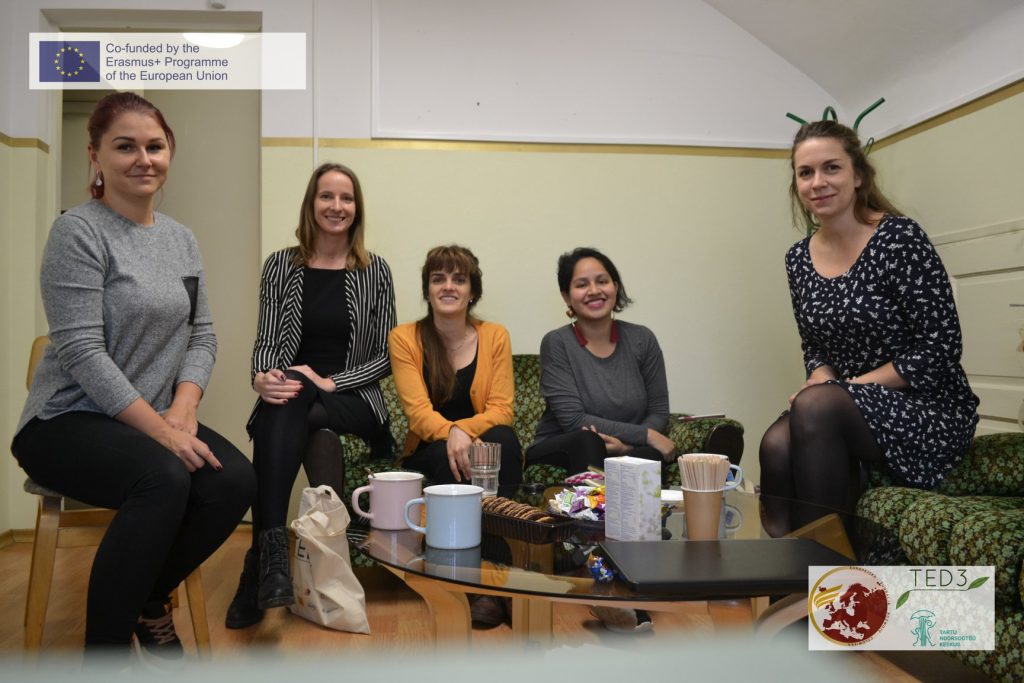
2.-7. September, the final meeting of the TED3 Tools for Employment & Environment Education Development project, or TED3 for short, took place in Reggio Calabria, Italy. TED 3 is an environmental international Erasmus+ project created to...
Jaanika Palm, head of Ilmatsalu Youth Center, looks back at the first year of operation of Ilmatsalu Youth Center as part of the Tartu Youth Work Center. Various nature study days and excursions have become a tradition at Ilmatsalu Youth Center. Young people experienced extreme situations...
The Tartu Youth Work Center is involved in the international project “TED3 – Tools for Employment and Environmental Education Development,” initiated by the Polish organization Europejska Fundacja Rozwoju Czlowieka. From March 3rd to 8th, the project's... took place in Łódź, Poland.
.. was an Erasmus+ strategic cooperation project, within which young people from Tartu youth centers had the opportunity to learn more about 3D printing technology.
3D printing technology, or three-dimensional printing, involves building details layer by layer, by adding new material to a previously laid layer. The technology is used for the rapid production of various prototypes and objects from a design.
The project involved the Lithuanian organization Robotikos mokykla, the Latvian organization Baltijas Reģionālais fonds and Tartu Youth Work Centre. The project lasted from February 2021 until the end of July 2022.
The international cooperation project “Young creators discover 3D,” initiated by the Lithuanian organization Robotikos mokykla, focused on applying 3D printing in youth work to develop young people's technical knowledge and skills.
As a result of the project, training material on 3D printing was developed for youth workers. Additionally, three interim meetings took place, including a training session, and workshops introducing the possibilities of 3D printers were held in each country, where local young people could hands-on experiment with the entire 3D printing process and develop their skills to succeed in the future job market.
The project was financially supported by the European Commission's Erasmus+ programme through the Lithuanian National Agency JTBA.
Project led by:
Akvilė Gerulskytė, project manager at Robotics School
akvile@robotikosmokykla.lt
Head of Tartu Youth Work Centre:
Helene Toomeoks
Email address: helene.toomeoks@tartu.ee
The main goal of the Erasmus+ project "Tartu Youth Work Camp: More Youth-Oriented" was to make the Tartu Youth Work Camp more aligned with the interests and wishes of young people. The project lasted 14 months and was implemented from 01.08.2021 to 30.09.2022.
To achieve the goal, members of the youth work camp's core group were involved in decision-making processes and given more responsible tasks in organizing the youth work camp (e.g., organizing the kick-off and reunion).
Through training, the active members developed skills in project management, public speaking, teamwork, and time management. To create a historical memory, a Wikipedia article and a comprehensive book about the Tartu youth work camp were compiled, which includes written accounts and published photos from its history, and collected experience stories from camp participants over different periods.
The project was supported by the Erasmus+ and European Solidarity Corps Agency from the Erasmus+ program.
.. was funded by the ENL Youth Participation Fund , and a youth active group is being established at the Anne Youth Center.
The main function of the core group is to participate in the creation of the youth centre's activity and development plan. The youth core group represents the voice of young people. The core group consists of 5-7 young people who write their own initiative projects, organize various events, and help youth workers understand the true needs and wishes of today's young people.
The youth core group provides input for Anne Youth Center's activities and contributes to young people's activity and entrepreneurship.

Tartu Youth work camp core group…
… is a group of active youth work camp participants and group leaders who contribute to the preparation of the youth work camp.
These activities include: organizing opening and closing events, representing the Tartu youth work camp at various events, advising and supporting the organizing team, joint activities, camp marketing, cooperation with core groups of other student work camps operating in Estonia, and much more.
.. the project was launched with the aim of raising awareness and tolerance regarding differences among young people in the city of Tartu. The project brought to Tartu Youth Work Centre three volunteers for 12 months, who started working in Tartu youth centres (Anne, Lille, and Ilmatsalu Youth Centres) and contributed to the organization of youth events (Tartu Children's Protection Day, Knowledge Day, etc.). The project ran from 01.09.2021 to 31.10.2022.
The sub-objectives of the project were:
– enrich youth work and youth center activities
– raise awareness about volunteer work and its values
– highlight the theme of solidarity
– support the development of competencies for both volunteers and young people
Volunteers were:
Dragana from Serbia
Anargyros from Greece
Greta from Armenia
The project was supported by the Erasmus+ and European Solidarity Corps Agency from the European Solidarity Corps program.

Further information:
Helen Toomsalu
helen.toomsalu@tartu.ee
When a great opportunity arises to spend time with friends in a creative environment and at the same time do good in the local community, it must be seized. And this is exactly what the Tartu Youth Work Centre's...
Hello everyone! My name is Anargyros, which is quite difficult to pronounce, so you can just call me Argy for short. An interesting fact about me (or maybe not so interesting) is that...
Inclusive Youth Workwas a long-term Erasmus+ strategic cooperation project initiated by organizations from four countries: Estonia, Armenia, Poland, and Slovenia.
Project period: 01.02.2019 – 30.04.2021
Organizations participating in the project: Tartu Youth Work Centre (lead partner), Public University of Ptuj, Armavir Development Center NGO
The aim of the project was to increase the involvement of young people with special needs in youth work by developing the competence of organizations working with them, creating an innovative training module “Inclusive youth work” for this purpose.
The sub-objectives were
1. Empowering youth workers by providing them with relevant methodology and training on youth work;
2. Creation and development of the training module 'Inclusive youth work' in 5 languages;
3. Raise general awareness regarding social inclusion and the involvement of young people with special needs;
4. To create added value and new approaches in youth work by integrating social work, non-formal education, and youth work;
5. To create a cooperation network among youth workers to support their daily work.
From September 23 to October 1, 2021, the Tartu Youth Work Centre organized a training seminar titled “Personally Professional” at the Tartumaa Health Sports Centre, located among the forests of Elva. Youth workers from Estonia, Armenia, Serbia, Slovenia, and Croatia participated in the 7-day training seminar.
The aim of the learning mobility was to develop the professional competencies of youth workers to implement inclusive youth work through self-development and peer learning. The program was structured in 4 parts: ME, WE, YOU, THEY.
Project period: 27.05.2020 – 31.01.2021
Partnerswere: ARMAVIR DEVELOPMENT CENTER, Mladinski center Zagorje ob Savi
VOLONTERSKI CENTAR ISTRA, NACIONALNA ASOCIJACIJA PRAKTICARA/KI OMLADINSKOG RADA-NAPOR
The project was supported by the Erasmus+ and European Solidarity Corps Agency from the Erasmus+ program.
| Aim | Activity | Specific content of the activity |
|---|---|---|
| 1. The expectations of teenagers with visual, hearing, and mobility impairments in Tartu and their parents regarding youth work, and the barriers to their participation, have been mapped. | Conducting a study in schools for students with special educational needs and associations gathering parents |
The Tartu City Government is conducting a procurement for a study. As a result of the study, we will receive up-to-date information regarding expectations and obstacles, and learn the proportion of young people with visual, hearing, and mobility impairments participating in youth work.
2019 study results 2021 study results |
| 2. Tartu youth centers are accessible and user-friendly for teenagers with visual, hearing, and mobility impairments. | Making municipal youth centers accessible and autonomously usable for target group youth. |
The activity includes spatial adaptations (e.g., light signals, movement markers) and the acquisition of suitable equipment. Young people from the target group are involved in the selection of equipment. |
| 3. Obstacles in youth centers and nature education have been removed. |
3.1 Changing attitudes through campaigns. 3.2 Developing TNK as a competence center. |
3.1 Introducing youth center opportunities in special needs schools and organizations, training for youth workers.
3.2 Testing assistive devices, creating training programs, involving support youth workers. |
| 4. The program of nature education events has been created and implemented. | Implementation of the nature education initiatives plan |
The final plan will be developed based on the target group and research results. Planned activities: canoe trip on the Emajõgi River, nature camps, geocaching, mindfulness-based activities. The goal is to change attitudes and create an inclusive environment. |
The project ran from 19.09.2019 to 30.11.2021.
Activities were funded within the framework of the European Social Fund co-funded program "Involving young people at risk of exclusion and improving youth employability," approved by the Minister of Education and Research and implemented by the Education and Youth Board.
The aim of the project is to increase societal tolerance between different communities through raising awareness of the sign language community.
The sub-objectives are:
– introduce Estonian sign language and the culture, activities, and potential collaboration opportunities of sign language users to young people in TNTK youth centers and schools, as well as to those working with youth.
– initiate the process so that Estonian sign language and the inclusion of deaf and hard-of-hearing youth in activities become as natural in the future as the inclusion of all other young people.
– integration of people from different linguistic backgrounds.
– based on the principles of open youth work, we offer activities that enable young people to acquire new skills and knowledge; activities for young people of all ages; we encourage young people to participate in planning and decision-making processes; we support young people in understanding topics that affect society; we foster tolerance in young people; we improve their social skills; we encourage young people to speak up.
The objectives of the youth meeting are:
to introduce global education to young people (educating young people on topics of society, environment, mental health, and self-development);
to introduce opportunities for self-expression (art, music, improvisation, theater);
to develop key competencies in young people (choosing appropriate communication methods/language, gaining an overview of the activities of young people in Narva and Tartu, expanding knowledge about democracy, civil society, and human rights, and the ability to act to implement their ideas).
The project is essential for young people to learn through playful activities to pay attention to their surroundings, identify areas where they can contribute, consider their ecological footprint, think about recycling, and gain confidence in performing and drawing attention to themselves. Additionally, young people from partner projects will have the opportunity to practice communication in another language. The overarching theme of the project is global education.
Each day of the project has its own theme. On the first day of the project, we will focus on society. We will talk about civic engagement and the opportunities it offers young people. We will answer questions about how to turn an idea into reality, how to contribute to society, and how to seize the opportunities that are offered. We will also introduce each other to the opportunities offered by the cities of Tartu and Narva.
On the second day, we will focus on the environment. We will learn how to reduce our ecological footprint on Earth and in what ways we can contribute to recycling. Young people will conduct workshops for each other on the topic of recycling (the workshops are planned and carried out independently by the young people). The Pärnu Sütevaka Humanitarian Gymnasium will also present its Erasmus+ project, which focused on environmental protection and waste. During the project, we also plan to visit the Pärnu Wastewater Treatment Plant.
On the third day, we focus on personal development and self-image. To do this, we learn improvisation and various techniques for preparing for public speaking from the young actors of Endla Youth Studio.
On the last day of the meeting, we will analyze with the youth what we learned, what we would do differently next time, and look for new cooperation opportunities. We also acknowledge and thank the young people who participated in the youth meeting.
Upon completion of the project, young people will have broader knowledge of an environmentally friendly lifestyle, practical skills on how to act in this way, and a mindset of 'where I see fault, I will come and help, or at least think'.
brought 3 foreign volunteers to Tartu, who started working in the youth centers managed by Tartu Youth Work Center: Lille, Anne, and Ilmatsalu youth centers.
During their 11-month service, from June 1, 2019, to July 31, 2020, the volunteers introduced their worldview, culture, and other values and activities to young people and communities. Their daily work involved working at the youth center, in addition to assisting with the organization of youth events in the city and various community activities.
The volunteers were from Armenia, Georgia, and Slovenia.
The European Solidarity Corps project “Volunteering as a pathway to solidarity” aims to promote youth solidarity in society.
The sub-objectives were:
– promoting solidarity and tolerance among young people;
– improving the quality of youth work in Tartu through new opportunities;
– to raise the cultural awareness of young people and the local community in general;
– to bring new knowledge and experiences to both sides (volunteers and TNTK);
– supporting the development of young people, especially in the case of accepted young volunteers;
– add value to the daily activities of youth centers.
The project was supported by the Erasmus+ and European Solidarity Corps Agency from the European Solidarity Corps program.
The project “Reveal YouropEaN Cultural Heritage” is a city network project initiated by the city of Veszprém, focused on cultural heritage themes.
During the project period, nine project meetings took place in various cities, attended by delegations from partner countries, as well as local young people and professionals interested in the topic.
In addition to international project meetings, local activities were held, resulting in the completion of a video introducing the city of Tartu and map for exploring Tartu from a young person's perspective. You can also read a summary of the projectHERE.


Veszprém, with 60,000 inhabitants, known as the "City of Queens," is one of Hungary's oldest cities. Located near Lake Balaton and the Bakony Mountains, it is the administrative center of Veszprém County and a regional economic and cultural hub. Culture plays a very important role in city life. The city is notable for its rich cultural heritage and hosts various significant cultural events and art festivals. Veszprém has several prestigious educational institutions and the most important higher education institution in Central Transdanubia, the University of Pannonia, along with its campus. The city is the European Capital of Culture in 2023. The lead partner of the project is the Veszprém City Council. The project team consists of high school students and university students and is supported by local historians, tourism experts, and the Lélektér Foundation, whose goal is to help young people promote communities and a healthy lifestyle.
https://www.facebook.com/lelekteralapitvany/


The Adult Education Centre in Lendava is a local public organization established by the Lendava City Council to promote and develop adult education. It offers a diverse range of learning programs, with increasing attention paid to lifelong learning projects, especially for vulnerable social groups such as the Roma community. In recent years, workshops have also been organized to raise awareness of active civic participation. Since 2005, various national and international projects (mostly with Hungary) have been implemented, some in cooperation with the Lendava Student Club and the Lendava Bilingual High School.
http://lendava-lendva.si/lang/en


Foster Europe, aimed at strong European regions, is an independent, non-political, private, and charitable Austrian foundation that promotes European integration, democracy, regional capacity, and federalism. Although operating within a pan-European framework, Foster Europe's primary focus is on Central and Eastern Europe. Since 2009, Foster Europe has been promoting a European debate on federalism and decentralization. In active cooperation with European partners from the fields of science, research, and the practical implementation of policy, Foster Europe focuses on how to organize the work of states and their institutions, and on the search for higher forms of democracy. Since 2011, Foster Europe has also focused on the culture of participatory politics in Europe. Foster Europe is dedicated to fostering international connections between civil society organizations, active urban residents, young people, academics, intellectuals, practitioners, and various social and sectoral institutions. Civic activism, NGO networking, and the relevant policy areas (culture, origin, environment, brain drain, migration) have so far been part of Foster Europe's work.


The harmonious city of Saint-Omer is characterized by a remarkable historical urban cultural heritage. The Marais Audomarois nature reserve, part of UNESCO biosphere reserves, is a paradise of flora and fauna and France's last cultivated marshland. Water shapes all surrounding natural forms and daily life. The municipal governments of the Morinie region carry on the rich history of Thérouanne – an ancient lost city, an example of a so-called dead city. Traces of this ancient medieval Pompeii are visible both in the landforms and in the soil.
The agency leads studies and projects related to regional planning and sustainable development. The organization holds the 'Art and Historical Sites' label, awarded by the Ministry of Culture and Communication, which distinguishes territories characterized by a genuine passion for the protection and development of architecture, landforms, and cultural heritage.
https://www.ville-saint-omer.fr/


With 100,000 inhabitants, Tartu is the second largest city in Estonia. It is the regional center of Southern Estonia and can also be considered the country's cultural and educational capital. Here are located the country's most important universities: the University of Tartu and the Estonian University of Life Sciences. Every year, more than 20,000 students study in Tartu, including international students from about 80 countries. Culture plays an important role in Tartu's city life: high-level cultural events with an international reach take place in the city, and the preservation of cultural heritage is highly valued here, especially now, as Tartu is a candidate for the European Capital of Culture 2024. Culture is also a connecting link between Tartu and its twin city Veszprém. Tartu has many international connections and has been part of the UNESCO Creative Cities Network (City of Literature) since 2015. There are about a hundred youth organizations in the city.
European Solidarity Corps project “Grasping Grafiti”
The project “Grasping Graffiti” was created with the aim of beautifying Tartu's cityscape using a specific art style. The project lasted 11 months, and the project team consisted of 6 young people – Kaisa Saluste, Sirli Solom, Grete Sass, Karl Mattias Laiuste, Liisa Veddel, Hanna Liis Sootla.
Project period: 01.02.2020 – 31.12.2020
Although the project activities were delayed due to the emergency situation caused by the coronavirus pandemic, the project team worked to achieve its set goals. The graffiti team's wish was to develop themselves during the project and gain a broader and more specific overview of the nature of graffiti – its styles, tools, and techniques. One of the set goals was also to bring what was learned to the city of Tartu, which is the European Capital of Culture in 2024. This involved introducing thoughtful and message-driven art into the cityscape, addressing socially relevant and important topics. To identify these themes, people were encouraged to notice graffiti in the city's street art, and young people in Tartu were given the opportunity to participate in project workshops, trainings, and internships. During the project, worn, outdated, and inappropriate graffiti was removed from the city of Tartu, and some of it was replaced with new works by the project team.
The young people in the project team gained in-depth knowledge of graffiti, design, Photoshop, and marketing. All interested young people outside the team were also involved in the workshops. Learning portfolios were created, which will be used in future workshops conducted by the institution.
The project was supported by the Erasmus+ and European Solidarity Corps Agency from the European Solidarity Corps program.
The smart project “Noortekraan” , funded by the open youth centers' project competition, is not a standalone activity or method; rather, it provides young people and youth workers with new tools to create innovative solutions for both current problems and new challenges in the daily activities of youth centers.
The aim of this cooperation project is to improve the quality of open youth work in the city of Tartu through the implementation of new information screens in 5 Tartu youth centers.
The sub-goals of the project are:
– to improve the availability of youth information for young people in Tartu through the installation of digital screens
– to increase the digital skills of young people and youth workers
– to make the activities of youth centers more visible and attractive to young people
– to develop cooperation and information exchange between youth centers in Tartu
In the project “Youth Screen”, Tartu Youth Work Centre (Anne, Lille and Ilmatsalu youth centres), Tähe Youth Club NGO (Aparaadi youth centre), NGO SPARK Makerlab (SPARK Makerlab youth centre), and Digital Signage OÜ collaborate.
The idea of the project is to organize three health seminar days at the Anne Youth Center, focusing on maintaining the mental and physical health of young people.
The seminars are intended for up to 75 young people from Tartu city, targeting the 12-18 age group.
During the Health Seminar days, we will gain knowledge on how to prevent school and study-related stress. We will learn how to ensure a balance between school and leisure time in today's fast-paced world, how to make healthy choices, and how to prevent drug abuse. We will introduce exciting and new ways to maintain physical health, such as fun yoga and dance movement, which are not always accessible or budget-friendly for all young people. On the third day of the health seminar, we will explore the exciting and diverse world of food. We will prepare healthy dishes with experts in the field, delve into the world of food, and learn to make healthy food choices.
Over the course of three seminar days, we will learn to maintain our mental well-being and health, focus on active movement, and introduce various therapeutic movement methods. The three health seminars are open to all, and we invite all young people from Tartu to participate.
We are implementing the project together with the Anne Youth Centre's active group.
Anne Youth Centre organizes four employment-themed trainings, during which young people gain more knowledge about employment topics. The topics include image building, ethics, career planning, and occupational health.
The aim of the project:
The aim of the project is to raise awareness among young people aged 13-19 about work culture, labor market opportunities, legislation, and their own responsibilities through non-formal education. The project provides young people with knowledge and practical skills, which improves their chances of entering the labor market and raises employers' awareness of young people as a knowledgeable and valuable target group.
The project focuses on young people's lack of knowledge regarding how to succeed in the career landscape and how previous life experience affects employment opportunities. Many young people believe they should receive maximum compensation for minimum effort. During the project, young people will gain knowledge on how to communicate effectively with employers and clients. We also inspire and encourage them to engage in entrepreneurship.
1) Self-marketing and image building
2) Work culture and ethics, how to be successful in the career landscape, employer vs my expectations
3) Future jobs and me as a shaper of the labor market
4) Maintaining motivation and health, interesting and
finding work with development opportunities, the living library method
Kaide-Liis Suurväli
Phone: +372 58 864 802
Email address: Kaide-Liis.Suurvali@raad.tartu.ee
Funded by the ENL Youth Participation Fund, a youth core group will be established at the Anne Youth Centre.
The main function of the active group is to contribute to the creation of the youth center's activity and development plan. The youth group represents the voice of young people. The group consists of 5-7 young people who write their own projects, organize various events, and help youth workers understand the real needs and desires of today's youth.
The Youth Active Group provides input for the activities of Anne Youth Center and contributes to youth activity and entrepreneurship.
Tartu Youth work camp core group…
… is a group of active youth work camp participants and group leaders who contribute to the preparation of the youth work camp.
These activities include: organizing opening and closing events, representing the Tartu youth work camp at various events, advising and supporting the organizing team, joint activities, camp marketing, cooperation with core groups of other student work camps operating in Estonia, and much more.
The Mentor Program was designed for mini and student companies. It was organized by the Youth Entrepreneurship Lab in cooperation with Anne Youth Center and Tartu Jaan Poska Gymnasium. During the academic year, 6 mentor club evenings were held.
The topics of the Mentor Club were: idea and product development, marketing, practical laboratory, teamwork and management, sales strategies, public speaking.
Marek Mekk moderated the mentor evenings.
The mentoring program was organized by Tartu Business Advisory Services and funded by Tartu City Government and Tartu Youth Work Center.
From July to the end of December 2018, the project “Fine Arts in the Digital World” took place at the Tartu Youth Work Center, led by Lille Youth Center. It was funded by the Estonian Youth Work Center's Varaait vol 14 project, with MTÜ Just Tants, MTÜ Spark Makerlab, and OÜ Nordic Digital as partners. The project's grant amount was 7989.88 euros, self-financing was 2000.24 euros, and the total cost was 9990.12 euros.
The main goal was to develop young people's digital competence, offer more diverse opportunities, and involve new young people in activities. Young people also had the opportunity to contribute to their own creative development through non-formal education. As a result, young people have gained and will continue to gain knowledge and experience in how to take quality photos and videos, and how to edit and process them.
As a final result of the project, three high-quality Nikon cameras, mini-studio equipment, and the opportunity to use Adobe programs at least until the end of August 2019 will be available for young people and youth workers.
The project was initiated by Liis Somelar and carried out by Reelika Lodjak. Young people were also involved in the process.
Of the Joint Project 'Young People Make History'
In the autumn of 2019, the 100th anniversary of the National University was celebrated. In connection with this, a memory collection campaign was launched under the leadership of the University of Tartu Museum. In addition to University of Tartu alumni and (former) employees, young people who had not yet experienced university life themselves were also able to contribute.
In cooperation with the Tartu Youth Work Center, the University of Tartu Museum issued a call to young people aged 15-25 to search for, research, and record stories and anecdotes from their close acquaintances about their university years, because it is the perspective of young people that gives memories a fresh color and helps to find and preserve the recollections of younger generation alumni (who may not get around to writing down their stories themselves).
Various types of contributions were welcome – including written accounts or recordings of oral memories, as well as photos and items somehow related to the university.
Stories related to both studies and free time were expected to be captured, as well as fragments of memories from former students, professors, and non-academic staff.
For example, you could ask your parents or relatives and friends who have already completed their university studies:
How and where did they study?
What was used for learning?
How did they prepare for exams and answer during exams?
what were the living conditions, etc.
Both longer stories and individual colorful anecdotes were welcome, such as those about a legendary lecturer or a particularly challenging exam experience.
There was no specific format or volume requirement for the competition entry; it was only important that the work reflected:
name of the person associated with the university, period of study and specialization at the university, and the workplace or position they currently represent;
for recording oral memories, a clear description of the event or place being recalled (names, locations, as precise a time as possible, etc.) is possible;
Regarding the photo: who are the people depicted in the photo? (as precise information as possible – name, profession, background, connection to the photo owner, etc.) what else is visible in the photo? (any building or place) When and where was the photo taken? Who is the author of the photo? What is the connection of the photo or the people/objects/places in it to the university?
Regarding the item: what kind of item is it? (name, purpose, material) From what time or era does the item originate? Its story – connection to the owner, the university, its future fate
All submitted works were reviewed by a jury consisting of people from the University of Tartu and the museum, as well as young people from the Tartu Youth Work Center. Suitable works found their place in the museum's collections, and the most colorful ones are exhibited. All participants were invited to attend the competition's final event on October 26 in the White Hall of the University of Tartu Museum in the historic Dome Church, where selected works were presented and the best were awarded.
The project was supported by the Estonian Librarians Association and the Ministry of Culture.
The project “Promoting an Environmental Education Direction” helps young people to feel, value, and protect nature, and develops skills to apply their knowledge in everyday life.
Nature Education and Awareness aims to make the values of young people, and thereby adults, more environmentally conscious, so that society understands, supports, and follows the principles of nature conservation. Nature education is provided through positive emotional learning. The main goal of conveying nature information is to provide young people with general knowledge, interesting facts and connections, as well as guidelines for appropriate behavior in nature.
It is also important to introduce the principle of nature's integrity and the benefits offered by nature, so that young people understand the unity of global processes and the role of Estonian nature and people within them.
The study program includes:
indoor activities – lectures (birdwatching, weather, hiking equipment, nature conservation, etc.), nature film screenings, discussions, map reading, knot tying;
activities in nature – birdwatching, movement in various terrains (forests, bogs, bodies of water) both as hiking and orienteering, identifying animals and birds (incl. animal tracks, skins, droppings), survival in nature (incl. making tools from basic items, first aid with available means, etc.).
Learning activities (lectures) take place at any time, but practical activities mainly occur during school holidays. Organizations and companies offering nature education are involved.
The aim is to raise young people's awareness of their local environment and Estonian nature.
The sub-goals are to make young people aware of the various opportunities for spending time in nature (active movement, conscious use of natural resources), teach them how to read topographic and orienteering maps and navigate using them, teach them how to behave in nature, teach them to notice and recognize animals, birds, and plants, and observe the weather. Raise awareness among young people about environmentally friendly lifestyles and nature conservation, and provide an overview of survival skills in nature. Based on the principles of open youth work, we offer activities that enable young people to acquire skills and knowledge; activities for young people of all ages; We encourage young people to participate in planning and decision-making processes. We support young people in understanding issues that affect society and encourage them to have a say.
The outcome is to be able to relate to, appreciate and protect nature, and to move and act purposefully in nature. From the topics covered, a nature corner will be created with the young people in the youth centre, featuring pictures, crafted items, thoughts, and more related to the themes. The nature corner promotes the creation of a natural environment and deepens young people's awareness in this field.
Project "KA2 Youth Work 360° - Mobile, digital, inclusive and accessible" is an international Erasmus+ cooperation project led by Tartu Youth Work Centre in cooperation with the Italian partner organization Vedogiovane. The project focuses on the development of mobile youth work.
The objectives of the project are:
To train 30 youth workers to provide support in diverse environments, including on the street and online.
To pilot the position of a digital youth worker for one year to reach young people with limited access to traditional youth work, including NEET youth and young people with mobility or socio-economic difficulties in both Estonia and Italy.
To pilot a mobile youth work bus for 3 months to offer pop-up youth centers in different areas of Tartu (Estonia) and Eastern Piedmont (Italy), providing accessible and inclusive activities.
📅 The project lasts 01.09.2025 – 28.02.2027 (total 18 months). During this time, several exciting and developmental activities will take place:
The project “Ambition, Collaboration, and E-sports Development” (ACE for short) is an international Erasmus+ cooperation project led by Tartu Youth Work Centre in cooperation with the Lithuanian partner organization Robotikos Mokykla. The project focuses on e-sports as a youth work tool – with the aim of making computer gaming more meaningful and supporting the development of young people through playful and practical experience.
🎯 The aim of the project is:
📅 The project lasts 01.01.2025 – 31.03.2026 (total 15 months). During this time, several exciting and developmental activities will take place:
Additional information:
Siim Vares
siim.vares@tartu.ee
The project is supported by the Erasmus+ program.
Erasmus+ KA2 project “Preventing Youth Violence”
The aim was to strengthen youth workers' knowledge and skills in violence prevention and to move from mere awareness-raising campaigns to practical daily action. To this end, a toolkit was developed for youth workers, offering violence prevention methods, practical action models, and guidelines for their implementation in daily youth work practice.
Within the framework of the project, two international training sessions took place – one in Tartu, Estonia and the other in Lublin, Poland.
The training sessions focused on increasing participants' competence and understanding of youth violence and its impact on youth relationships.
various forms of violence (physical, mental, digital violence, etc.),
on the role of social media in influencing, grooming, and intimidating young people,
to gender, masculinity, and sexuality norms, and their connection to violence,
the importance of equality and a respectful communication culture,
to the development of competencies related to the prevention of sexual violence.
Erasmus + project “ESTEEM”
..is a two-year international cooperation project focusing on youth well-being. The project is implemented between five organizations from Latvia, Estonia, Bulgaria, and Spain. The project's main goal is to draw attention to youth mental health and psychological well-being.
Project period: 01.04.2022 – 01.04.2024
Participating organizations in the project: Association of Educational games and method (lead partner, from Latvia), Tartu Youth Work Center (from Estonia), Child and adolescent resource centre (from Latvia), AC Amics de la Biblioteca de la Fonteta (from Spain), CVS BULGARIA SDRUZHENIE (from Bulgaria).
– To improve the quality of youth work in a post-pandemic world.
– To raise youth workers' awareness of youth mental health.
– To develop innovative mental health solutions for informal use with young people.
– Activities related to project management, communication, and dissemination
– Development of intellectual outputs
– International meetings
– Youth training and app testing
– Youth workers' training
– Local events
Tartu Youth Work Centre staff Kristina, Aveli, Liisa, and Helen participated from November 21-26 in sunny Alicante, Spain, in connection with the well-being project aimed at young people, “ESTEEM – Youth work responses to young people well-being.” The project involved…
Erasmus + project “ESTEEM” is a two-year international cooperation project focusing on youth well-being. The project is implemented by five organizations from Latvia, Estonia, Bulgaria, and Spain. The main goal of the project is to draw attention to youth mental…
The Erasmus+ project 'Inclusion is On 2021-2024' collected best practices and updated tools to promote accessibility, social inclusion, and youth participation in leisure activities.
Good practices and new tools were compiled into a guide, based on which a training model and a podcast were developed.
During the project, five international training events were organized for project partners and local youth workers in the target country. The training introduced local youth work and addressed the project's theme through guest lecturers and practical methods. The project culminated in an international final seminar for Italian youth workers at the beginning of 2024 and national final events organized in partner countries in the spring of 2024.
The project was implemented with European Union Erasmus+ funding from 2021–2024 and involved partner organizations from six different countries.
Project partners:
Nuorten Akatemia, Finland
Nuorisoseurat, The Finnish Youth Association, Finland
Radio- R, CzechRepublic
Federation of Children's and Youth Municipal Councils,Hungary
Le Discipline,Italy
Croatian Office for Creativity and Innovation,Croatia
Toolkit
The toolkit is a collection of best practices, tools, and tips gathered and/or created during the project to promote social inclusion in youth leisure activities:
Innovation Model
The Innovation Model is a collection of methods that offers a systematic approach and a structured framework for problem-solving. It can be used to create tools for promoting social inclusion and accessibility. The model consists of four stages, utilizing a collaborative approach and ideally real data from beneficiaries. It can be used as a whole or its steps can be applied separately for different needs. The model can also be applied to other topics. The Innovation Model is available in several languages:
IncOn_innovation model_English
IncOn_innovation model_Finnish
IncOn_innovation model_Estonian
IncOn_innovation model_Czech
IncOn_innovation model_Italian
IncOn_innovation model_Hungarian
IncOn_innovation model_Croatian
Podcast series
“Inclusion is not an illusion” is a podcast series covering the main themes of the IncOn project and the experiences of partner organizations. The series consists of four episodes and is available on Spotify:
IncOn_podcast_English (Spotify)
Materials from the International Final Seminar
Materials from the final seminar presentation held in Italy in January 2024:
Materials for the youth worker training model
The training model consists of several parts, based on the content of the toolkit produced as part of the “Inclusion is On” project. Different parts of the training model can be applied separately or together to create a training based on preferences and available time. The model is suitable for both face-to-face and online training and provides facilitating instructions for each part. The youth worker training model is available in several languages:
IncOn_youth workers training model_English
IncOn_youth workers training model_Finnish
IncOn_youth workers training model_Estonian
IncOn_youth workers training model_Czech
IncOn_youth workers training model_Italian
IncOn_youth workers training model_Hungarian
IncOn_youth workers training model_Croatian
Good practices and tools:
IncOn_toolpack_goodpracticesandtools_English
Short versions (posters) of partner organizations/good practices and tools:
IncOn_good practice poster_Youth Academy
IncOn_good practice poster_Finnish Youth Association
IncOn_tool poster_Finnish Youth Association
IncOn_good practice poster_Tartu Youth Work Center
Video: Essential rules for communicating with deaf or hard-of-hearing people
IncOn_tool poster_Tartu Youth Work Center
IncOn_good practice poster_Radio R
IncOn_tool poster_Radio R
IncOn_good practice poster_Le Discipline
IncOn_tool poster_Le Discipline
IncOn_good practice poster_GYIÖT
IncOn_tool poster_GYIÖT
![]()
Engagement of international volunteers in the activities of Tartu youth centers during the period autumn 2024 – winter 2025
The aim of the project is to enrich youth work activities by involving foreign volunteers in the daily activities of youth centers and to make the activities of youth centers more diverse, with an important focus on promoting solidarity and tolerance in society. Young people have the opportunity to get acquainted with different cultures and practice foreign languages. Volunteers also gain their first experience in youth work.
Within the framework of the European Solidarity Corps program, 2 foreign volunteers work for 12 months at the Tartu Youth Work Centre. The volunteers carry out various activities and workshops based on the focus area and organize major events.
The project will take place from 01.10.2024 to 31.12.2025.
Hello, I am Burak! I am from Türkiye, 29 years old, and studying for a master’s degree in the humanities in Italy. In my free time, I mostly do drawings...
Manuel, a volunteer at the Tartu Youth Work Centre, describes to us in more detail why he considers volunteer work important. So, you want to work as a volunteer, huh? That’s great! But what can you actually…
It’s hard to realize that my volunteering project is going to the end. Before my coming, I’ve thought that 8 months is quite long period of time. But when I…
Erasmus+ KA2 project “Preventing Youth Violence”
The aim was to strengthen youth workers' knowledge and skills in violence prevention and to move from mere awareness-raising campaigns to practical daily action. To this end, a toolkit was developed for youth workers, offering violence prevention methods, practical action models, and guidelines for their implementation in daily youth work practice.
Within the framework of the project, two international training sessions took place – one in Tartu, Estonia and the other in Lublin, Poland.
The training sessions focused on increasing participants' competence and understanding of youth violence and its impact on youth relationships.
various forms of violence (physical, mental, digital violence, etc.),
on the role of social media in influencing, grooming, and intimidating young people,
to gender, masculinity, and sexuality norms, and their connection to violence,
the importance of equality and a respectful communication culture,
to the development of competencies related to the prevention of sexual violence.
Erasmus + project “ESTEEM”
..is a two-year international cooperation project focusing on youth well-being. The project is implemented between five organizations from Latvia, Estonia, Bulgaria, and Spain. The project's main goal is to draw attention to youth mental health and psychological well-being.
Project period: 01.04.2022 – 01.04.2024
Participating organizations in the project: Association of Educational games and method (lead partner, from Latvia), Tartu Youth Work Center (from Estonia), Child and adolescent resource centre (from Latvia), AC Amics de la Biblioteca de la Fonteta (from Spain), CVS BULGARIA SDRUZHENIE (from Bulgaria).
– To improve the quality of youth work in a post-pandemic world.
– To raise youth workers' awareness of youth mental health.
– To develop innovative mental health solutions for informal use with young people.
– Activities related to project management, communication, and dissemination
– Development of intellectual outputs
– International meetings
– Youth training and app testing
– Youth workers' training
– Local events
Tartu Youth Work Centre staff Kristina, Aveli, Liisa, and Helen participated from November 21-26 in sunny Alicante, Spain, in connection with the well-being project aimed at young people, “ESTEEM – Youth work responses to young people well-being.” The project involved…
Erasmus + project “ESTEEM” is a two-year international cooperation project focusing on youth well-being. The project is implemented by five organizations from Latvia, Estonia, Bulgaria, and Spain. The main goal of the project is to draw attention to youth mental…
The Erasmus+ project 'Inclusion is On 2021-2024' collected best practices and updated tools to promote accessibility, social inclusion, and youth participation in leisure activities.
Good practices and new tools were compiled into a guide, based on which a training model and a podcast were developed.
During the project, five international training events were organized for project partners and local youth workers in the target country. The training introduced local youth work and addressed the project's theme through guest lecturers and practical methods. The project culminated in an international final seminar for Italian youth workers at the beginning of 2024 and national final events organized in partner countries in the spring of 2024.
The project was implemented with European Union Erasmus+ funding from 2021–2024 and involved partner organizations from six different countries.
Project partners:
Nuorten Akatemia, Finland
Nuorisoseurat, The Finnish Youth Association, Finland
Radio- R, CzechRepublic
Federation of Children's and Youth Municipal Councils,Hungary
Le Discipline,Italy
Croatian Office for Creativity and Innovation,Croatia
Toolkit
The toolkit is a collection of best practices, tools, and tips gathered and/or created during the project to promote social inclusion in youth leisure activities:
Innovation Model
The Innovation Model is a collection of methods that offers a systematic approach and a structured framework for problem-solving. It can be used to create tools for promoting social inclusion and accessibility. The model consists of four stages, utilizing a collaborative approach and ideally real data from beneficiaries. It can be used as a whole or its steps can be applied separately for different needs. The model can also be applied to other topics. The Innovation Model is available in several languages:
IncOn_innovation model_English
IncOn_innovation model_Finnish
IncOn_innovation model_Estonian
IncOn_innovation model_Czech
IncOn_innovation model_Italian
IncOn_innovation model_Hungarian
IncOn_innovation model_Croatian
Podcast series
“Inclusion is not an illusion” is a podcast series covering the main themes of the IncOn project and the experiences of partner organizations. The series consists of four episodes and is available on Spotify:
IncOn_podcast_English (Spotify)
Materials from the International Final Seminar
Materials from the final seminar presentation held in Italy in January 2024:
Materials for the youth worker training model
The training model consists of several parts, based on the content of the toolkit produced as part of the “Inclusion is On” project. Different parts of the training model can be applied separately or together to create a training based on preferences and available time. The model is suitable for both face-to-face and online training and provides facilitating instructions for each part. The youth worker training model is available in several languages:
IncOn_youth workers training model_English
IncOn_youth workers training model_Finnish
IncOn_youth workers training model_Estonian
IncOn_youth workers training model_Czech
IncOn_youth workers training model_Italian
IncOn_youth workers training model_Hungarian
IncOn_youth workers training model_Croatian
Good practices and tools:
IncOn_toolpack_goodpracticesandtools_English
Short versions (posters) of partner organizations/good practices and tools:
IncOn_good practice poster_Youth Academy
IncOn_good practice poster_Finnish Youth Association
IncOn_tool poster_Finnish Youth Association
IncOn_good practice poster_Tartu Youth Work Center
Video: Essential rules for communicating with deaf or hard-of-hearing people
IncOn_tool poster_Tartu Youth Work Center
IncOn_good practice poster_Radio R
IncOn_tool poster_Radio R
IncOn_good practice poster_Le Discipline
IncOn_tool poster_Le Discipline
IncOn_good practice poster_GYIÖT
IncOn_tool poster_GYIÖT
![]()
Engagement of international volunteers in the activities of Tartu youth centers during the period autumn 2024 – winter 2025
The aim of the project is to enrich youth work activities by involving foreign volunteers in the daily activities of youth centers and to make the activities of youth centers more diverse, with an important focus on promoting solidarity and tolerance in society. Young people have the opportunity to get acquainted with different cultures and practice foreign languages. Volunteers also gain their first experience in youth work.
Within the framework of the European Solidarity Corps program, 2 foreign volunteers work for 12 months at the Tartu Youth Work Centre. The volunteers carry out various activities and workshops based on the focus area and organize major events.
The project will take place from 01.10.2024 to 31.12.2025.
Hello, I am Burak! I am from Türkiye, 29 years old, and studying for a master’s degree in the humanities in Italy. In my free time, I mostly do drawings...
Manuel, a volunteer at the Tartu Youth Work Centre, describes to us in more detail why he considers volunteer work important. So, you want to work as a volunteer, huh? That’s great! But what can you actually…
It’s hard to realize that my volunteering project is going to the end. Before my coming, I’ve thought that 8 months is quite long period of time. But when I…
Erasmus+ KA2 project “Preventing Youth Violence”
The aim was to strengthen youth workers' knowledge and skills in violence prevention and to move from mere awareness-raising campaigns to practical daily action. To this end, a toolkit was developed for youth workers, offering violence prevention methods, practical action models, and guidelines for their implementation in daily youth work practice.
Within the framework of the project, two international training sessions took place – one in Tartu, Estonia and the other in Lublin, Poland.
The training sessions focused on increasing participants' competence and understanding of youth violence and its impact on youth relationships.
various forms of violence (physical, mental, digital violence, etc.),
on the role of social media in influencing, grooming, and intimidating young people,
to gender, masculinity, and sexuality norms, and their connection to violence,
the importance of equality and a respectful communication culture,
to the development of competencies related to the prevention of sexual violence.
Erasmus + project “ESTEEM”
..is a two-year international cooperation project focusing on youth well-being. The project is implemented between five organizations from Latvia, Estonia, Bulgaria, and Spain. The project's main goal is to draw attention to youth mental health and psychological well-being.
Project period: 01.04.2022 – 01.04.2024
Participating organizations in the project: Association of Educational games and method (lead partner, from Latvia), Tartu Youth Work Center (from Estonia), Child and adolescent resource centre (from Latvia), AC Amics de la Biblioteca de la Fonteta (from Spain), CVS BULGARIA SDRUZHENIE (from Bulgaria).
From April 20-22, the second training meeting of the Erasmus+ project “Diggiloo – Digital Cultural Production from Youth to Youth” took place in Amstelveen, with Margit, Liisa, and Eeva participating as representatives of the Tartu Youth Work Center. Topics covered in the training…
In September a cooperation project between Estonia and Finland took place in Tartu, within the framework of which a large interactive graffiti was made under the Friendship Bridge. The implementation…
From September 5th to 9th, there was a lot of activity under the Sõprus Bridge. Specifically, a large mural, or rather murals, were created there in cooperation with Estonian and Finnish street artists and young people, covering several...
"The ABCs of Street Youth Work"is an Erasmus+ cooperation project initiated by organizations from two countries: Estonia (Tartu Youth Work Center) and Latvia (Baltijas Reģionālais fonds). The project will last for 12 months and the project activities will be carried out from November 1, 2021, to October 31, 2022.
The need for street youth work is growing in Estonia and elsewhere in Europe. Street youth work is a very specific part of the youth work field that many youth workers have not encountered in practice, and starting it without prior preparation and knowledge is not possible. Street work involves many different situations that do not often arise in open youth work, and therefore, youth workers may have competency gaps for conducting street youth work. This project was created for this purpose, and its results are being implemented.
In this regard, the project's main goal is to prevent risky behavior among young people in Tartu through street youth work.
The sub-objectives of the project are as follows:
1. Increasing the competence of youth workers in the daily implementation of street-based youth work at the local level.
2. Developing and sharing new and innovative street-based youth work training and support modules among professionals working with young people.
3. Increasing the involvement of young people at risk in youth work activities and thereby preventing risky behaviour at the local level.
As a result of the project, a guide document will be created for aspiring street youth workers and three mini-training videos on mobile youth work.
.. is a project of the Tartu Youth Work Center to enrich youth work through international opportunities. During the project, two international youth exchanges and one international training course will take place, and its main goal is to enrich youth work activities through international Erasmus+ opportunities.
During the project, 2 international youth exchanges for young people and 1 international training for youth workers will be organized, as a result of which young people and youth workers will have gained international experience and developed their competencies in the respective thematic areas covered during the project.
The initial period of the project was 01.08.2021 – 31.10.2022, but due to the coronavirus pandemic and movement restrictions, it was extended until the second half of 2023.
In June, our youth workers went on a study trip to Helsinki, Finland, focusing on street youth work and generally getting acquainted with Helsinki's youth work. In the first part of the week, Aseman Lapset provided us with street mediation training. Street mediation is a conflict resolution method based on Restorative…
Digital Tools for Youth Workis an Erasmus+ cooperation project initiated by organizations from four countries: Estonia, Armenia, Poland, and Lithuania. The project will last for 20 months and will be implemented between March 1, 2021, and October 31, 2022.
The project's goal is to develop, as a result of collaboration, digital tools that facilitate and support youth work.
The project's sub-objectives are as follows:
Project website: https://digitaltools.gaminu.eu
The project is supported by the Erasmus+ and European Solidarity Corps Agency from the Erasmus+ program.
“Digital Tools for Youth Work”is an Erasmus+ KA2 project initiated by organizations from four countries: Estonia, Armenia, Poland, and Lithuania. The project will last 20 months and will be implemented between March 1, 2021, and October 31, 2022.
The aim of the project is to develop digital tools that facilitate and support youth work.
The sub-objectives of the project are:
Project homepage: https://digitaltools.gaminu.eu
This project has been funded with support from the European Commission Erasmus+ programme.
"Gamification tools for youth learning"is a long-term Erasmus+ strategic cooperation project initiated by organizations from four countries: Poland, Estonia, Hungary, and North Macedonia.
The project brings together youth work organizations from three countries to jointly develop digital tools for improved youth work.
Goals:
– create opportunities for youth workers to implement digital tools in their work
– create new digital tools for youth work
– offer young people opportunities to acquire skills and knowledge for self-development using digital tools.
– motivate young people to participate more actively in society
– offer online-learning opportunities for both young people and youth workers
Partners: Europejska Fundacja Rozwoju Człowieka (EuroFRC), Centre for youth activism KRIK, Gyermek- és Ifjúsági Önkormányzati Társaság and Tartu Youth Work Center.
The project results will be reflected on the website in the future: www.gamificationtools.eu/
The project is supported by the European Commission from the Erasmus+ program.
.. the project was an international environmental cooperation project, in which the Tartu Youth Work Center was involved as an organization in the youth work sector. The project was created to contribute to supporting sustainable development. The project, which started in mid-December 2018, was planned to last until mid-June 2020 (15.12.2018 – 15.06.2020), but due to the coronavirus pandemic and the international diversity of the project, it was only completed in the autumn of 2022.
The project was led by the Polish organizationEuropejska Fundacja Rozwoju Czlowieka, with participation fromEuroDemos Youth Mobility NGO,Global Unity – Sumak Kausay, Associació Cultural Tabalà,Centro Urbes, The Fools, andTartu Youth Work Center.
The aim of the project was to focus on socio-economic development and to equip youth work with the necessary methods to promote an environmentally friendly mindset and behavior.
The sub-objectives of the project included, for example:
– developing cross-sectoral cooperation
– sharing practices, ideas, and experiences
– raising awareness among young people and youth workers
Activities carried out within the project:
Kick-off Meeting in Poland
Trainers' Training in Mexico
Job Shadowing Visit to Peru
Job Shadowing Visit to Estonia
Job Shadowing Visit to Spain
Job Shadowing Visit to Poland
Job Shadowing Visit to Brazil
Job Shadowing Visit to Italy
Local Workshops in Estonia
Local Workshops in Poland
Local Workshops in Peru
Youth Workers' Training in Brazil
Final Conference in Italy
The project resulted in the creation of:
1. Green-Lab InKubator
2. Youth work information bank
3. Several webinars, which can be found on YouTube
4.A toolkitwith the best practices of the project
5. A brochure on Green Rights
2.-7. September, the final meeting of the TED3 Tools for Employment & Environment Education Development project, or TED3 for short, took place in Reggio Calabria, Italy. TED 3 is an environmental international Erasmus+ project created to...
Jaanika Palm, head of Ilmatsalu Youth Center, looks back at the first year of operation of Ilmatsalu Youth Center as part of the Tartu Youth Work Center. Various nature study days and excursions have become a tradition at Ilmatsalu Youth Center. Young people experienced extreme situations...
The Tartu Youth Work Center is involved in the international project “TED3 – Tools for Employment and Environmental Education Development,” initiated by the Polish organization Europejska Fundacja Rozwoju Czlowieka. From March 3rd to 8th, the project's... took place in Łódź, Poland.
.. was an Erasmus+ strategic cooperation project, within which young people from Tartu youth centers had the opportunity to learn more about 3D printing technology.
3D printing technology, or three-dimensional printing, involves building details layer by layer, by adding new material to a previously laid layer. The technology is used for the rapid production of various prototypes and objects from a design.
The project involved the Lithuanian organization Robotikos mokykla, the Latvian organization Baltijas Reģionālais fonds and Tartu Youth Work Centre. The project lasted from February 2021 until the end of July 2022.
The international cooperation project “Young creators discover 3D,” initiated by the Lithuanian organization Robotikos mokykla, focused on applying 3D printing in youth work to develop young people's technical knowledge and skills.
As a result of the project, training material on 3D printing was developed for youth workers. Additionally, three interim meetings took place, including a training session, and workshops introducing the possibilities of 3D printers were held in each country, where local young people could hands-on experiment with the entire 3D printing process and develop their skills to succeed in the future job market.
The project was financially supported by the European Commission's Erasmus+ programme through the Lithuanian National Agency JTBA.
Project led by:
Akvilė Gerulskytė, project manager at Robotics School
akvile@robotikosmokykla.lt
Head of Tartu Youth Work Centre:
Helene Toomeoks
Email address: helene.toomeoks@tartu.ee
The main goal of the Erasmus+ project "Tartu Youth Work Camp: More Youth-Oriented" was to make the Tartu Youth Work Camp more aligned with the interests and wishes of young people. The project lasted 14 months and was implemented from 01.08.2021 to 30.09.2022.
To achieve the goal, members of the youth work camp's core group were involved in decision-making processes and given more responsible tasks in organizing the youth work camp (e.g., organizing the kick-off and reunion).
Through training, the active members developed skills in project management, public speaking, teamwork, and time management. To create a historical memory, a Wikipedia article and a comprehensive book about the Tartu youth work camp were compiled, which includes written accounts and published photos from its history, and collected experience stories from camp participants over different periods.
The project was supported by the Erasmus+ and European Solidarity Corps Agency from the Erasmus+ program.
.. was funded by the ENL Youth Participation Fund , and a youth active group is being established at the Anne Youth Center.
The main function of the core group is to participate in the creation of the youth centre's activity and development plan. The youth core group represents the voice of young people. The core group consists of 5-7 young people who write their own initiative projects, organize various events, and help youth workers understand the true needs and wishes of today's young people.
The youth core group provides input for Anne Youth Center's activities and contributes to young people's activity and entrepreneurship.

Tartu Youth work camp core group…
… is a group of active youth work camp participants and group leaders who contribute to the preparation of the youth work camp.
These activities include: organizing opening and closing events, representing the Tartu youth work camp at various events, advising and supporting the organizing team, joint activities, camp marketing, cooperation with core groups of other student work camps operating in Estonia, and much more.
.. the project was launched with the aim of raising awareness and tolerance regarding differences among young people in the city of Tartu. The project brought to Tartu Youth Work Centre three volunteers for 12 months, who started working in Tartu youth centres (Anne, Lille, and Ilmatsalu Youth Centres) and contributed to the organization of youth events (Tartu Children's Protection Day, Knowledge Day, etc.). The project ran from 01.09.2021 to 31.10.2022.
The sub-objectives of the project were:
– enrich youth work and youth center activities
– raise awareness about volunteer work and its values
– highlight the theme of solidarity
– support the development of competencies for both volunteers and young people
Volunteers were:
Dragana from Serbia
Anargyros from Greece
Greta from Armenia
The project was supported by the Erasmus+ and European Solidarity Corps Agency from the European Solidarity Corps program.

Further information:
Helen Toomsalu
helen.toomsalu@tartu.ee
When a great opportunity arises to spend time with friends in a creative environment and at the same time do good in the local community, it must be seized. And this is exactly what the Tartu Youth Work Centre's...
Hello everyone! My name is Anargyros, which is quite difficult to pronounce, so you can just call me Argy for short. An interesting fact about me (or maybe not so interesting) is that...
Inclusive Youth Workwas a long-term Erasmus+ strategic cooperation project initiated by organizations from four countries: Estonia, Armenia, Poland, and Slovenia.
Project period: 01.02.2019 – 30.04.2021
Organizations participating in the project: Tartu Youth Work Centre (lead partner), Public University of Ptuj, Armavir Development Center NGO
The aim of the project was to increase the involvement of young people with special needs in youth work by developing the competence of organizations working with them, creating an innovative training module “Inclusive youth work” for this purpose.
The sub-objectives were
1. Empowering youth workers by providing them with relevant methodology and training on youth work;
2. Creation and development of the training module 'Inclusive youth work' in 5 languages;
3. Raise general awareness regarding social inclusion and the involvement of young people with special needs;
4. To create added value and new approaches in youth work by integrating social work, non-formal education, and youth work;
5. To create a cooperation network among youth workers to support their daily work.
From September 23 to October 1, 2021, the Tartu Youth Work Centre organized a training seminar titled “Personally Professional” at the Tartumaa Health Sports Centre, located among the forests of Elva. Youth workers from Estonia, Armenia, Serbia, Slovenia, and Croatia participated in the 7-day training seminar.
The aim of the learning mobility was to develop the professional competencies of youth workers to implement inclusive youth work through self-development and peer learning. The program was structured in 4 parts: ME, WE, YOU, THEY.
Project period: 27.05.2020 – 31.01.2021
Partnerswere: ARMAVIR DEVELOPMENT CENTER, Mladinski center Zagorje ob Savi
VOLONTERSKI CENTAR ISTRA, NACIONALNA ASOCIJACIJA PRAKTICARA/KI OMLADINSKOG RADA-NAPOR
The project was supported by the Erasmus+ and European Solidarity Corps Agency from the Erasmus+ program.
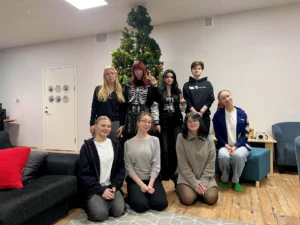
| Aim | Activity | Specific content of the activity |
|---|---|---|
| 1. The expectations of teenagers with visual, hearing, and mobility impairments in Tartu and their parents regarding youth work, and the barriers to their participation, have been mapped. | Conducting a study in schools for students with special educational needs and associations gathering parents |
The Tartu City Government is conducting a procurement for a study. As a result of the study, we will receive up-to-date information regarding expectations and obstacles, and learn the proportion of young people with visual, hearing, and mobility impairments participating in youth work.
2019 study results 2021 study results |
| 2. Tartu youth centers are accessible and user-friendly for teenagers with visual, hearing, and mobility impairments. | Making municipal youth centers accessible and autonomously usable for target group youth. |
The activity includes spatial adaptations (e.g., light signals, movement markers) and the acquisition of suitable equipment. Young people from the target group are involved in the selection of equipment. |
| 3. Obstacles in youth centers and nature education have been removed. |
3.1 Changing attitudes through campaigns. 3.2 Developing TNK as a competence center. |
3.1 Introducing youth center opportunities in special needs schools and organizations, training for youth workers.
3.2 Testing assistive devices, creating training programs, involving support youth workers. |
| 4. The program of nature education events has been created and implemented. | Implementation of the nature education initiatives plan |
The final plan will be developed based on the target group and research results. Planned activities: canoe trip on the Emajõgi River, nature camps, geocaching, mindfulness-based activities. The goal is to change attitudes and create an inclusive environment. |
The project ran from 19.09.2019 to 30.11.2021.
Activities were funded within the framework of the European Social Fund co-funded program "Involving young people at risk of exclusion and improving youth employability," approved by the Minister of Education and Research and implemented by the Education and Youth Board.
The aim of the project is to increase societal tolerance between different communities through raising awareness of the sign language community.
The sub-objectives are:
– introduce Estonian sign language and the culture, activities, and potential collaboration opportunities of sign language users to young people in TNTK youth centers and schools, as well as to those working with youth.
– initiate the process so that Estonian sign language and the inclusion of deaf and hard-of-hearing youth in activities become as natural in the future as the inclusion of all other young people.
– integration of people from different linguistic backgrounds.
– based on the principles of open youth work, we offer activities that enable young people to acquire new skills and knowledge; activities for young people of all ages; we encourage young people to participate in planning and decision-making processes; we support young people in understanding topics that affect society; we foster tolerance in young people; we improve their social skills; we encourage young people to speak up.
The objectives of the youth meeting are:
to introduce global education to young people (educating young people on topics of society, environment, mental health, and self-development);
to introduce opportunities for self-expression (art, music, improvisation, theater);
to develop key competencies in young people (choosing appropriate communication methods/language, gaining an overview of the activities of young people in Narva and Tartu, expanding knowledge about democracy, civil society, and human rights, and the ability to act to implement their ideas).
The project is essential for young people to learn through playful activities to pay attention to their surroundings, identify areas where they can contribute, consider their ecological footprint, think about recycling, and gain confidence in performing and drawing attention to themselves. Additionally, young people from partner projects will have the opportunity to practice communication in another language. The overarching theme of the project is global education.
Each day of the project has its own theme. On the first day of the project, we will focus on society. We will talk about civic engagement and the opportunities it offers young people. We will answer questions about how to turn an idea into reality, how to contribute to society, and how to seize the opportunities that are offered. We will also introduce each other to the opportunities offered by the cities of Tartu and Narva.
On the second day, we will focus on the environment. We will learn how to reduce our ecological footprint on Earth and in what ways we can contribute to recycling. Young people will conduct workshops for each other on the topic of recycling (the workshops are planned and carried out independently by the young people). The Pärnu Sütevaka Humanitarian Gymnasium will also present its Erasmus+ project, which focused on environmental protection and waste. During the project, we also plan to visit the Pärnu Wastewater Treatment Plant.
On the third day, we focus on personal development and self-image. To do this, we learn improvisation and various techniques for preparing for public speaking from the young actors of Endla Youth Studio.
On the last day of the meeting, we will analyze with the youth what we learned, what we would do differently next time, and look for new cooperation opportunities. We also acknowledge and thank the young people who participated in the youth meeting.
Upon completion of the project, young people will have broader knowledge of an environmentally friendly lifestyle, practical skills on how to act in this way, and a mindset of 'where I see fault, I will come and help, or at least think'.
brought 3 foreign volunteers to Tartu, who started working in the youth centers managed by Tartu Youth Work Center: Lille, Anne, and Ilmatsalu youth centers.
During their 11-month service, from June 1, 2019, to July 31, 2020, the volunteers introduced their worldview, culture, and other values and activities to young people and communities. Their daily work involved working at the youth center, in addition to assisting with the organization of youth events in the city and various community activities.
The volunteers were from Armenia, Georgia, and Slovenia.
The European Solidarity Corps project “Volunteering as a pathway to solidarity” aims to promote youth solidarity in society.
The sub-objectives were:
– promoting solidarity and tolerance among young people;
– improving the quality of youth work in Tartu through new opportunities;
– to raise the cultural awareness of young people and the local community in general;
– to bring new knowledge and experiences to both sides (volunteers and TNTK);
– supporting the development of young people, especially in the case of accepted young volunteers;
– add value to the daily activities of youth centers.
The project was supported by the Erasmus+ and European Solidarity Corps Agency from the European Solidarity Corps program.
The project “Reveal YouropEaN Cultural Heritage” is a city network project initiated by the city of Veszprém, focused on cultural heritage themes.
During the project period, nine project meetings took place in various cities, attended by delegations from partner countries, as well as local young people and professionals interested in the topic.
In addition to international project meetings, local activities were held, resulting in the completion of a video introducing the city of Tartu and map for exploring Tartu from a young person's perspective. You can also read a summary of the projectHERE.


Veszprém, with 60,000 inhabitants, known as the "City of Queens," is one of Hungary's oldest cities. Located near Lake Balaton and the Bakony Mountains, it is the administrative center of Veszprém County and a regional economic and cultural hub. Culture plays a very important role in city life. The city is notable for its rich cultural heritage and hosts various significant cultural events and art festivals. Veszprém has several prestigious educational institutions and the most important higher education institution in Central Transdanubia, the University of Pannonia, along with its campus. The city is the European Capital of Culture in 2023. The lead partner of the project is the Veszprém City Council. The project team consists of high school students and university students and is supported by local historians, tourism experts, and the Lélektér Foundation, whose goal is to help young people promote communities and a healthy lifestyle.
https://www.facebook.com/lelekteralapitvany/


The Adult Education Centre in Lendava is a local public organization established by the Lendava City Council to promote and develop adult education. It offers a diverse range of learning programs, with increasing attention paid to lifelong learning projects, especially for vulnerable social groups such as the Roma community. In recent years, workshops have also been organized to raise awareness of active civic participation. Since 2005, various national and international projects (mostly with Hungary) have been implemented, some in cooperation with the Lendava Student Club and the Lendava Bilingual High School.
http://lendava-lendva.si/lang/en


Foster Europe, aimed at strong European regions, is an independent, non-political, private, and charitable Austrian foundation that promotes European integration, democracy, regional capacity, and federalism. Although operating within a pan-European framework, Foster Europe's primary focus is on Central and Eastern Europe. Since 2009, Foster Europe has been promoting a European debate on federalism and decentralization. In active cooperation with European partners from the fields of science, research, and the practical implementation of policy, Foster Europe focuses on how to organize the work of states and their institutions, and on the search for higher forms of democracy. Since 2011, Foster Europe has also focused on the culture of participatory politics in Europe. Foster Europe is dedicated to fostering international connections between civil society organizations, active urban residents, young people, academics, intellectuals, practitioners, and various social and sectoral institutions. Civic activism, NGO networking, and the relevant policy areas (culture, origin, environment, brain drain, migration) have so far been part of Foster Europe's work.


The harmonious city of Saint-Omer is characterized by a remarkable historical urban cultural heritage. The Marais Audomarois nature reserve, part of UNESCO biosphere reserves, is a paradise of flora and fauna and France's last cultivated marshland. Water shapes all surrounding natural forms and daily life. The municipal governments of the Morinie region carry on the rich history of Thérouanne – an ancient lost city, an example of a so-called dead city. Traces of this ancient medieval Pompeii are visible both in the landforms and in the soil.
The agency leads studies and projects related to regional planning and sustainable development. The organization holds the 'Art and Historical Sites' label, awarded by the Ministry of Culture and Communication, which distinguishes territories characterized by a genuine passion for the protection and development of architecture, landforms, and cultural heritage.
https://www.ville-saint-omer.fr/


With 100,000 inhabitants, Tartu is the second largest city in Estonia. It is the regional center of Southern Estonia and can also be considered the country's cultural and educational capital. Here are located the country's most important universities: the University of Tartu and the Estonian University of Life Sciences. Every year, more than 20,000 students study in Tartu, including international students from about 80 countries. Culture plays an important role in Tartu's city life: high-level cultural events with an international reach take place in the city, and the preservation of cultural heritage is highly valued here, especially now, as Tartu is a candidate for the European Capital of Culture 2024. Culture is also a connecting link between Tartu and its twin city Veszprém. Tartu has many international connections and has been part of the UNESCO Creative Cities Network (City of Literature) since 2015. There are about a hundred youth organizations in the city.
European Solidarity Corps project “Grasping Grafiti”
The project “Grasping Graffiti” was created with the aim of beautifying Tartu's cityscape using a specific art style. The project lasted 11 months, and the project team consisted of 6 young people – Kaisa Saluste, Sirli Solom, Grete Sass, Karl Mattias Laiuste, Liisa Veddel, Hanna Liis Sootla.
Project period: 01.02.2020 – 31.12.2020
Although the project activities were delayed due to the emergency situation caused by the coronavirus pandemic, the project team worked to achieve its set goals. The graffiti team's wish was to develop themselves during the project and gain a broader and more specific overview of the nature of graffiti – its styles, tools, and techniques. One of the set goals was also to bring what was learned to the city of Tartu, which is the European Capital of Culture in 2024. This involved introducing thoughtful and message-driven art into the cityscape, addressing socially relevant and important topics. To identify these themes, people were encouraged to notice graffiti in the city's street art, and young people in Tartu were given the opportunity to participate in project workshops, trainings, and internships. During the project, worn, outdated, and inappropriate graffiti was removed from the city of Tartu, and some of it was replaced with new works by the project team.
The young people in the project team gained in-depth knowledge of graffiti, design, Photoshop, and marketing. All interested young people outside the team were also involved in the workshops. Learning portfolios were created, which will be used in future workshops conducted by the institution.
The project was supported by the Erasmus+ and European Solidarity Corps Agency from the European Solidarity Corps program.
The smart project “Noortekraan” , funded by the open youth centers' project competition, is not a standalone activity or method; rather, it provides young people and youth workers with new tools to create innovative solutions for both current problems and new challenges in the daily activities of youth centers.
The aim of this cooperation project is to improve the quality of open youth work in the city of Tartu through the implementation of new information screens in 5 Tartu youth centers.
The sub-goals of the project are:
– to improve the availability of youth information for young people in Tartu through the installation of digital screens
– to increase the digital skills of young people and youth workers
– to make the activities of youth centers more visible and attractive to young people
– to develop cooperation and information exchange between youth centers in Tartu
In the project “Youth Screen”, Tartu Youth Work Centre (Anne, Lille and Ilmatsalu youth centres), Tähe Youth Club NGO (Aparaadi youth centre), NGO SPARK Makerlab (SPARK Makerlab youth centre), and Digital Signage OÜ collaborate.
The idea of the project is to organize three health seminar days at the Anne Youth Center, focusing on maintaining the mental and physical health of young people.
The seminars are intended for up to 75 young people from Tartu city, targeting the 12-18 age group.
During the Health Seminar days, we will gain knowledge on how to prevent school and study-related stress. We will learn how to ensure a balance between school and leisure time in today's fast-paced world, how to make healthy choices, and how to prevent drug abuse. We will introduce exciting and new ways to maintain physical health, such as fun yoga and dance movement, which are not always accessible or budget-friendly for all young people. On the third day of the health seminar, we will explore the exciting and diverse world of food. We will prepare healthy dishes with experts in the field, delve into the world of food, and learn to make healthy food choices.
Over the course of three seminar days, we will learn to maintain our mental well-being and health, focus on active movement, and introduce various therapeutic movement methods. The three health seminars are open to all, and we invite all young people from Tartu to participate.
We are implementing the project together with the Anne Youth Centre's active group.
Anne Youth Centre organizes four employment-themed trainings, during which young people gain more knowledge about employment topics. The topics include image building, ethics, career planning, and occupational health.
The aim of the project:
The aim of the project is to raise awareness among young people aged 13-19 about work culture, labor market opportunities, legislation, and their own responsibilities through non-formal education. The project provides young people with knowledge and practical skills, which improves their chances of entering the labor market and raises employers' awareness of young people as a knowledgeable and valuable target group.
The project focuses on young people's lack of knowledge regarding how to succeed in the career landscape and how previous life experience affects employment opportunities. Many young people believe they should receive maximum compensation for minimum effort. During the project, young people will gain knowledge on how to communicate effectively with employers and clients. We also inspire and encourage them to engage in entrepreneurship.
1) Self-marketing and image building
2) Work culture and ethics, how to be successful in the career landscape, employer vs my expectations
3) Future jobs and me as a shaper of the labor market
4) Maintaining motivation and health, interesting and
finding work with development opportunities, the living library method
Kaide-Liis Suurväli
Phone: +372 58 864 802
Email address: Kaide-Liis.Suurvali@raad.tartu.ee
Funded by the ENL Youth Participation Fund, a youth core group will be established at the Anne Youth Centre.
The main function of the active group is to contribute to the creation of the youth center's activity and development plan. The youth group represents the voice of young people. The group consists of 5-7 young people who write their own projects, organize various events, and help youth workers understand the real needs and desires of today's youth.
The Youth Active Group provides input for the activities of Anne Youth Center and contributes to youth activity and entrepreneurship.
Tartu Youth work camp core group…
… is a group of active youth work camp participants and group leaders who contribute to the preparation of the youth work camp.
These activities include: organizing opening and closing events, representing the Tartu youth work camp at various events, advising and supporting the organizing team, joint activities, camp marketing, cooperation with core groups of other student work camps operating in Estonia, and much more.
The Mentor Program was designed for mini and student companies. It was organized by the Youth Entrepreneurship Lab in cooperation with Anne Youth Center and Tartu Jaan Poska Gymnasium. During the academic year, 6 mentor club evenings were held.
The topics of the Mentor Club were: idea and product development, marketing, practical laboratory, teamwork and management, sales strategies, public speaking.
Marek Mekk moderated the mentor evenings.
The mentoring program was organized by Tartu Business Advisory Services and funded by Tartu City Government and Tartu Youth Work Center.
From July to the end of December 2018, the project “Fine Arts in the Digital World” took place at the Tartu Youth Work Center, led by Lille Youth Center. It was funded by the Estonian Youth Work Center's Varaait vol 14 project, with MTÜ Just Tants, MTÜ Spark Makerlab, and OÜ Nordic Digital as partners. The project's grant amount was 7989.88 euros, self-financing was 2000.24 euros, and the total cost was 9990.12 euros.
The main goal was to develop young people's digital competence, offer more diverse opportunities, and involve new young people in activities. Young people also had the opportunity to contribute to their own creative development through non-formal education. As a result, young people have gained and will continue to gain knowledge and experience in how to take quality photos and videos, and how to edit and process them.
As a final result of the project, three high-quality Nikon cameras, mini-studio equipment, and the opportunity to use Adobe programs at least until the end of August 2019 will be available for young people and youth workers.
The project was initiated by Liis Somelar and carried out by Reelika Lodjak. Young people were also involved in the process.
Of the Joint Project 'Young People Make History'
In the autumn of 2019, the 100th anniversary of the National University was celebrated. In connection with this, a memory collection campaign was launched under the leadership of the University of Tartu Museum. In addition to University of Tartu alumni and (former) employees, young people who had not yet experienced university life themselves were also able to contribute.
In cooperation with the Tartu Youth Work Center, the University of Tartu Museum issued a call to young people aged 15-25 to search for, research, and record stories and anecdotes from their close acquaintances about their university years, because it is the perspective of young people that gives memories a fresh color and helps to find and preserve the recollections of younger generation alumni (who may not get around to writing down their stories themselves).
Various types of contributions were welcome – including written accounts or recordings of oral memories, as well as photos and items somehow related to the university.
Stories related to both studies and free time were expected to be captured, as well as fragments of memories from former students, professors, and non-academic staff.
For example, you could ask your parents or relatives and friends who have already completed their university studies:
How and where did they study?
What was used for learning?
How did they prepare for exams and answer during exams?
what were the living conditions, etc.
Both longer stories and individual colorful anecdotes were welcome, such as those about a legendary lecturer or a particularly challenging exam experience.
There was no specific format or volume requirement for the competition entry; it was only important that the work reflected:
name of the person associated with the university, period of study and specialization at the university, and the workplace or position they currently represent;
for recording oral memories, a clear description of the event or place being recalled (names, locations, as precise a time as possible, etc.) is possible;
Regarding the photo: who are the people depicted in the photo? (as precise information as possible – name, profession, background, connection to the photo owner, etc.) what else is visible in the photo? (any building or place) When and where was the photo taken? Who is the author of the photo? What is the connection of the photo or the people/objects/places in it to the university?
Regarding the item: what kind of item is it? (name, purpose, material) From what time or era does the item originate? Its story – connection to the owner, the university, its future fate
All submitted works were reviewed by a jury consisting of people from the University of Tartu and the museum, as well as young people from the Tartu Youth Work Center. Suitable works found their place in the museum's collections, and the most colorful ones are exhibited. All participants were invited to attend the competition's final event on October 26 in the White Hall of the University of Tartu Museum in the historic Dome Church, where selected works were presented and the best were awarded.
The project was supported by the Estonian Librarians Association and the Ministry of Culture.
The project “Promoting an Environmental Education Direction” helps young people to feel, value, and protect nature, and develops skills to apply their knowledge in everyday life.
Nature Education and Awareness aims to make the values of young people, and thereby adults, more environmentally conscious, so that society understands, supports, and follows the principles of nature conservation. Nature education is provided through positive emotional learning. The main goal of conveying nature information is to provide young people with general knowledge, interesting facts and connections, as well as guidelines for appropriate behavior in nature.
It is also important to introduce the principle of nature's integrity and the benefits offered by nature, so that young people understand the unity of global processes and the role of Estonian nature and people within them.
The study program includes:
indoor activities – lectures (birdwatching, weather, hiking equipment, nature conservation, etc.), nature film screenings, discussions, map reading, knot tying;
activities in nature – birdwatching, movement in various terrains (forests, bogs, bodies of water) both as hiking and orienteering, identifying animals and birds (incl. animal tracks, skins, droppings), survival in nature (incl. making tools from basic items, first aid with available means, etc.).
Learning activities (lectures) take place at any time, but practical activities mainly occur during school holidays. Organizations and companies offering nature education are involved.
The aim is to raise young people's awareness of their local environment and Estonian nature.
The sub-goals are to make young people aware of the various opportunities for spending time in nature (active movement, conscious use of natural resources), teach them how to read topographic and orienteering maps and navigate using them, teach them how to behave in nature, teach them to notice and recognize animals, birds, and plants, and observe the weather. Raise awareness among young people about environmentally friendly lifestyles and nature conservation, and provide an overview of survival skills in nature. Based on the principles of open youth work, we offer activities that enable young people to acquire skills and knowledge; activities for young people of all ages; We encourage young people to participate in planning and decision-making processes. We support young people in understanding issues that affect society and encourage them to have a say.
The outcome is to be able to relate to, appreciate and protect nature, and to move and act purposefully in nature. From the topics covered, a nature corner will be created with the young people in the youth centre, featuring pictures, crafted items, thoughts, and more related to the themes. The nature corner promotes the creation of a natural environment and deepens young people's awareness in this field.