
In English:
Last time I tried to present you some random similarities between Hungary and Estonia I’ve experienced since I was here. This time I would like to show you some random differences that were unexpected or incomprehensible to me at first – and have been ever since…
- My collegaues started to talk about reflectors on a meeting in October. I was a little confused and listened to the coversation with eyes wide open. They were discussing which tree to place the reflectors on so that it would be recognizable and people could pick one if they don’t have any. After the meeting I stood in the office window with Kristina looking for the perfect tree for that purpose. My confusion increased because I still didn’t understand why they want to put big reflectors on the trees and light the building during winter. Then I became enlightened – or let’s say they enlightened me. The reflector is the small reflective prism worn on people’s coats ad bags to be more recognizable by the drivers in the dark. Actually my friends asked me the same thing I had done: why do Estonians not use more street lighting? I still don’t know the right answer to that. But I must admit that although in Hungary almost every single pylon has a lighting in every settlement, it might not be a bad idea to use reflectors to avoid accidents.
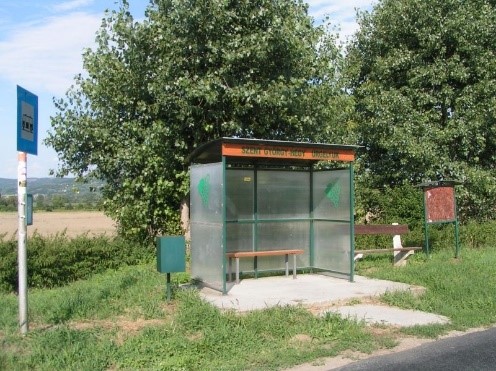
- Bus station means a little house (or pavilion) in all Hungarian town and villages where you can retreat in the harsh weather. Besides that there is a big blue board which indicates the potential passengers. Then before you arrive at your destination you better press the stop button otherwise the driver won’t stop. Not to mention those who put their bags in the seat next to them or sit in the external seats are considered to be indecent because this way new boarders can not sit down. Or even so if they don’t give their seats to the elderly. How does the long distance transport work in Estonia? I am still not sure about that. 😀 Sometimes I feel bus stations are just random places in the middle of nowhere. And passengers prefer to stand instead of sitting down next to a stranger. Well, I could somehow get used to that in Hungary too.
- In Hungary most workplaces start at 8 a.m.– except factories where morning shift starts at 6 a.m. So you can see it is necessary to get up early enough especially for those who work far away from their home. Let’s take me as an example. I had to get up at 5:40 every morning to get to the museum by 8:30. I don’t know how the situation is with you but I am unable to eat anything before 8. Because of this – if I didn’t want to prepare anything for breakfast – it was really helpful to go to a shop to buy something while I was walking to the bus station. Also when I used to live in Budapest I could do the shopping before work. In Estonia I don’t have any chance to do the same because most of the groceries – to my great surprise – open at 9 a.m.
- I love to cook and bake what people close to me enjoy the most – however it is a matter of point of view, according to my flatmate my only goal is to make her fat. 😀 And if someone asks for a recipe, I am happy to share it with others. One of my colleauges asked me for the recipe of the iconic lángos* I tried my very best to give her the perfect measurements – in dekagrams. Since most of Hungarian recipes are written in this form. A couple of days later the surprise came: Laura told me that she and her mother was starring at the recipe for minutes because they didn’t know what this quantity meant. It is not known in Estonia.
- As a Hungarian I couldn’t be happier with the wide range of milk products. If I would like to compare myself to the iconic story book character – Artúr Gombóc** – I could say that I love everything what’s made of milk: the cottage cheese roll, the sweat cream cheese, the milk rice, the greek yoghurt, the sour cream, the sweat and salty cottage cheese and of course, the milk. Yes, but who wants to go constantly to the store to buy milk since it has a very short expiration date. On my first days here I have searched for long-life milk in several stores, unsuccessfully. But what is long-life milk? It is milk processed at utra-high temperature*** I am not sure this is the healthiest thing but it lasts for 5-6 months so you only need to go for it to the pantry or the basement. Oh and unopened it can be stored at room temperature.
*Lángos is a deep-fried flatbread which is eaten fresh and warm, topped with sour cream and grated cheese or doused with garlic water.
** He loved all kinds and shapes of chocolate. His character was created by István Csukás who is a famous Hungarian author died 4 years ago.
***UHT = Ultra-high-temperature processed milk.
In Estonian:
In the previous article, I presented some random similarities between Hungary and Estonia that I have experienced while being here. This time, however, I would like to introduce you to the differences that were initially unexpected or incomprehensible to me – and still are, in fact...

Reflectors are an unfamiliar thing.
My colleagues started talking about reflectors at the beginning of October. I was a bit confused and listened to their conversation wide-eyed. They discussed which tree to place the reflectors on so they would be visible and people could take them if they didn't have their own. After the meeting, Kristina and I looked out the office window and chose a suitable tree. My confusion grew – I still didn't understand why they wanted to put large reflectors on trees in winter to illuminate the building. But then I was enlightened myself. Or rather, they enlightened me. A reflector is actually that small reflective prism that people wear on their coats or bags so that drivers can see them better in the dark. My friends asked me the same thing I had even thought before: why don't Estonians use more street lighting? In fact, I still don't know the right answer. Although I must admit that even though every settlement in Hungary has lighting, the use of reflectors seems like a good option to prevent traffic accidents.
 People behave differently when traveling by bus
Everywhere in Hungarian towns and villages, a bus station means a small building (or pavilion) where one can take shelter in harsh weather conditions. Additionally, there is a large blue board displaying information for potential passengers. Before reaching your destination, it's better to press the 'stop' button, otherwise the driver might not simply stop. Not to mention those who place their bag next to them or sit on the outer seats. This is considered impolite, as it prevents new passengers from sitting down. Or when they don't give up their seat to the elderly. How do long bus journeys work in Estonia? I'm not sure yet. 😀 Sometimes it seems as if the bus stops here are random places in the middle of nowhere, and passengers prefer to stand rather than sit next to a stranger. Well, even in Hungary, I suppose I could get used to that somehow.
Hungarians – morning people? 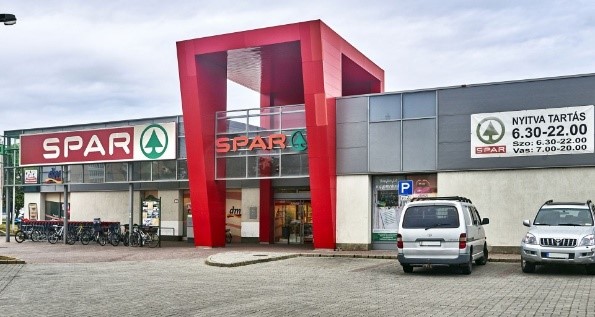
In Hungary, work usually starts at eight in the morning, except in factories where the morning shift begins at six. Therefore, it is necessary to wake up quite early, especially for those who work further from home. For example, when working at a museum, I had to wake up at 5:40 AM every morning to be at the museum by 8:30 AM. I don't know about you, but I can't eat before eight. Therefore, it was very helpful that I could go to the shop before taking the bus. When living in Budapest, I could go to shops even before my workday began. In Estonia, however, there is no such opportunity, because to my surprise, most of them open at nine.
Confusion with units of measurement
 I really enjoy cooking and baking, and my loved ones enjoy it too. Except for my flatmate, who says my only goal is to make him fat. 😀 If someone asks me for a recipe, I share it with great pleasure. One of my colleagues once asked me for the recipe for the iconic lángos*. I tried my best to give her the perfect measurements in decagrams, as most Hungarian recipes are written that way. A few days later, there was a surprise: Laura told me that she and her mother stared at the recipe for several minutes trying to understand what the quantities could mean. In Estonia, this way of writing recipes is not known.
You can't get super milk from Estonia 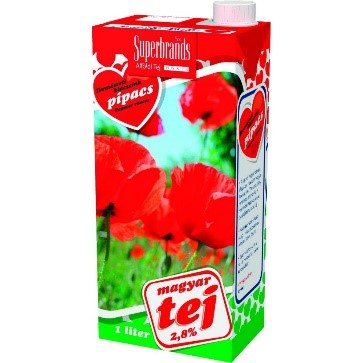
As a Hungarian, I am incredibly pleased by the wide selection of dairy products here. If I were to compare myself to the iconic storybook character Artur Gomboc**, I would say I like everything made of milk: cottage cheese rolls, cream cheese, rice pudding, Greek yogurt, sour cream, savory cottage cheese, and of course, milk. But who would want to constantly buy it from the store if the shelf life is so short? During my first days here, I searched for long-lasting milk for days, without success. What is long-lasting milk? It is milk processed at ultra-high temperatures. I'm not sure if it's particularly healthy, but it lasts 5-6 months, so you can store it in a pantry or cellar. And unopened, it can be kept at room temperature.
*Langos is a fried flatbread which is usually eaten fresh and warm, with sour cream and grated cheese or with garlic water.
**He loved all kinds and shapes of chocolate. His character was created by Istvan Csukas, who was a famous Hungarian writer. Csukas died four years ago.
Beáta Pravetz
Volunteer at the European Solidarity Corps at Tartu Youth Work Center