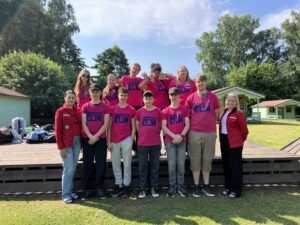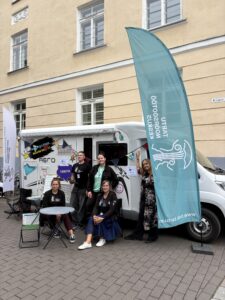

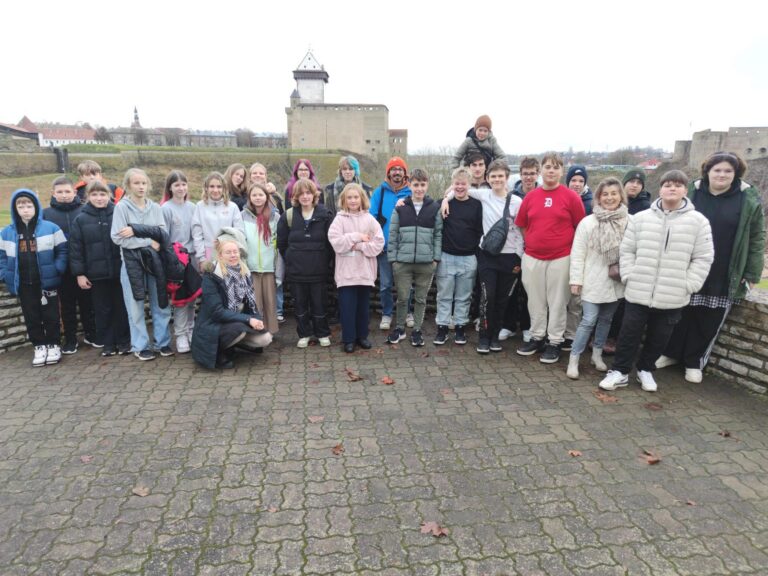
Organizing a youth event is more than just setting a date and planning activities. Participating in organizing offers young people the opportunity to develop, communicate, discover their strengths, and feel that their opinion is valued. I believe that the success of an event cannot be measured solely by the number of participants or a diverse program, but by whether young people felt included and heard. Below, I have outlined five of my own thoughts that, as a youth worker, have helped me organize memorable and successful events with young people over the years.
1. Involve young people from the start
Youth involvement does not just mean asking for opinions, but ensuring that their ideas and thoughts are taken seriously and genuinely considered. Young people often have many creative, bold, and fresh ideas, but they may not yet have a complete picture of the temporal, financial, or organizational aspects. Therefore, it is important for a youth worker to be a guiding force – someone who helps structure ideas, place them into a realistic framework, and guide them towards solutions. I have experienced that good engagement is characterized by open communication and an encouraging and enthusiastic adult. A good tip is to also provide some snacks for meetings, as this creates a warmer atmosphere and increases the likelihood of more young people attending in the future.
2. Give young people the opportunity to take responsibility and act
As a youth worker, I know that often one wants to do things quickly and smoothly oneself, but in reality, the key to success lies in trusting young people and giving them experience. Young people who have already come forward to organize things usually don't want to be mere spectators. If they are entrusted with tasks – such as choosing music, taking photos, leading games, or managing the stage program – their motivation and sense of participation significantly increase. Even contributing with small tasks can give young people a great sense of achievement. The youth worker's role here is to individually observe young people's abilities and interests, and based on that, give them responsibility and position themselves as a mentor.
3. Advertise where young people actually are.
A regular poster on the door is no longer sufficient today. Young people are primarily engaged by visual, short, and clear information shared on channels familiar to them – Instagram, TikTok, Discord, Snapchat, or in their group chats. The most effective way to disseminate information is often when young people themselves share and talk about it. Information shared from youth to youth works reliably. It would also be beneficial to collectively map out where young people spend their time and which channels they watch/listen to, in order to then consciously direct event information there.
4. An event that resonates with young people
An event is successful when it truly offers something meaningful to young people. It doesn't have to be just fun (although that is also very important), but should support creativity, self-development, social skills, or simply provide a safe environment for interaction. The theme can be related to music, sports, mental health, arts, project creation, or simply spending time together. I encourage thinking outside the box, as young people are generally very trend-aware and innovative. I believe that a good event emerges at the intersection of young people's interests and needs.
5. Ask for feedback and celebrate achievements
During event preparation, it is important to consistently discuss what has been done and what remains to be done, and to adjust activities accordingly. Regular feedback is crucial and provides an opportunity to improve activities. After the event, it is always worthwhile to ask for young people's opinions and feedback. What did they like? What could be done better next time? Through these questions, valuable input can be gathered for future events, and young people feel that their opinion truly matters. It is also important to celebrate the work done together – whether through words of thanks, acknowledgements, or an enjoyable joint gathering. Such activities signal to young people that their contributions are important and strengthen the sense of cooperation.
A well-organized youth event does not happen by chance, but through conscious planning, involvement, and meaningful activities. The most important thing is to create an event where young people feel they are part of something created for them and with them. Wishing you successful organizing!