
Hike on the Piusa Primeval Valley hiking trail 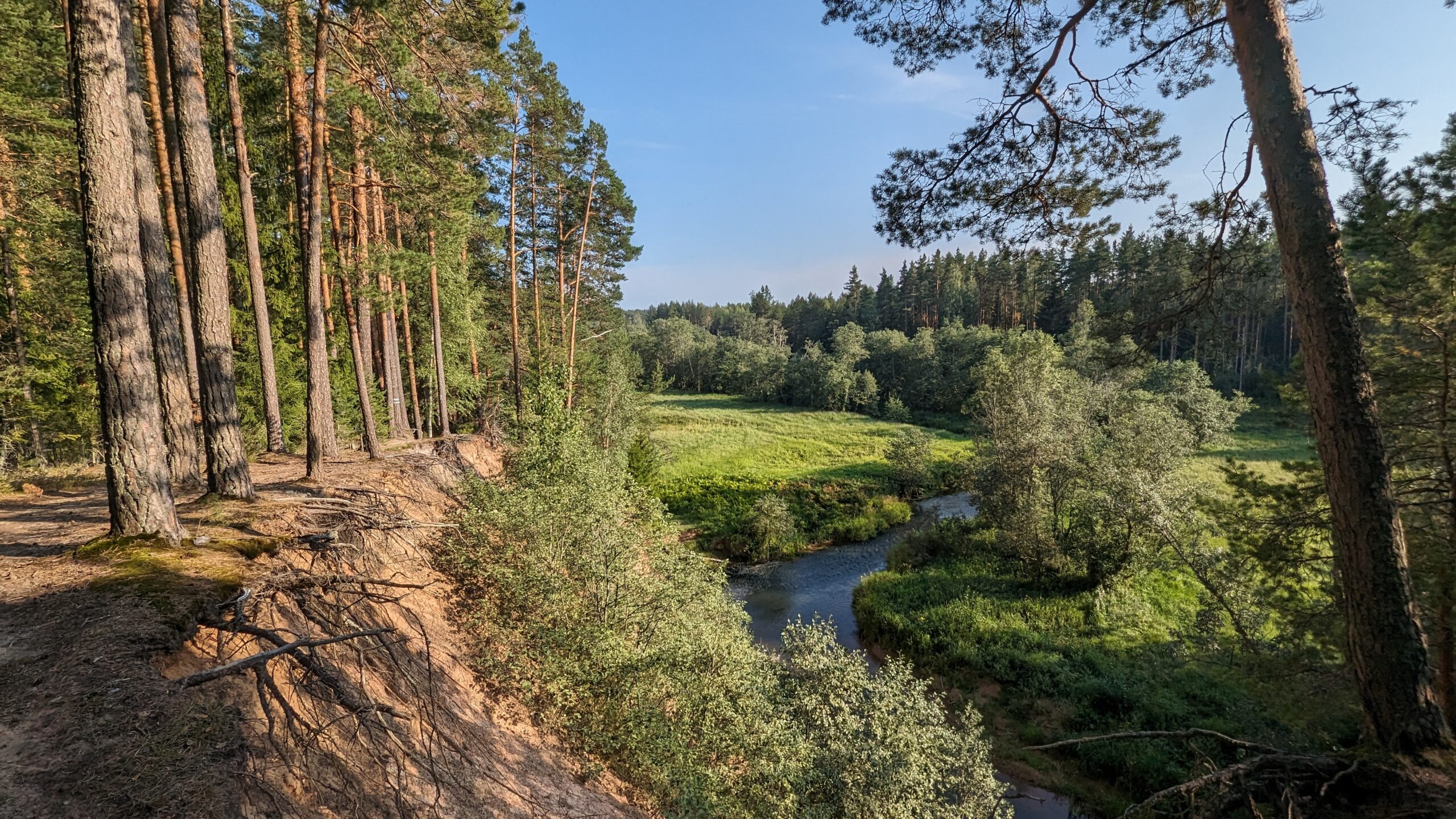
August 18-19
~15 km
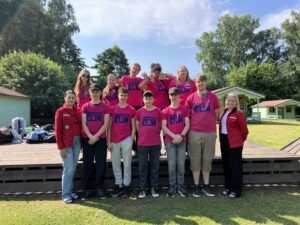
Youth workers and hike organizers Elisabeth and Liisi, along with young participant Aliise-Gea Vares, share their memories of the hike:
We started our journey from Tartu bus station. We waited for the Tartu-Võru bus, which was a little late. Since there were 16 of us, it took time to load our belongings and get on the bus, so our departure from Tartu also took longer. Furthermore, it turned out that we would not make our next or the one after that regional bus connection. When we arrived in Võru, we had to wait half an hour for our next bus, which fortunately had enough space, and all of us (including regular passengers) fit comfortably.
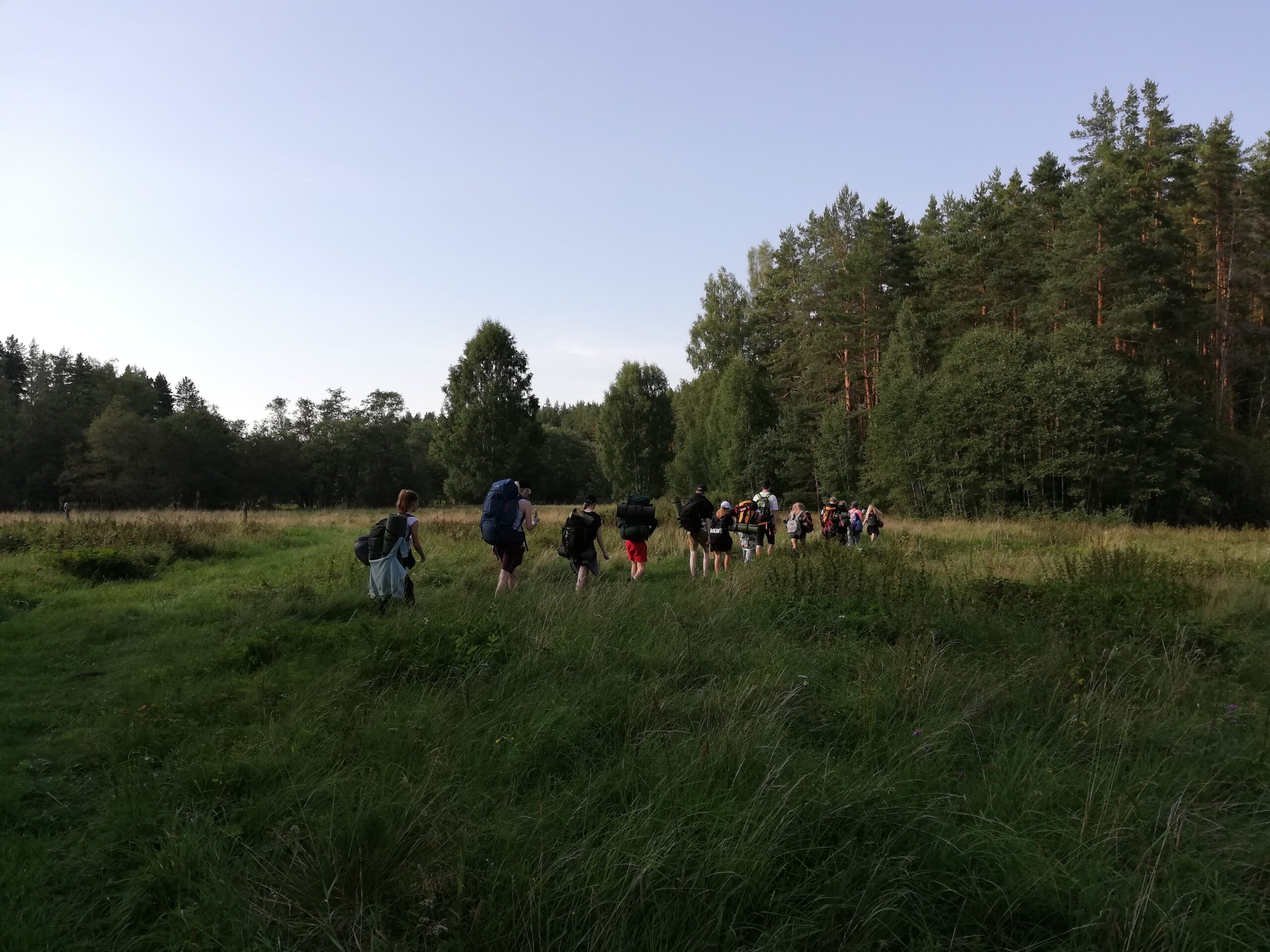
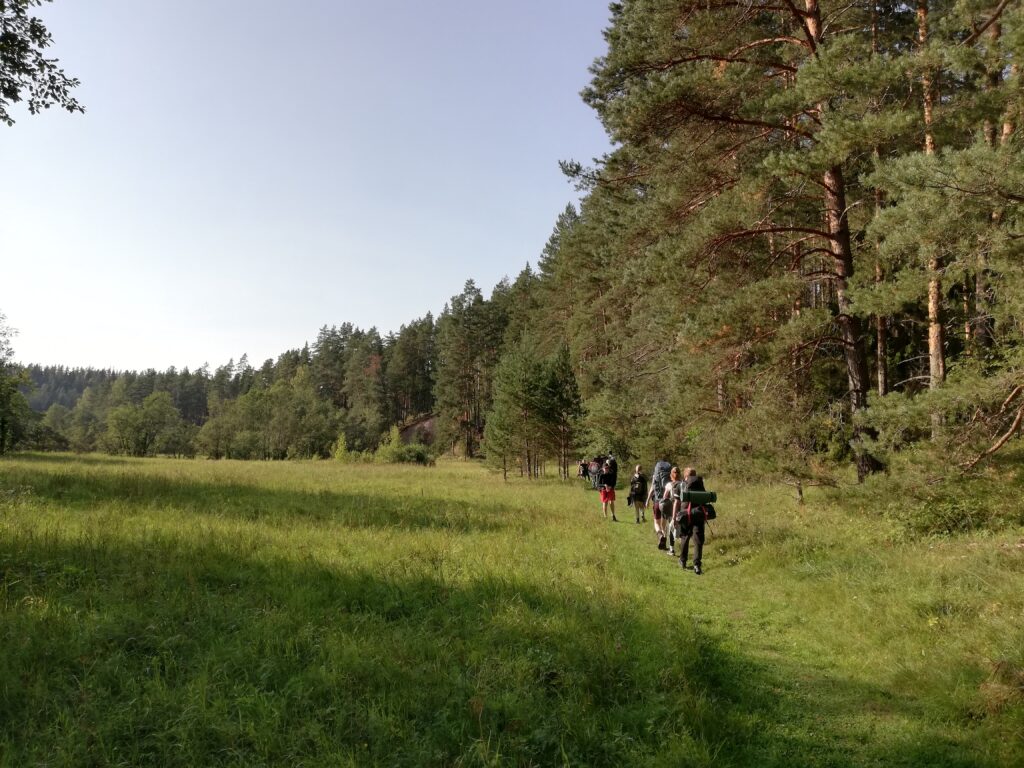
We had reached the fortress. We all had 15 minutes to look around. Once everyone had explored the fortress, we did a small introductory round, discussed our route, distributed food supplies and tents, and set off. Our journey began from the Vastseliina fortress manor park and led through local fields (which had a lot of ticks). Occasionally, we walked along gravel roads, sometimes a highway, and even pastures full of nettles. We also crossed the Piusa River a couple of times over beautiful bridges.
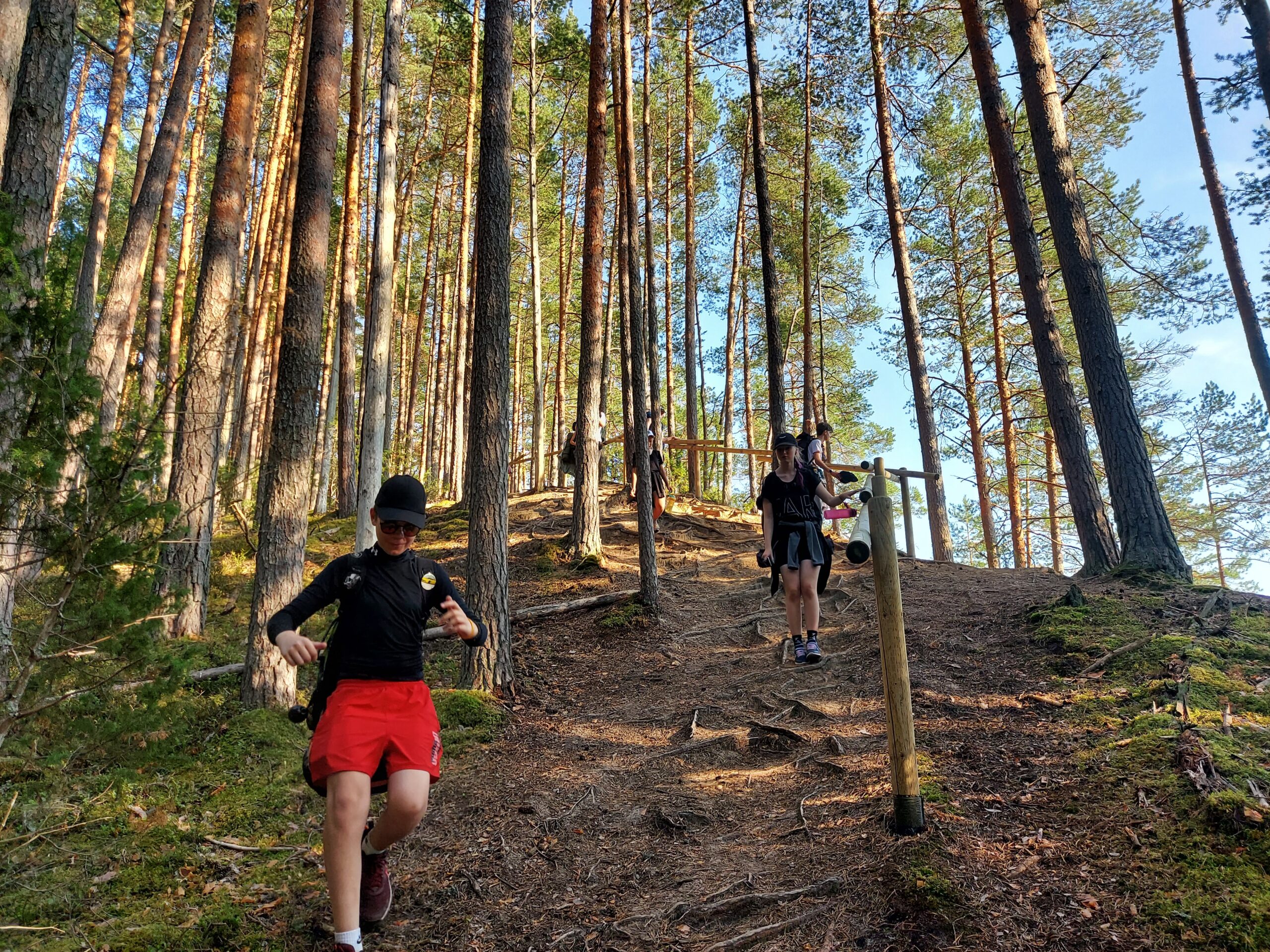
 We were approaching the first day's destination when we started encountering highlands and steep descents. The most common phrase heard was “Liisi, I'm going to kill you!!!”* But on the other hand, the views were a-m-a-z-i-n-g.
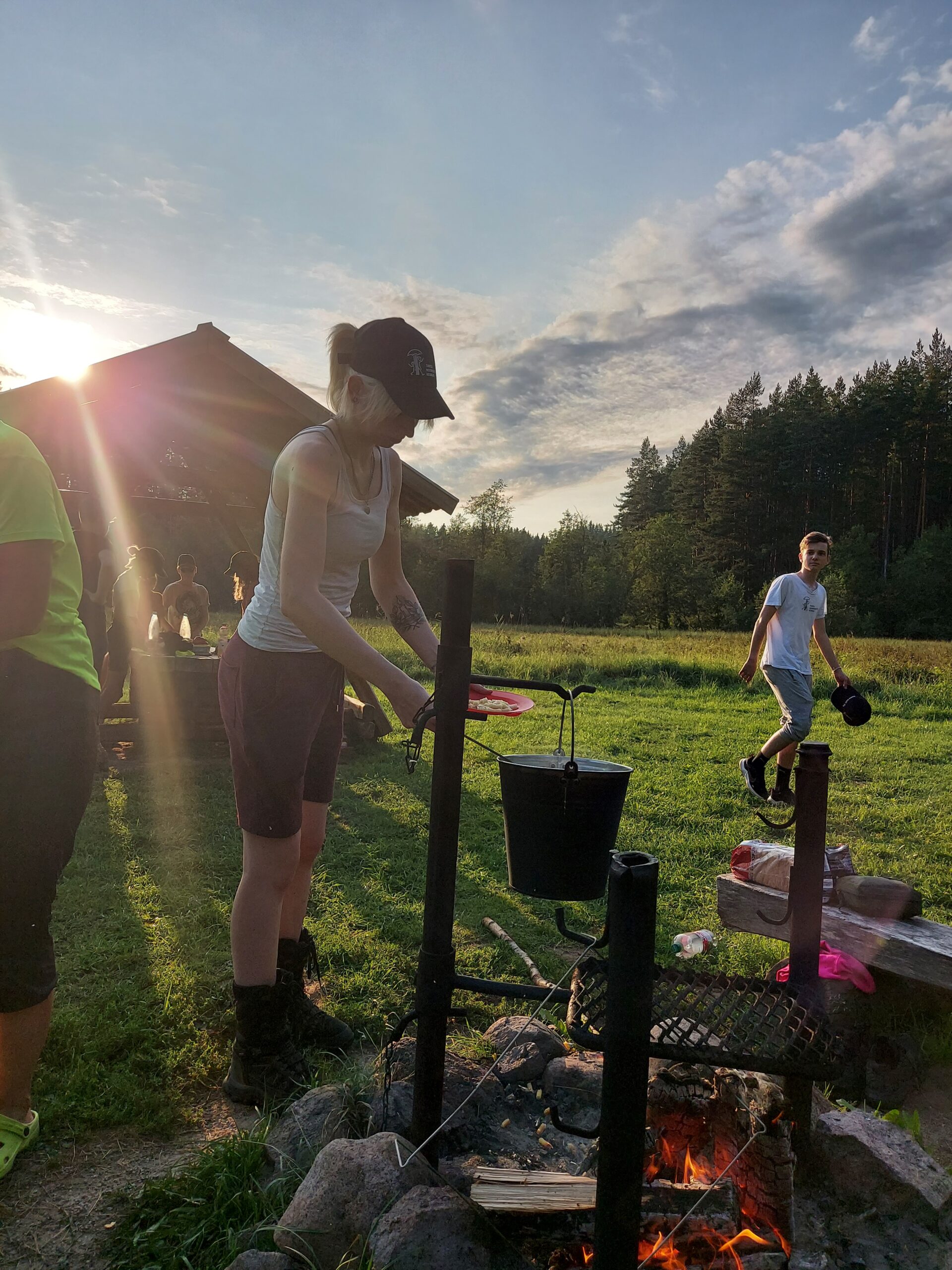
We arrived at Härma campfire site, right next to Härma wall. The start of camping was very cool. We distributed the tents, set them up, and went swimming in the Piusa River. The river was incredibly cold, but it was a very memorable experience, and with good company, the water didn't feel as cold. Elisabeth* got everyone wet from going into the water. Then we cooked. Dinner consisted of pasta with canned meat and Liisi's homegrown cucumbers and tomatoes.
Once everyone had eaten, the young people started playing. Some played with bottles, others just chatted, and to one young person's positive surprise, we learned interesting facts about Setomaa. At that moment, we saw a faint lightning strike in the distance. We also checked the cloud radar, but it seemed to us that the cloud coming from Latvia would not reach us. We watched the stars a bit longer and then all went to our tents. 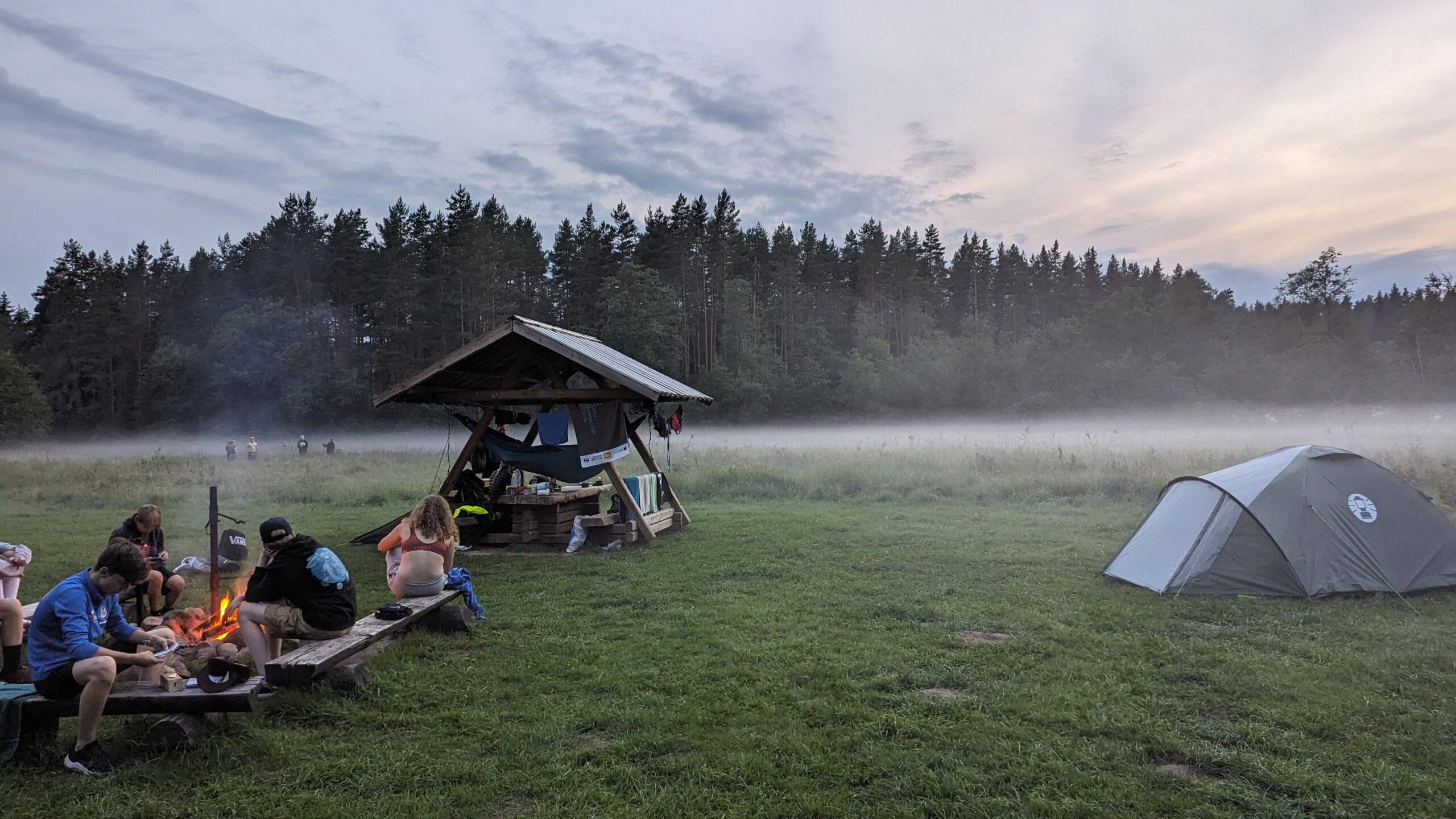
Around 1:30 PM, the situation began to deteriorate. A thunderstorm had arrived nearby. At that moment, only a few young people and staff were awake. Flashes of light were visible in the tents, but fortunately, there was no thunder yet. Elisabeth also called the emergency center and asked for advice on what we should do next. Our situation was made dangerous by our proximity to a body of water, our tents being essentially in an open field, a sandstone outcrop nearby, and our location next to a campfire site with a metal pole in the ground and recently extinguished coals. We were told that as long as we didn't hear thunder, everything was fine, and we could spend the night there if needed. Around 2:00 PM, the first heavy downpour began. It truly rained cats and dogs. Around this time, we also received 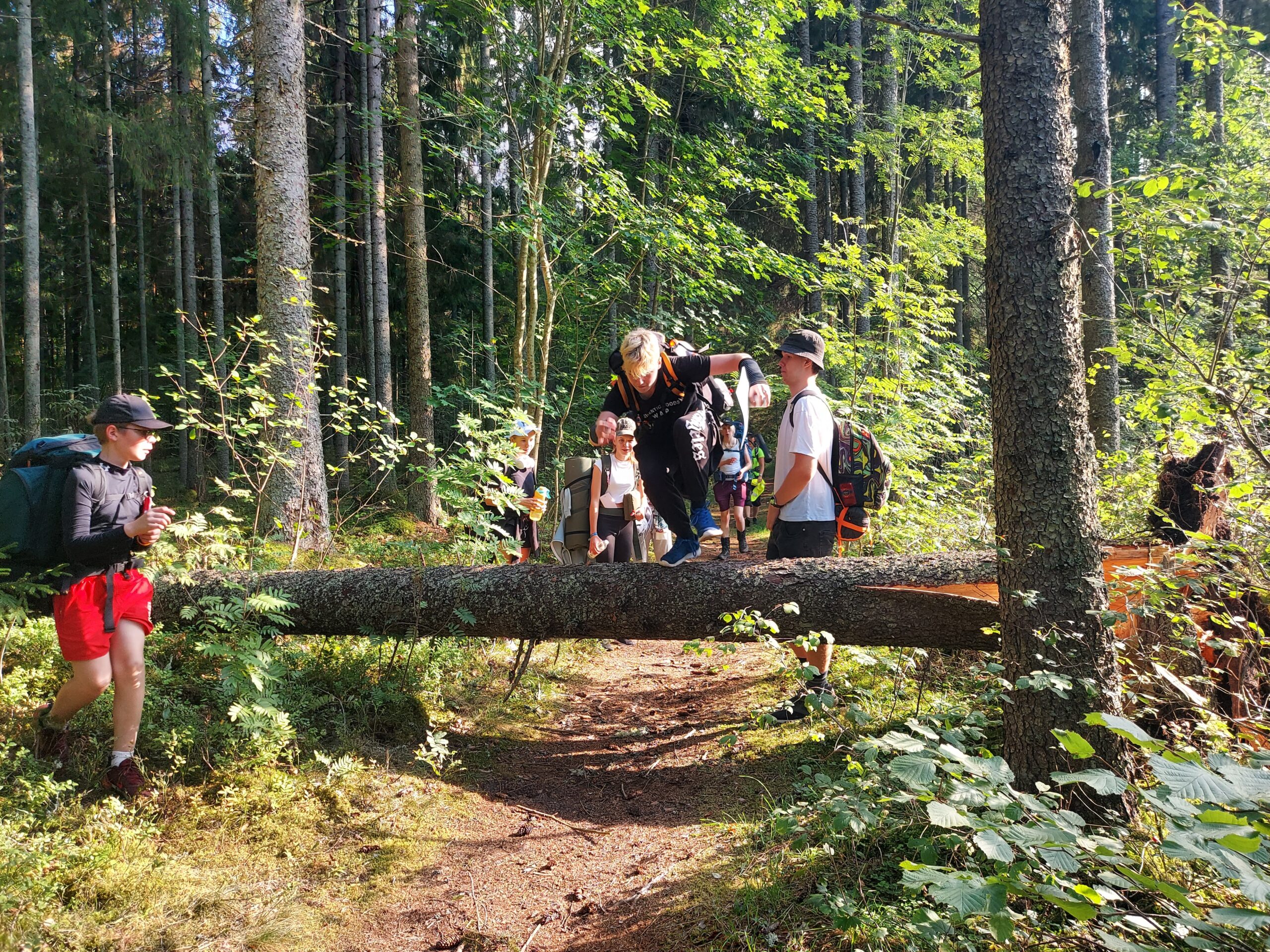 thunder. All this commotion and 'disco' lasted until about four o'clock. Then there was a big flash and a bang. Lightning struck a tree right near us. Then it was clear to us that we wouldn't stay there. We had already waited until the last possible moment. Fortunately, one young person from that area had found the nearest household, and luckily for us, it was a holiday village, which we immediately called. They kindly agreed to take us in. So, our morning wake-up was at four o'clock; we grabbed our essential and most important things and started walking towards Jõeveere holiday village through the lightning and thunder.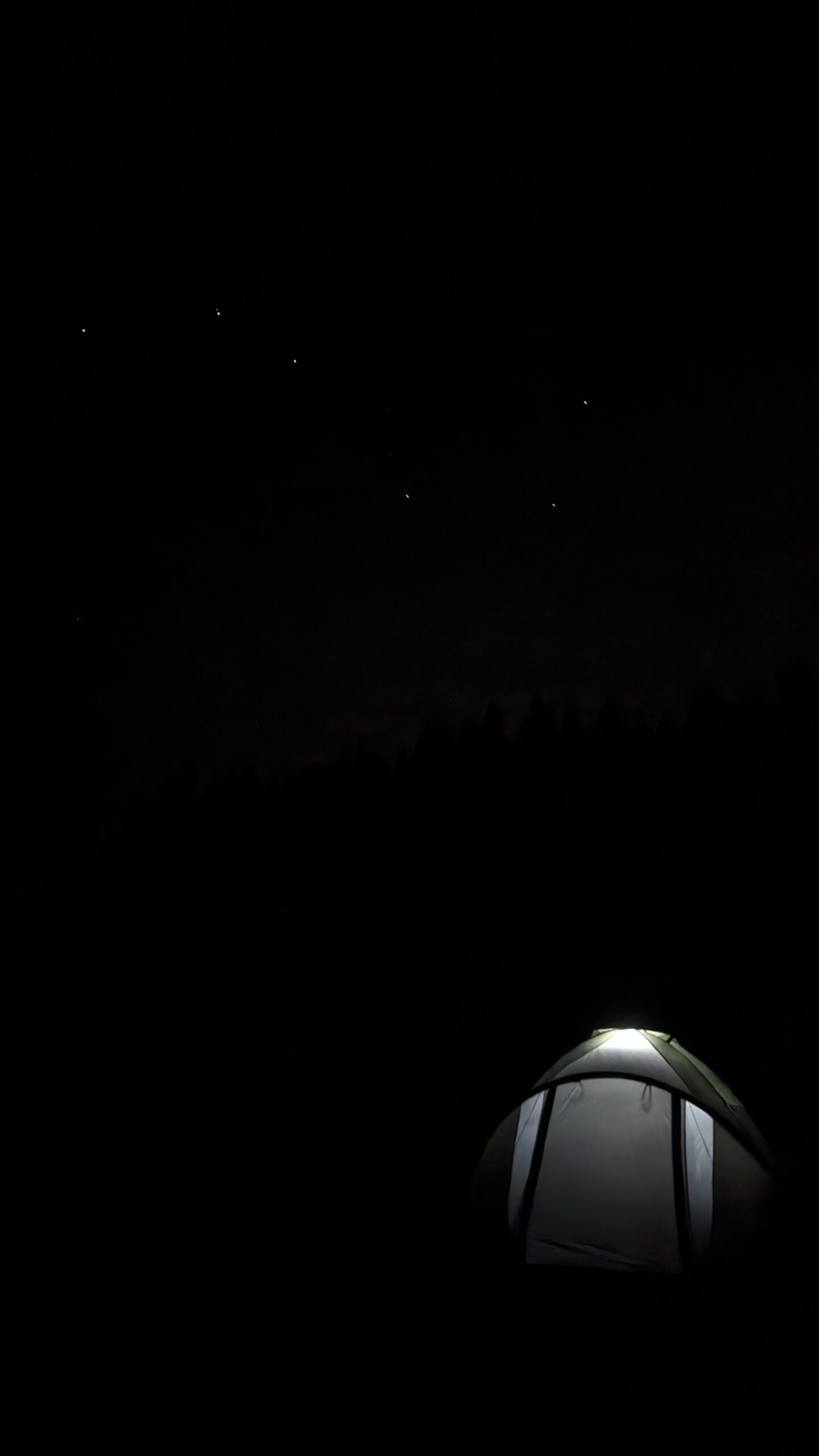
We were very warmly welcomed there. The hostess brought us tea and water. Many still took the opportunity to sleep until morning. We ate sandwiches, for which we had brought the ingredients overnight, and drank more tea. Then we split into two groups. Some stayed at the rest village to cook porridge, and others went back to the campsite to pack up the tents. One young person's grandfather also kindly agreed to help us take all our belongings back to the rest village. Then we ate more porridge, played cards, and received our hiking certificates.
Since we had time until our bus from the hiking trail to Võru, we had a flexible schedule until departure. The young people played Mafia, some tried to get more sleep, and others simply chatted. Gradually, it was time to start moving. We packed our gear, extended our sincerest thanks to the hostess of Jõeveere Holiday Village, and our final leg of the hike began. We walked about 2 km along a gravel road until we reached the main road, where our bus stop was also visible. The bus driver who picked us up was extremely accommodating and helpful: he opened the back door for us so we could put our gear at the very back and also helped load the equipment onto the bus. We took over the back half of the bus, and since there were many of us, we also occupied the aisle. On the way back, we asked the young people how they felt after such a big adventure. Sleepily and tiredly, they replied with happy faces: thank you for organizing such a hike, when is the next one? :) In Võru, the young people were able to go to a shop and buy sweets before the bus to Tartu. The bus ride to Tartu was quiet, as most of them were asleep.
Comment from youth workers Liisi and Elisabeth:
This was our first proper experience organizing a hike, and what an experience it was! Overall, we were satisfied, and the hike was successful. Despite all the difficulties, the feedback from the young people was very positive, and they are already looking forward to the next adventure. The mood was especially content after breakfast porridge on the second morning :). What we would do differently next time is to rely a little less on radar and the favorable movement of clouds when it comes to thunderstorms and hail. The sooner you act in such situations, the better. Better safe than sorry. However, we did not lose our optimism. If a thunderstorm comes next time, we'll know what to do, but it's not worth moving for anything less; young people will sleep through that storm anyway (at least most of them, provided the hike has been physically demanding enough).
* Explanation of names discussed in the story-
- Elisabeth - youth worker, hike organizer
- Liisi - youth worker, hike organizer