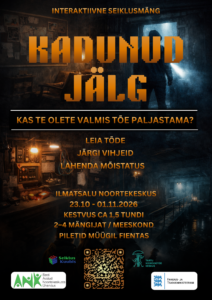


A month or two ago, thanks to the initiative of a new young person, we started Role-Playing Fridays in Ilmatsalu, where role-playing games (RPGs) (e.g., Dungeons & Dragons (D&D)) are played. In the English-speaking world, role-playing games have captivated players for decades, offering a unique blend of storytelling, strategy, and creativity. As I had just discovered D&D myself at that time, I was very happy to embark on this new adventure in the Estonian gaming landscape as well. At first, I was apprehensive about how I would get young people to join me, as it is such a specific interest. However, the younger age group embraced the game with cheers and excitement. Now I have seen how, in addition to fun and adventures, these games offer numerous benefits that can positively impact the lives of young and old.
RPGs require players to create characters, develop complex plots, and navigate fantastic worlds. This process stimulates creativity and imagination, encouraging players to think outside the box and explore new ideas(1). For example, as a storyteller, I have often found myself in situations where the story I initially conceived was not nearly as interesting as the adventure we ultimately experienced with the young people, thanks to their ingenious solutions and mischievous tricks. In D&D, players often face complex challenges that require strategic thinking, cunning, and problem-solving. Whether it's devising a plan to defeat a dragon or negotiating with a complex NPC (non-player character). These scenarios help players develop critical thinking skills and learn to approach problems from different perspectives(2). Playing characters with diverse backgrounds and motivations helps players develop empathy, which can lead to greater emotional intelligence and a better understanding of the complexities of human behavior (2)
Role-playing games are usually played in groups, fostering cooperation and communication. Players must work together to achieve common goals, which improves their ability to collaborate, listen, and express their thoughts effectively. This aspect of teamwork can develop into better social skills in real life (2). Additionally, RPGs often incorporate elements of history, mythology, and literature, offering educational benefits. Players can learn about different cultures, historical events, and literary themes, enriching their knowledge and broadening their horizons (1).
Engaging with RPGs can be an excellent way to relax and escape the stresses of daily life. The immersive nature of these games allows players to focus on the story and their characters, providing mental respite and promoting relaxation. Furthermore, the sense of accomplishment derived from overcoming in-game challenges can boost self-esteem and overall mental well-being (3).
So, here in Ilmatsalu, we have embarked on a journey to discover worlds and universes within our minds. We still have a long way to go and are eagerly looking for players aged 12-19, as the older age group is still small, making regular play difficult. However, those who have participated tend to stay and play. There's simply a wonderful magic in role-playing games that brings people together across all ages and backgrounds.
Have you ever played D&D or any other role-playing game? If yes, what was your favorite part?
2: Improving treatment with role-playing games
3: Good News, Nerds! Playing Dungeons and Dragons is … – The Debrief