
Autumn school holiday city camp – a tradition that unites! 

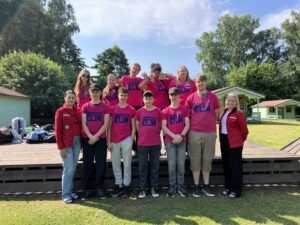
Young people already know that the city camp has become an inseparable part of school holidays, developing into a traditional event. What makes the camp special is that each time one of our five youth centers opens its doors, offering the chance to discover new places and make new friends. This gives young people the opportunity to get acquainted with new centers and peers. The city camp is an experience that always offers something new and exciting. 

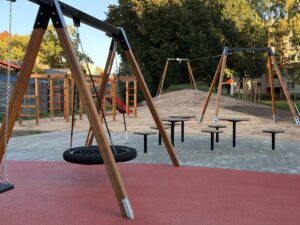
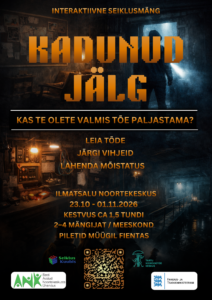
This time, the city camp took place at the Ilmatsalu youth center, and the day was full of activities and excitement. To begin, they all went on a unicorn hunt: young people formed teams and set out to find the unicorn in Ilmatsalu borough. One team's joy was immense when they managed to catch the unicorn. At the same time, another participant felt a slight disappointment because the unicorn slipped from their grasp, and they couldn't be the first to touch this "magical creature." After the adventure, hot tea and cookies were enjoyed, and exciting impressions were shared among them. 

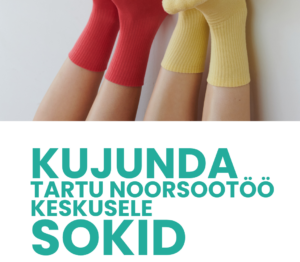
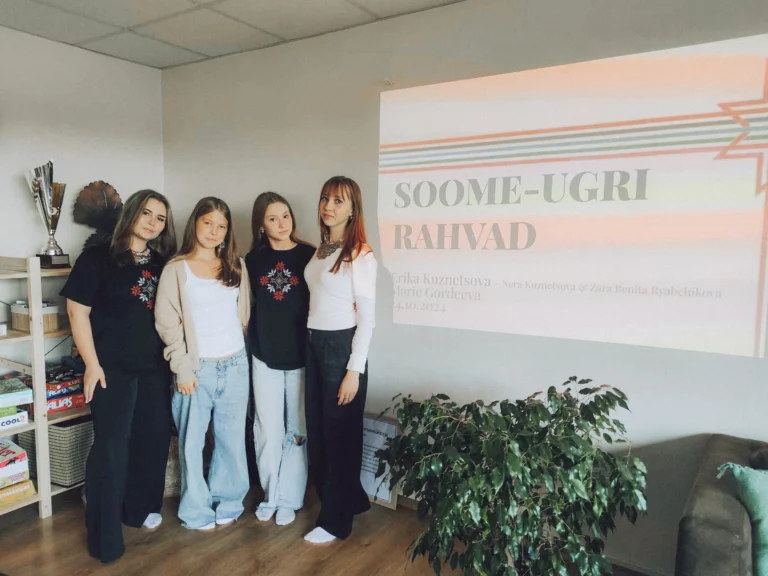
During the day, there was also talk about the October Month of Kin-Peoples. Young people learned who kin-peoples are, such as Udmurts and Estonians, and what perepetš is. They familiarized themselves with Finno-Ugric patterns and their meanings, then decorated socks. Many young people were so enthusiastic that they made decorated socks not only for themselves but also for family members. 

The camp also taught how to make perepetšid. The young people had the opportunity to get their hands in the flour and bake their own delicious treats, which everyone enjoyed very much. Many also wanted to take some home for their families to try, but all the perepetšid were eaten on the spot. Fortunately, the young people can now try making perepetšid themselves at home. 

Perepetshi recipe 

Dough: 

  • 0.5 l kefir 
  • 0.5 tsp baking soda 
  • about 1 kg whole wheat flour 
  • salt to taste (about 1 tsp) 

Mix all ingredients together and knead a stiff dough. 

Filling: 

  • salt and pepper to taste 
  • 300–400 g minced meat 
  • 4 medium onions 
  • 5 eggs 
  • 0.25 cups of milk or cold water 
  • 100–200 g fresh cabbage, minced 

Mix all the filling ingredients together. The dough must be liquid. 

Make round bases with edges from the dough, place them on a tray, add the filling to the baskets, and immediately put them in the oven. Bake in a hot oven at 200-220°C until the perepets are ready. 

So, everything is ready for making homemade family projects! 
news:

Do digital environments bring us together or make us more lonely?

Have you ever had a day where you’ve been chatting with friends on Snapchat, Instagram, or Discord all day long, but still feel lonely in the evening? It might seem strange—how can we feel lonely when we’re connected to others almost all the time? Loneliness is a topic that’s being discussed more and more. According to the World Health Organization, about

Read more »

Philosophizing with Children and Youth

Many 21st-century skills are closely linked to thinking skills. These include, for example, creative and critical thinking, as well as a collaborative and caring mindset. These skills can also be developed in youth work through philosophizing with children and young people. Philosophizing creates more space for discussion and helps participants become more skilled at articulating their opinions, listening to others, making decisions, and

Read more »

The Tartu Youth Work Brigade’s anniversary summer kicks off with a parade and an evening of work brigade songs

Today, June 15, Tartu will kick off the 30th summer of the Tartu Youth Work Camp, which will bring together 238 young people this year. The opening event of this anniversary year begins at 4:30 p.m. in the courtyard of the Anne Youth Center and proceeds with a parade to Town Hall Square, where the start of the work camp season will be celebrated with a speech by Mayor Urmas Klaas and the taking of the work camp oath. The opening ceremony will be followed at 7 p.m. by an evening of work camp songs in Tartu

Read more »

Ukrainian Youth in Tartu: A Week That Left a Lasting Impression

In early June, from June 8–14, the Tartu Youth Work Center had the extraordinary honor and pleasure of hosting young people from Ukraine—young people whose lives have been completely turned upside down by the war. The camp was made possible thanks to financial support from the City of Tartu, and the Tartu Youth Work Center wholeheartedly took on the task of organizing the program. The week began creatively—in a stencilling workshop, the young people

Read more »

A Children's Day bursting with joy and youthful energy!

The theme of this year’s Child Protection Day was the question: “A young person speaks—are you listening?” The need to be seen, heard, and truly listened to became clear right from the first preparatory meeting, where young volunteers had the chance to share which topics they consider important in the daily lives of children and young people. Almost without exception, all participants highlighted today’s fast-paced lifestyle—home,

Read more »

A mobile youth center will be on the move in Tartu this summer

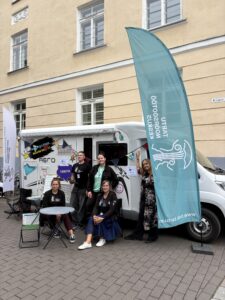
From June 1 to September 1, the Tartu Youth Work Center is launching the MoNo bus—a youth center on wheels—as part of a pilot project, bringing youth work to young people at their everyday gathering places. It is a specially adapted van designed to provide young people with a safe and supportive environment in areas where youth work services are currently unavailable or where young people cannot easily access them on a daily basis. MoNo

Read more »

Youth workers from the Tartu Youth Work Center on a study trip to Portugal

From April 19–26, youth workers from the Tartu Youth Work Center participated in a study trip to Lisbon, Portugal, as part of the Erasmus+ program, to learn about local street youth work methods, non-formal education, and ways to support young people in the NEET situation. Study trips give youth workers the opportunity to step outside their usual work environment for a moment, learn about different practices, and bring the knowledge and effective solutions they gain back to their own community (Pavlakias and

Read more »