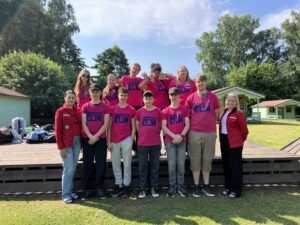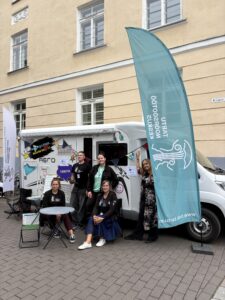

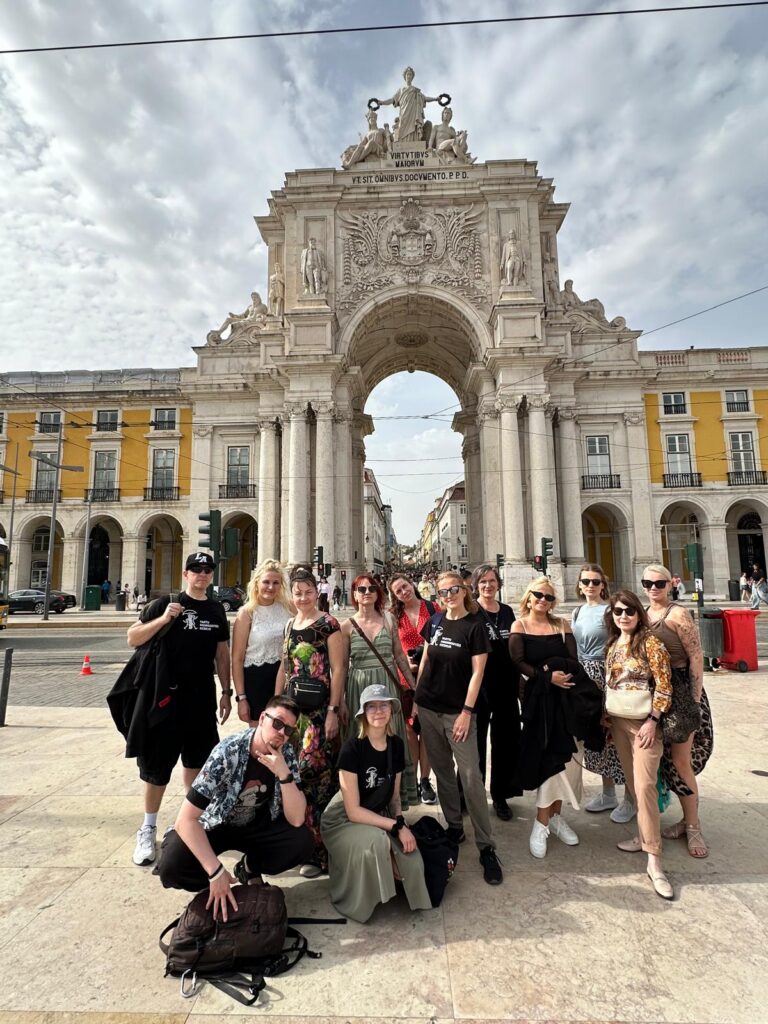
From April 19 to 26, youth workers from the Tartu Youth Work Center took part in a study trip to Lisbon, Portugal, as part of the Erasmus+ program, to learn about local street youth work methods, non-formal education, and ways to support young people in the NEET situation.
Learning mobility programs give youth workers the opportunity to step outside their usual work environment for a while, learn about different practices, and bring the knowledge and effective solutions they gain back to their communities (Pavlakias and Comas, 2025). Such experiences help boost work motivation and strengthen team spirit, while also offering an opportunity to develop professional skills and create a more supportive environment for Estonian youth. A study by Pavlakias and Comas (2025) emphasizes that change and variety help organizations develop, particularly when they are viewed as a natural part of professional learning rather than as isolated experiences. For this reason, the Tartu Youth Work Center has consistently offered its employees various opportunities for learning mobility.
Participants found the study trip to Portugal to be extremely valuable, as it provided a multifaceted insight into the nature of street work. The focus was on current issues such as meeting basic needs, supporting sexual health, providing food assistance, and helping young people find employment. During the study trip, participants visited youth centers and community projects in Lisbon and gained an overview of Portugal’s youth policy and funding models in the youth sector. Special attention was given to street youth work, which in Estonia is primarily known as mobile youth work.
The partner organization for the study trip was CAI – Conversas Associação Internacional, represented by Helder Luiz Santos. The partner had put together a substantive and practical program that provided an opportunity to learn about community-based and non-formal learning methods and to experience firsthand how street outreach work is carried out on the streets and in the communities of Lisbon.
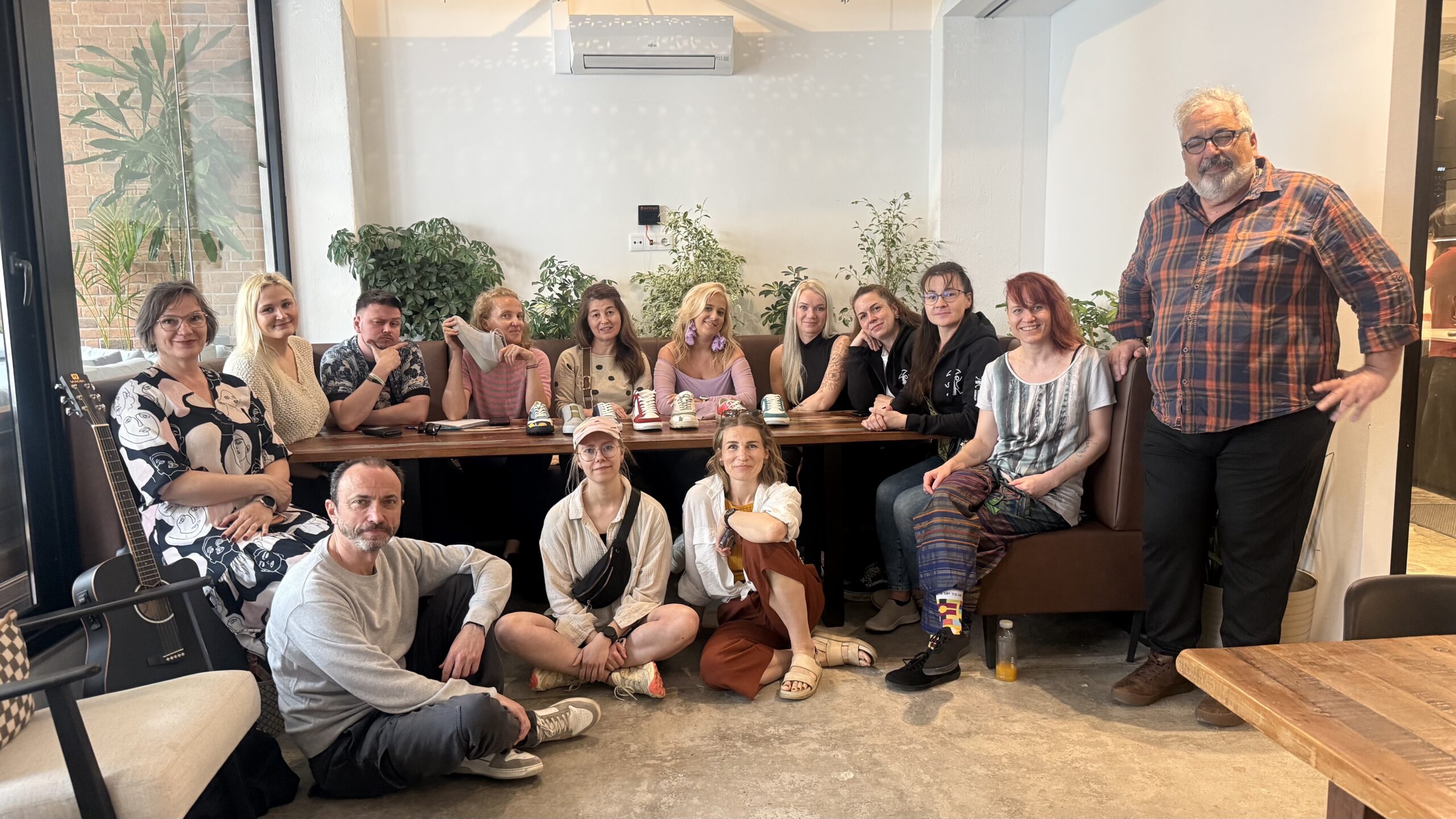
The Inspiring DiVERGE Sneakers Program
One of the most memorable experiences was learning about the DiVERGE Sneakers program, Imagine, which was created to improve the social inclusion and employability of young adults. The program engages NEET youth to offer them the opportunity to shape a brighter and more meaningful future for themselves and to boost their self-confidence and motivation.
At the start of the program, the young people undergo intensive training designed to develop their social, communication, marketing, entrepreneurial, and self-expression skills, while also fostering greater self-awareness. Then, the design and creation phase begins. Each participant has the opportunity to tell their personal story through design by creating unique sneakers and launching their own micro-business with the support of DiVERGE.
The young people are supported by a professional team and a company that manufactures footwear from high-quality materials, organizes photo shoots, and handles marketing and sales. The collections created by the young people tell their personal stories. In addition to compensation, the proceeds from sales provide participants with real-world business experience and the opportunity to apply the skills they’ve learned in real life. Throughout the program, the young people receive ongoing mentorship, which helps boost their self-confidence and reduce social exclusion.
The program director’s observation that many young people who enter the program initially consider themselves highly capable and knowledgeable—and often believe they can handle anything—was particularly striking. At the same time, they lack the skills to cope with failure. One of the program’s key goals was identified as fostering a more realistic self-perception and developing skills that help them better cope with difficulties, setbacks, and failure.
How has Portugal reduced the proportion of NEETs?
Portugal has historically been a country with low educational attainment, as the dictator Salazar did not pay much attention to education. However, following the 1974 Carnation Revolution and the end of the dictatorship, the situation began to change rapidly. As a result, Portugal has long had to deal with a high school dropout rate and a high proportion of NEET youth.
To date, Portugal has managed to reduce the proportion of NEETs to approximately 6% through various systemic measures, whereas in Estonia, according to Statistics Estonia, the figure stood at 11% in 2024. In this regard, Estonia has a lot to learn from Portugal.
During the study trip, the group also learned about the work of the Fundação Calouste Gulbenkian. It is one of Portugal’s best-known charitable foundations, supporting education, culture, research, and social projects.
The Foundation has established several programs to support young people, including the Gulbenkian Empregari initiative, which aims to help young people enter the labor market through training that fosters creativity, mentoring, practical work experience, and skills development.
Although Portugal has made significant progress in reducing the proportion of NEETs, local partners also highlighted a major challenge: often, a fragile system is used to support a fragile target group. Many projects are short-term, and the youth sector needs a sustainable and comprehensive approach at the national level. Supporting young people cannot rely solely on project-based solutions but requires long-term strategic support.
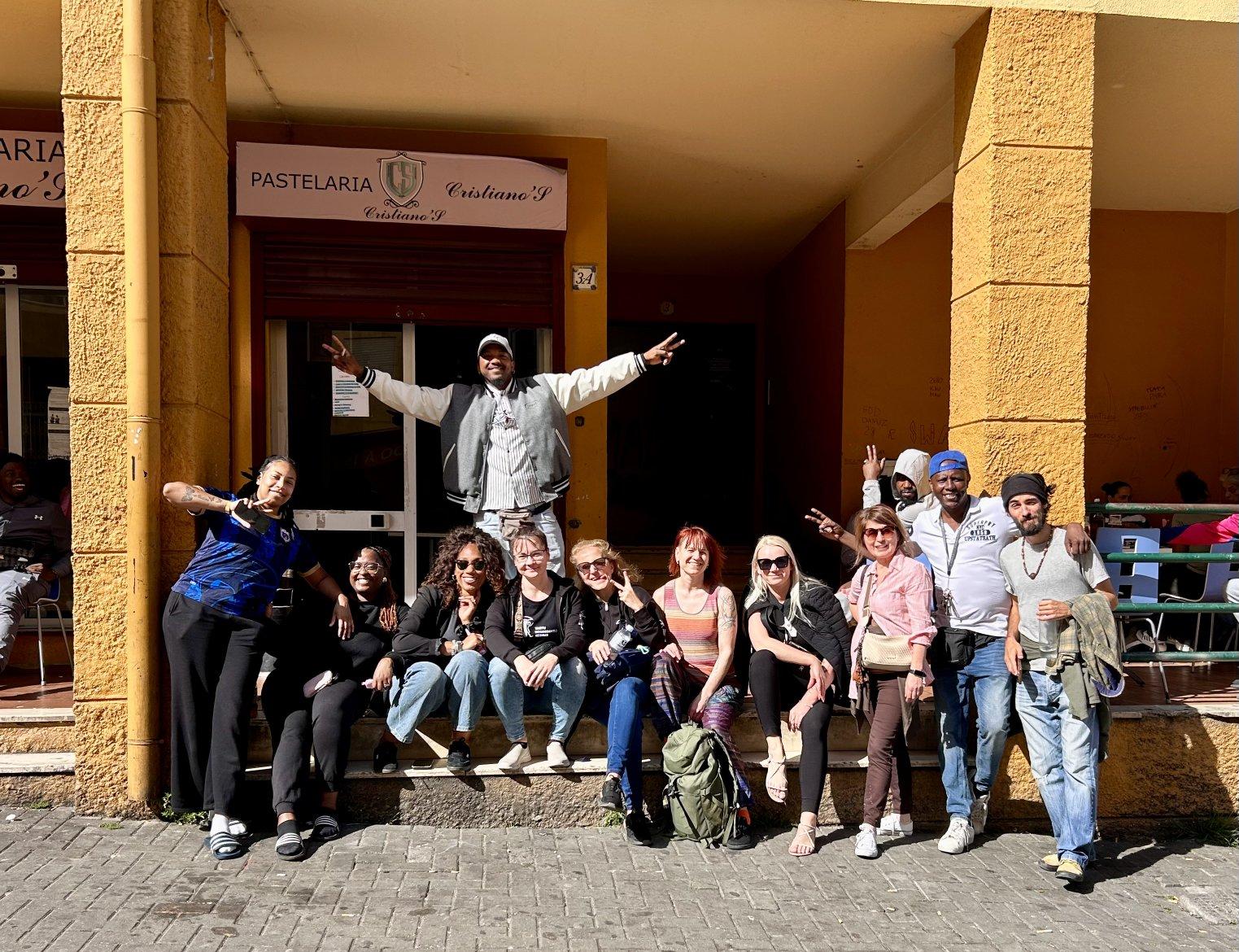
An Introduction to Street Outreach Work in Portugal
A visit to a social housing area on the outskirts of Lisbon left a particularly strong impression; the area was home to the active youth center R_deRUA, and its outreach work targeted young people up to the age of 35. The area featured closely integrated services: a soup kitchen, a clothing distribution center, after-school care for schoolchildren, a youth center, and street outreach work.
In Portugal, approximately 13% of the population lives in overcrowded housing (EU-SILC estimate, 2023), and the problem has worsened over time (OECD, 2026). Overcrowding was significantly higher in this region. By comparison, according to Eurostat data, the rate in Estonia remains at approximately 5–7%. The local community needs daily support, and assistance has been structured as a comprehensive system.
At the same time, many larger initiatives rely on project funding: when the funding ends, the activities often come to a halt as well. This, in turn, does not foster trust in the system within the community. Street workers, however, are present on a daily basis, visible and in contact with the community, to build trusting relationships and provide consistent support. Local people have experienced prejudice and disappointment over generations, and as a result, trust does not develop quickly. It was all the more positive to experience that everyone we encountered was very friendly, and several participants in the study tour later admitted that they had let their preconceptions influence them.
It became clear just how important the interconnection and continuity of services are, as well as preventive and support efforts. The goal is to help young people break free from the complex environment and patterns that have persisted for generations, which hold them back or lead them into trouble.
My experience with street work in Portugal made me realize just how much we have to be grateful for in Estonia. While in Estonia we are primarily faced with mental health issues among young people, in Portugal these are often compounded by widespread shortages of basic necessities. This experience served as a powerful reminder of how important it is to value what we have while continuing to move toward a system that supports development and prevention.
The delegation also visited the MyMachine project, which operates in the town of Óbidos .
The project brings together learners of different ages and skill levels to turn children’s ideas into real-world solutions. It all starts with elementary school students’ “dream machines, ” which university students use as a basis to create more professional concepts and models. Then, students from vocational and technical schools build working prototypes based on these ideas.
Collaboration is a key part of the process—both the children who came up with the ideas and the college students who helped develop the concept are involved in creating the prototypes. The project fosters creativity, practical skills, and self-confidence, and demonstrates how collaboration can turn a single idea into a truly functional solution.
What should we bring into our environment?
The study trip provided youth workers from the Tartu Youth Work Center with several ideas that they hope to implement in Estonia in the future. For example, they saw an opportunity to adapt the principles of the DiVERGE Sneakers program to the Estonian context by involving local businesses and communities.
The most important lesson was the realization that a holistic approach works best when supporting young people—when they have a safe environment, community support, and opportunities for self-development and self-expression. In Portugal, young people in NEET situations are often supported through creative activities, and this has yielded lasting results.
The study tour gave participants a valuable opportunity to see how different countries support young people through community-based and systematic approaches. International experiences help us understand that there is no one-size-fits-all solution when it comes to supporting young people, but practices from other countries can offer inspiration and new ideas for youth work in Estonia as well. It is precisely these study visits that help bring fresh perspectives to daily work, encourage the testing of new methods, and create even safer and more supportive opportunities for young people.
Riin Juurma, Director of the Lille Youth Center / Mobile Youth Work Coordinator
Sources used
A PROFILE OF HOUSING INEQUALITY – PORTUGAL, EU-SILC 2025; https://www.housing2030.org/files/2025/05/2025-05-Portugal.pdf?
NH24: Proportion of NEET Youth Among 15- to 26-Year-Olds, Statistics Estonia 2024; https://andmed.stat.ee/et/stat/Lepetatud_tabelid__Eri-valdkonnad.%20Arhiiv__Noorteseire/NH24/table/tableViewLayout2
OECD (2026), OECD Economic Surveys: Portugal 2026, OECD Publishing, Paris, https://doi.org/10.1787/025b3445-en.’
Pavlakis, M., & Comas, R. (2025). Integrating Erasmus+ Mobility into the Design and Evaluation of Professional Development Programs for Academic Staff. Academia, 0(42), 40–65. DOI:https://doi.org/10.26220/aca.5395