
What if, instead of waiting for young people to come to the youth center, the youth center went to where the young people are right now?
Over the past four years, the Tartu Youth Work Center has developed a mobile
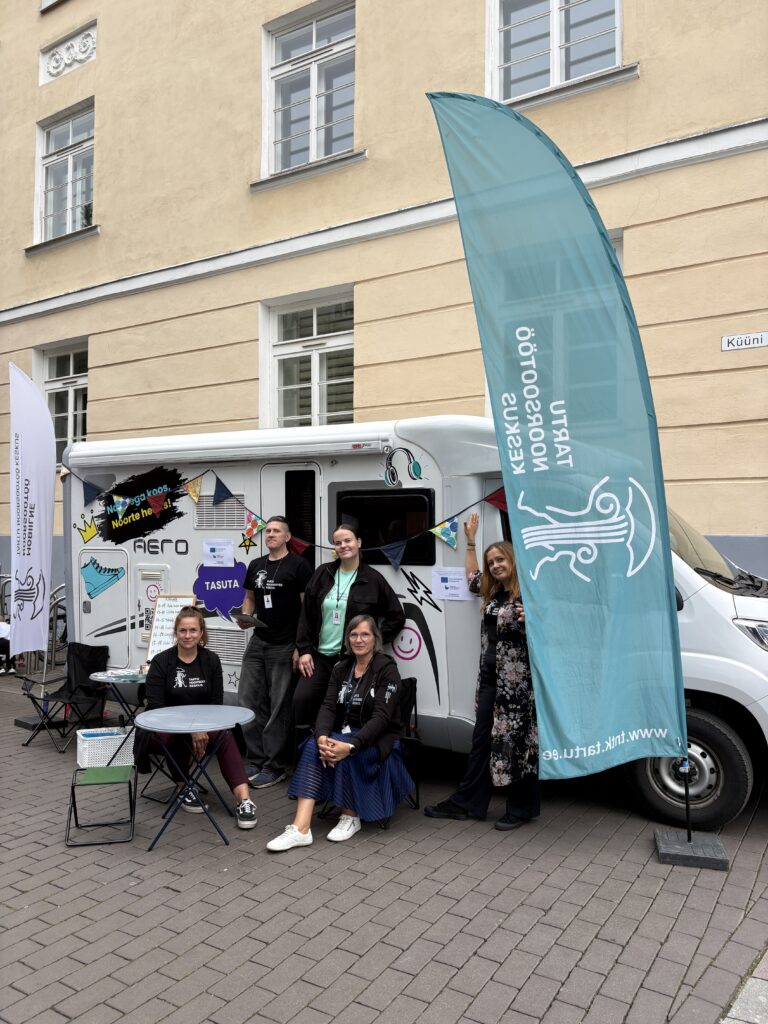
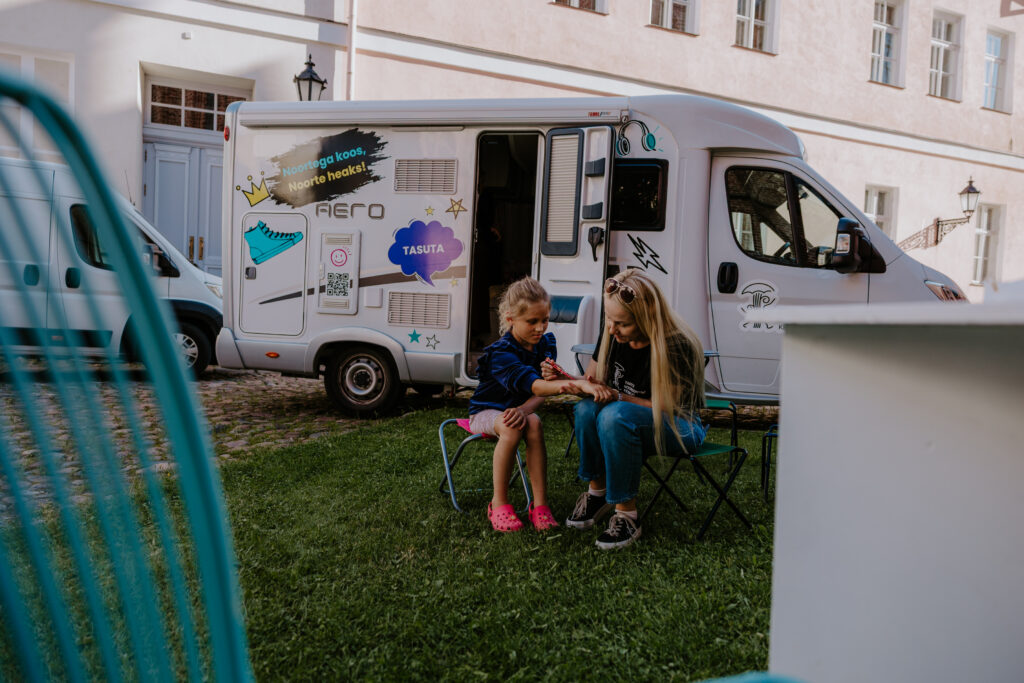
Youth work in Tartu’s public spaces. This summer, a mobile youth work bus (the MoNo bus) was tested for the first time to see if this type of solution could help reach young people who do not yet participate regularly in youth work, and to determine what role the bus might play in Tartu’s youth work.
Over the course of three months, the bus visited various neighborhoods and playgrounds,
skateparks, beaches, and events. Youth workers made 1,904 contacts with 483 different young people over the course of the summer. The data comes from a nationwide youth—
from the “Logiraamat” monitoring system used by the centers and from a survey conducted among young people at the end of August.
The idea wasn't simply to turn the bus into a youth center on wheels. The key was to reach young people where they go and spend their time, make contact with them, and offer activities that would give them a reason to come to the bus.
The bus reached the youngest teenagers the most
The bus statistics showed that children aged 7–11 accounted for the largest share of contacts during the summer. They accounted for 40.1% of all recorded contacts. Children aged 12–16—
The percentage of 10-year-olds was 22.7%, and the percentage of 17- to 19-year-olds was 5%.
One of the pilot program’s goals was to reach more teenagers. At the same time, 7- to 11-year-olds
They also make up a significant portion of the Tartu Youth Work Center’s target audience. There are two youth centers in Tartu for 7- to 11-year-olds, but it turned out that many of these young people had never been to them before
aware. The MoNo bus gave them the opportunity to get involved in youth work at an early age and learn about the opportunities offered by youth centers.
Young people themselves also recognized the value of the MoNo bus. Juliana, a member of the Tartu City Youth Council , pointed out: “The MoNo bus is a necessary service because it helps youth workers reach young people more easily and offer them various opportunities to spend time outdoors.” She also felt that the bus helped make youth workers more visible.
However, the lower proportion of teenagers suggests that if the goal is to reach older youth as well, we need to take a closer look at where and at what times they
what moves them and what kinds of activities resonate with them.
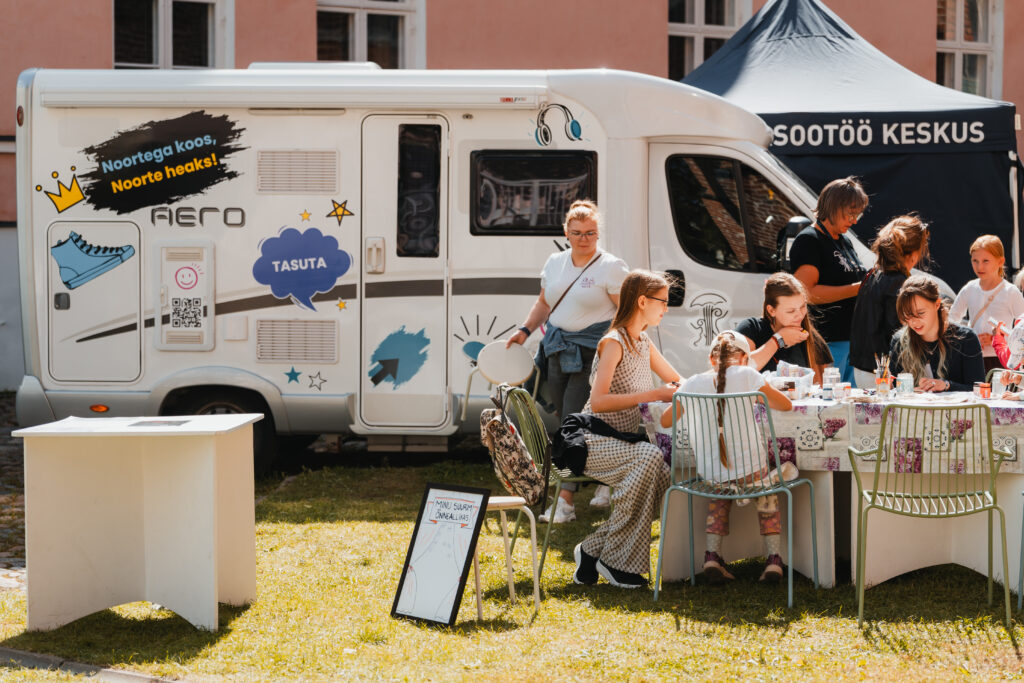
The right location matters
In addition to the young people’s age, the number of interactions was strongly influenced by where the bus happened to be stopped. The most interactions occurred in places where the young people were already spending time or where an event was taking place at the same time. For example, Veeriku and Tähtvere worked well
neighborhoods, but I also made a lot of contacts in Annelinna and downtown.
At some of the planned stops, however, there were fewer young people than expected, or there were
primarily preschool-aged children and their families. It became clear quite quickly that the mobile
When it comes to the youth work bus, you can’t rely solely on pre-made plans. It’s important to keep track of where young people are actually going and to be prepared to adjust your location or activities
modify as needed.
This is one of the broader principles of mobile youth work—the youth worker goes where the young people are, rather than waiting for them to come to him or her.
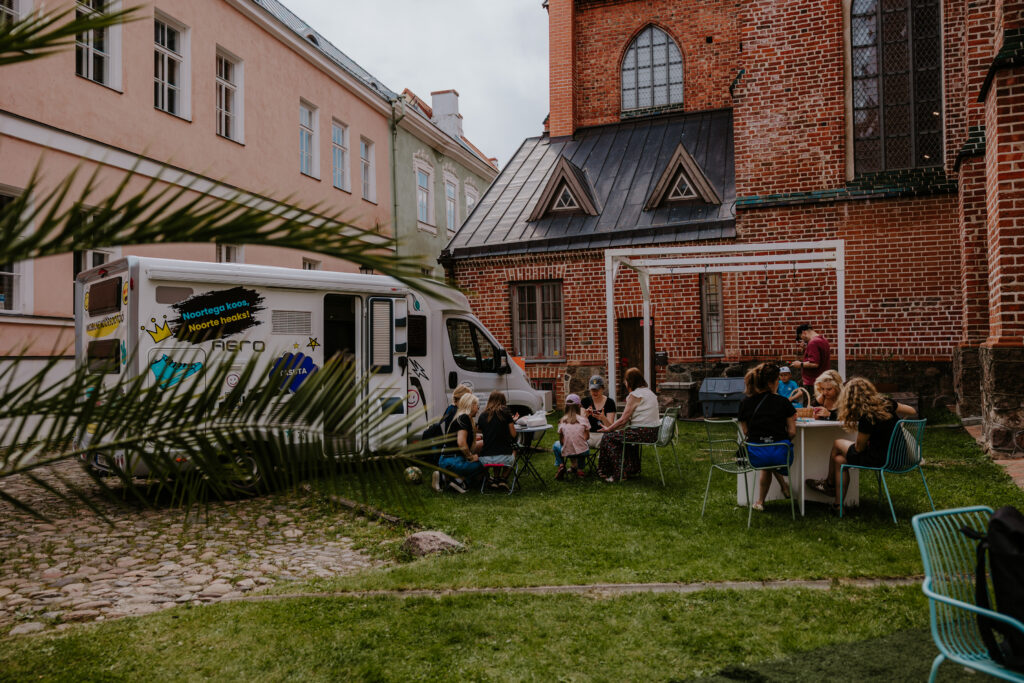
The incident led the young man to the bus; the contact kept him there
The activities depended largely on both the location and the young people’s preferences: sometimes they got to try breakdancing, do graffiti, or make something with their own hands; other times
play board games or try out VR headsets. At the same time, there wasn't always something to do
to do. You could just stop by the bus, hang out for a little while, and the youth—
talk to the employees.
The feedback we received from the young people made it quite clear that this opportunity was
important. The opportunity to do things together was valued the most, but youth workers were also singled out and described as friendly, nice, and good communicators.
While the activity itself may have been what drew the young people to the bus, it was what happened next—conversations and connections—that really took hold. This is also evidenced by the fact that more than 70% of survey respondents had been on the bus at least twice.
Through the bus tour, the young people also learned about opportunities they hadn't been aware of before
had been. In some cases, the interactions that took place on the bus led to longer conversations among the youth—
with the staff, or to the point where they started spending more time at the youth center.
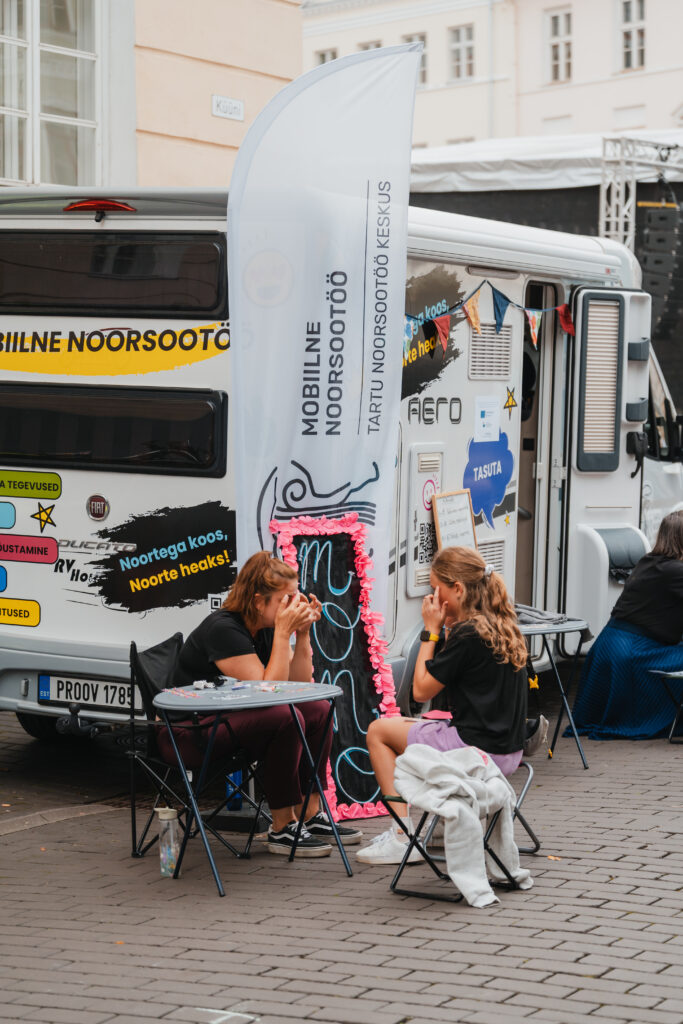
The bus does not replace mobile youth work; rather, it provides an additional opportunity for it
The first summer showed that the MoNo bus can help reach young people in Tartu who are not typically reached by conventional—
Appropriate forms of youth work are not always possible. The bus also helped to introduce
the opportunities offered by youth centers and to make new connections, including with parents and other city residents.
"In my opinion, it was a very good and valuable project. In addition to interacting with young people,
The MoNo bus also provided an opportunity to interact with parents, partners, and
with many other interesting people whom I probably wouldn't have met without this project
"It wouldn't have happened," says Merle, a youth worker from the Ilmatsalu community who worked on the bus.
At the same time, it became clear over the course of the summer that the MoNo bus cannot replace traditional mobile youth work, which takes place in public spaces. The bus provides one additional opportunity for youth work, but its value does not lie solely in the bus itself.
What matters is that the youth worker reaches the young person.
The mobile youth work bus is part of the international Erasmus+ cooperation project “KA2 Youth Work 360° – mobile, digital, inclusive, and accessible,” which is funded by the European Union.