This is the title of a four-episode podcast (Eng. “Inclusion is not an illusion”) created as one of the outcomes of the Erasmus+ project “Inclusion is On 2021-2024”. This slogan also aptly describes the entire project, as the inclusion of all young people in leisure activities and society at large, which was the main theme of the project, is not a baseless hope or an unfulfilled dream – one simply needs to enhance their knowledge and boldly take action.
The project was led by Nuorten Akatemia from Finland, and in addition to Tartu Youth Work Centre, project partners included The Finnish Youth Association from Finland, Radio- R from the Czech Republic, Federation of Children´s and Youth Municipal Councils from Hungary, Le Discipline from Italy, and Croatian office for Creativity and Innovation from Croatia.
During the project period, five training sessions were held for youth workers from partner countries, covering inclusion from various perspectives. Although the organizations involved in the project have very different backgrounds, they all operate in the field of youth work, and regardless of their country of origin, the actual problems are very similar. For example, representatives from partner countries highlighted common concerns such as young people lacking knowledge about leisure activities, youth work institutions not being physically accessible or lacking suitable facilities for young people with special needs, and young people not feeling safe there.
Based on the collected input and training results, four different project outputs were prepared: a collection of good practices, an innovation model, a training model for youth workers, and the aforementioned pocket broadcasting. In the project partners' feedback round, all partners agreed that the completed materials have great potential for use, as they are comprehensive, easy to understand, and ready for immediate use.
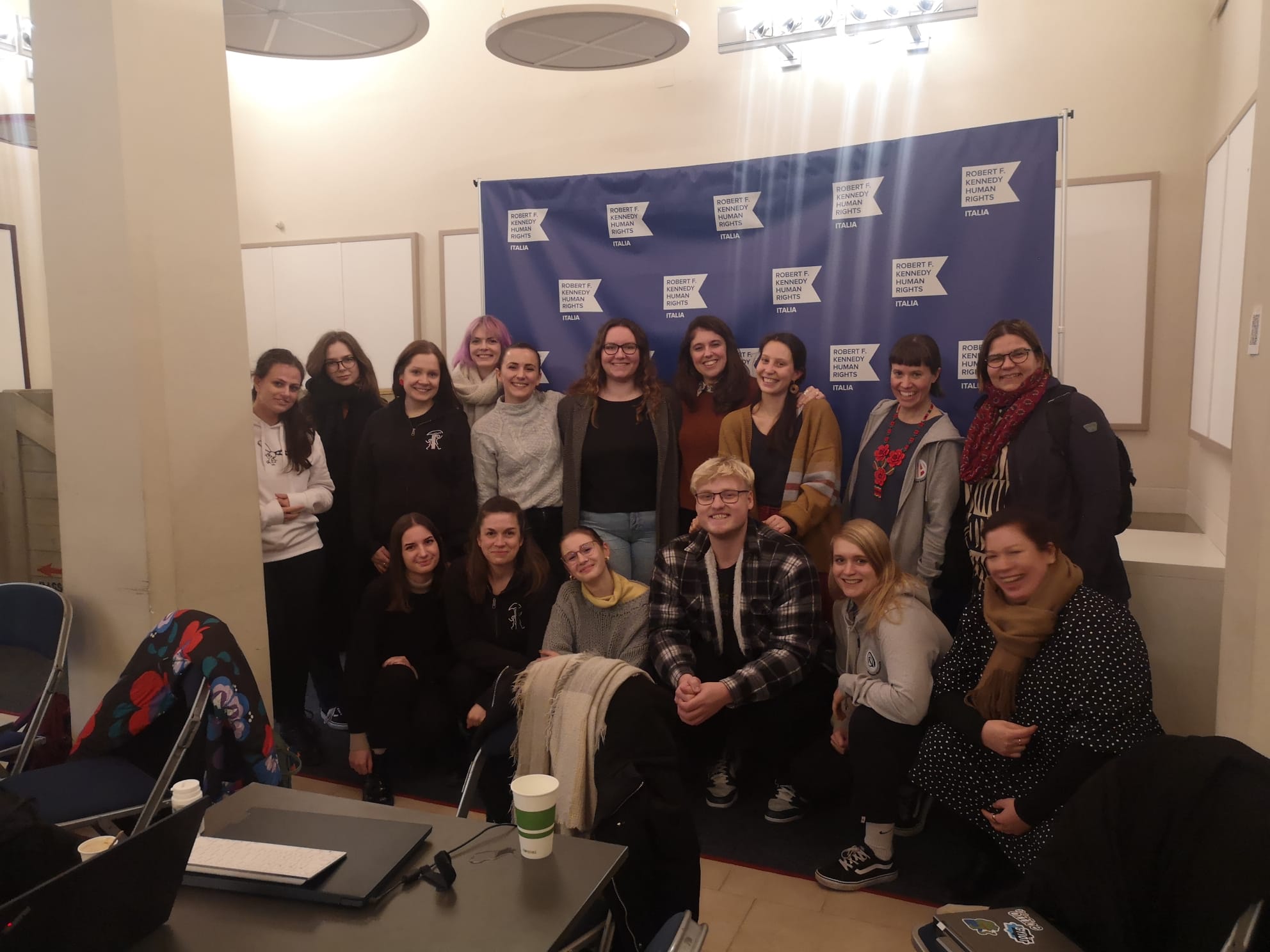
At the final project meeting in Florence, Italy, in addition to the project team, five youth workers from all partner countries participated and had the opportunity to get acquainted with the completed materials in various workshops. Youth workers Liisa and Aveli from Tartu Youth Work Centre pointed out that “The most memorable method of the seminar was a quiz conducted via Mentimeter, where participants could test their knowledge on the topic of social inclusion. Even if there wasn't much prior knowledge on the topic, a lot was learned through the answers provided there.” Aveli also highlighted that “In the workshops, I was able to think and talk most about inclusion in the workshops of the Finnish organization Nuorten Akatemia and our own institution, Tartu Youth Work Centre. Ulla, the facilitator of the first workshop, presented a study conducted in Finland that examined the involvement of young people from different backgrounds in extracurricular activities. The results of this study led to a handbook sharing tips on how to engage young people from minority groups. Their research also inspired me to conduct a similar study in Estonia to achieve better inclusion. The Estonian workshop, led by Helene, Development Manager, and Margit, Director of Tartu Youth Work Centre, had the largest inclusion process at the seminar, as they involved people on-site to discuss how to better bring young people, parents, and other cooperation partners into youth work and how to create the strongest possible network between the parties.”
Liisa added that "the seminar day was intense and made me think about different aspects of inclusion – how can we, within our organization, involve youngsters with as many different abilities as possible, and what exactly is my role in this whole process? There was plenty to think about for the future, and the most important thought that emerged was that inclusion is a process in which we all play an important part."
Based on the knowledge gained from the project, we have already implemented the principles of a safer space in the Tartu Youth Work Center collective, which shows that our collective is open and inclusive. In addition, the organization's 2024 media plan is based on the image-building plan created during the project to link the improvement of the visibility of youth work with the dissemination of information about the Tartu Youth Work Center. One of the Tartu Youth Work Center's focuses for 2024 is to continue improving the accessibility of youth centers, both in terms of physical spaces and creating an even safer environment for all young people. The first steps in this direction have already been taken.
In the feedback round from project partners, it was highlighted that the project was successful because the participating partners were very interested in the topic and willing to contribute maximally, cooperation went smoothly, and the previously mentioned project outputs are practical and allow the topic to be further addressed in partner countries. We agree with the partners and look forward to follow-up activities to delve even deeper into the topic.
In Estonia, you can learn more about the project results at a dissemination event taking place on March 14th in Tartu. All interested parties are welcome to participate (if you don't want to miss out on information, please express your interest at: helene.toomeoks@tartu.ee). The completed materials and tools can also be viewed in advance on the Tartu Youth Work Centre's website.