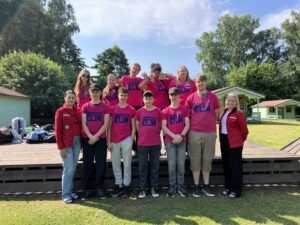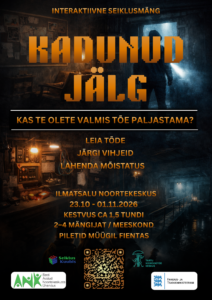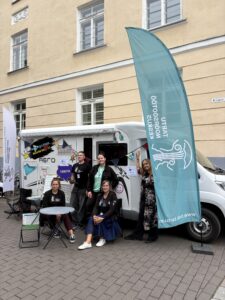

At the end of September and beginning of October, from September 27 to October 2, a large part of the Tartu Youth Work Centre's team was on a study visit to Iceland. They visited various youth work institutions and learned best practices on both mobile youth work and open youth rooms. Now others also have the opportunity to experience a piece of this, as two of our employees have written down their experiences.
P.S.! In addition to the experience stories, the Iceland study visit can also be seen in video form – a vlog was created from the trip in a free and enjoyable format
“VLOG │TNTK staff study trip in Iceland!”
Youth work camp coordinator Keidi's experience story:
Early in the morning on September 27, 20 employees of the Tartu Youth Work Center boarded a bus in the lower parking lot of Vanemuine to travel to Riga, from where they would head to Reykjavik to learn about youth work and youth work principles in Iceland. Although it was a long day of traveling, on our first evening in the city we headed to the Reykjavik City Education and Youth Work Department, where we were given a 90-minute presentation on youth work in Reykjavik (Iceland). That afternoon at the Reykjavik City Education and Youth Work Department laid the foundation for the following days and meetings. On the first evening, we learned that schools, hobby education, and youth work are closely linked and work well together in Reykjavik, and we saw this with our own eyes when visiting youth clubs and centers.
Things haven't always been as rosy in Reykjavik (Iceland) as they are now. A little over 20 years ago, it was very common among young people to stay out late, ignore their responsibilities, and spend their time with friends, alcohol, and tobacco. Changes began to be introduced when it was realized that society could not continue like this. In order for something to change, it was necessary to change society as a whole, and the first step was to make residents understand that a sense of community and responsibility begins with them.
On the following days of the study trip, we visited various youth centers and institutions working with young people, which demonstrated how it is possible to offer young people an exciting and developmental environment, letting them know that their voice matters. For example, various youth councils are a very common phenomenon in Iceland. Samfés, an organization that unites 124 youth clubs and centers across Iceland, has two youth councils whose members can actively convey the voice of young people in society and participate in various activities throughout the year.
It was evident that youth centers and clubs in Iceland trust young people. In several youth centers we visited, such as Hitt husid and Musik og motor, young people could rent rooms to record music without supervision. Of course, they also have rules in place, and if a violation is discovered, the problem is addressed. What resonated was that both parents and youth workers are there for young people, and in case of various worries and problems, they always try to talk and find solutions so that no young person is left without help.
The Icelandic people we met were full of energy and a desire to act, ensuring a safe and good environment for themselves and their children to live in. As many immigrants have settled in Iceland in recent years, there is active engagement in integrating them into society, both in youth work and other areas. It was evident that people cared for each other and worked towards a better future.
Mobile Youth Worker Sigrid's Experience Story
I will give you an overview of my experience when I spent the last week of September this year with my colleagues on Icelandic youth work trails. My experience in youth work is limited to eight months, during which I have worked as a street youth worker at the Tartu Youth Work Center. I am currently in my third year of studying community education and leisure activities at the University of Tartu Viljandi Culture Academy, and I have gained good practical experience from my studies, but I still feel that I have a lot to learn and experience. What could be better learning material than watching the masters of their field at work? A week is quite a short time for personal development, but I dare say that when we returned from Iceland, we had grown closer as a group and were full of new ideas and a desire to take action.
Before I can talk about my trip exploring youth work in Iceland, I must mention a few facts that stood out regarding the country, its people, and youth work: firstly, as of 2021, Iceland has a population of approximately 370,000 people, with 120,000 of them living in Reykjavik. The currency in Iceland is the króna, and an average Icelandic youth worker earns about 4100 euros per month. Icelanders are most proud of their language and nature, considering them the foundation of their national identity. It also became clear that if you want to eat out, you must be prepared to pay 20-30 euros for food and drink. At this point, I recommend buying food from a store and preparing meals at your accommodation; it will definitely be cheaper, as, for example, I saved over 100 euros on food compared to my colleagues. Additionally, it is a fact that Icelandic grocery stores do not sell alcohol, aiming to make alcohol as inconvenient as possible to access and thereby reduce people's need for alcohol consumption.
I went to Iceland with the desire to find out the following: 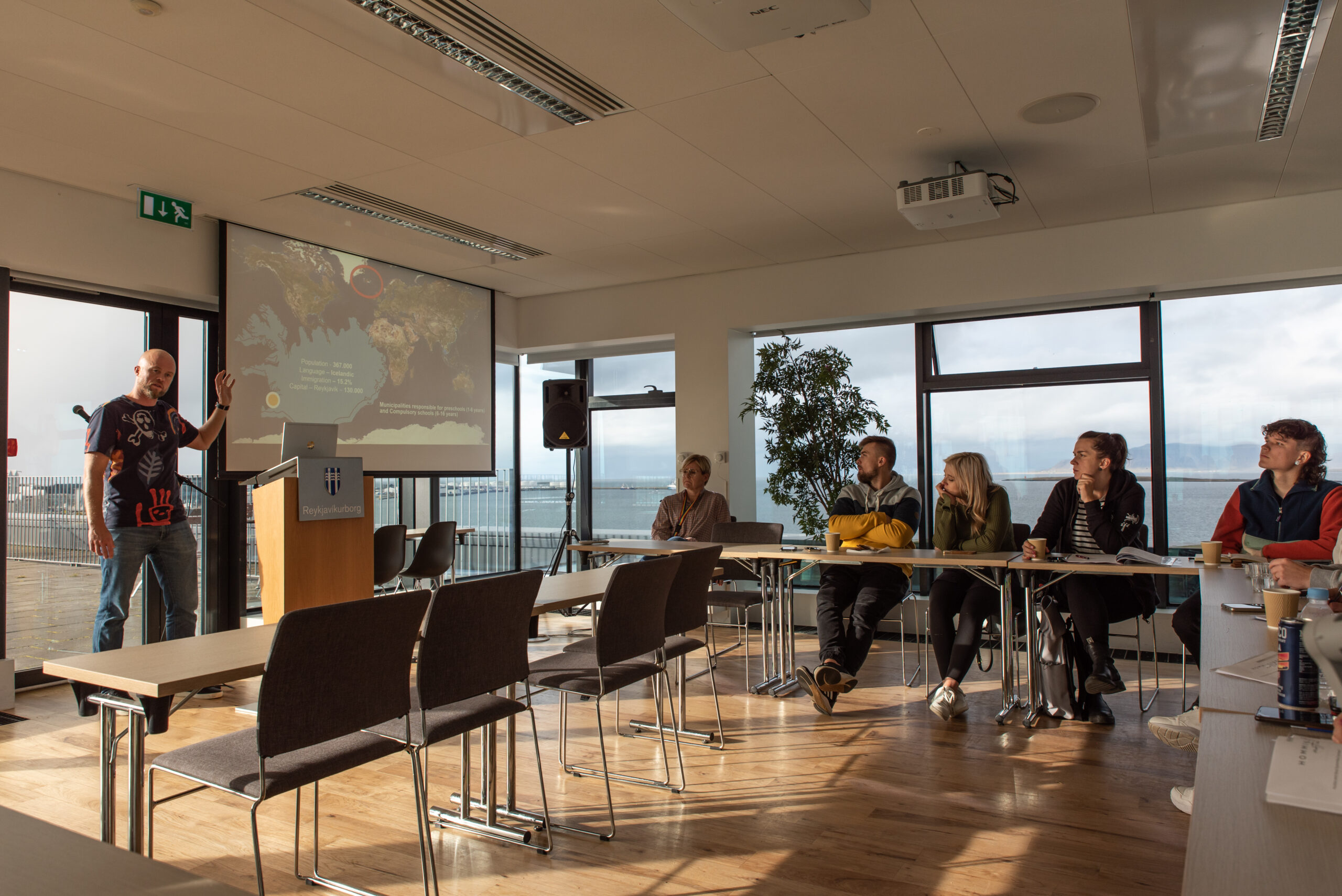
- What are the conditions for youth work there (national system)?
- How does the mobile youth work operate there?
- What are the youth centers there and what activities can they offer to young people?
- How healthy are the youth workers there?
Over the course of the week, by visiting various youth centres and youth work institutions and interacting with local people, I received answers to these questions, which I want to share with you.
- Youth work is highly valued and well remunerated in the community. Local authorities require youth centers to operate, and the city is fully prepared to support this area. In addition, youth workers are given the opportunity to develop this field creatively, as they are not restricted by many rigidly regulated laws. The creative approach of youth workers there is also supported by the local government's attitude towards projects, where youth workers have the opportunity to apply for funding without fear of the project failing and the long reporting process and eventual repayment of funds that would entail. The youth work system is structured on three levels. At the highest level is the city, or local government. At the middle level are umbrella organizations, and at the lowest level are youth centers, youth councils, and hobby schools, which are well supported and therefore easily accessible to young people. Iceland has thus found a good system for youth work that covers all the necessary activities, from initiation to management and financing. It continues with communication and the creation of opportunities for cooperation between different institutions, and ends with ensuring a high-quality and individual hobby education program for every young person and a pleasant place to meet with friends. They have a very strong sense of community in society, and in order for young people to feel like they are part of the community, rather than misfits who are not understood and whose problems are not real problems, youth workers and youth organizations work daily to develop various ways of explaining to both young people and adults that they exist in one system, not separately, and that every member of the community has a responsibility to fulfill their role. A good example of this is the voluntary patrols carried out by adults and parents to send children home at 8 p.m. in accordance with the law or to remind young people hanging out on the streets of the law. Another example is large youth-led projects and youth councils, where young people have the opportunity to directly participate in discussions concerning their well-being and make their voices heard.
- I didn't hear much about mobile youth work on this study trip. In Reykjavik, a couple of youth centers out of 24 are intensively involved with MONO, ensuring that MONO gains popularity and is therefore better funded. I feel that I can relate to them in this regard, because in Tartu (and in fact throughout Estonia), MONO is a new phenomenon, and that is why we are working hard to raise our profile, raise awareness, and thereby gain even better support from the city.
- Reykjavik has a total of 24 youth centers. We had the chance to visit six of them, and the centers' activities varied greatly. However, they all shared one mission: to offer young people a safe environment where they can be themselves and engage in what truly interests them and is close to their hearts. They can play in bands and make music for free, organize youth festivals, hike in Icelandic nature, tinker with machines in an oily garage, create and participate in various role-playing clubs, cook, engage in charity work, organize exhibitions, design competitions, and grand computer game battles, get to know the community better, and finally, simply spend free time with friends and put together puzzles for relaxation.
- For me the greatest emotion was the realizationthat when happy are in Reykjavik young young workersd. Hearing, how their work valued by by and they receive their work for well fairly paid, takes from them his daily worries and lets deal young people safe and warm environment by. Their enthusiasm me too me once again focus on, which I already have and and know the joy, let creativity flow and not worry so much about about, because it will anyway, but from the present can quickly the past and it any back back possible possible.
I recommend all youth work professionals to explore the paths of Icelandic youth work, as it is an educational and horizon-broadening journey, and a fresh bag of motivation is guaranteed. It's up to you how big a bag you bring back.
“Their enthusiasm inspired me to refocus on what I already have and enjoy it, to let my creativity flow and not worry so much about the future, because it will come anyway, but the present quickly becomes the past and there is no turning back.” – Sigrid, mobile youth worker
The learning mobility is made possible thanks to the Erasmus+ program of the Erasmus+ and European Solidarity Corps Agency.