
What to take on a hike?

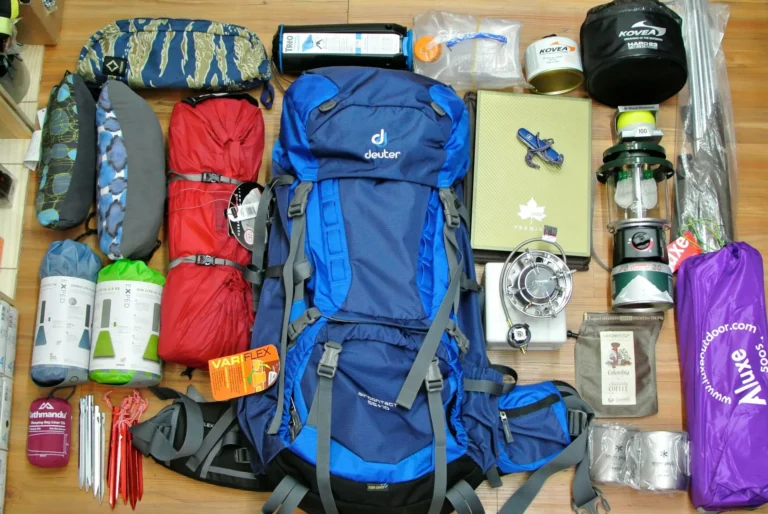
When hiking, it's always important to have the right equipment. This affects how successful your hike might be and how comfortable you feel while hiking. Of course, equipment can sometimes vary among hikers depending on the individual, their preferences, and hiking habits, but there are some definite things every hiker should keep in mind regarding gear. Below, young hiking enthusiast Valter has compiled a list of equipment that would definitely be good to bring on a hike. 

Clothing  

Long trousers – wear them even in summer, they protect against ticks  

Dress in layers – if it's hot, you take one layer off, and if it gets cold, you put it back on.  

Rain poncho – should cover your bag as well as yourself, so that your belongings don't get wet  

Comfortable waterproof hiking boots – test the boots before hiking to prevent blisters from friction.  

Headwear – wear a baseball cap under your warm hat; if it starts to rain, you'll want to keep your face dry, and you'll generally feel drier.  

Other  

Backpack – could have a back support to make it more comfortable and reduce strain on the back  

Water bottle 0.5 l – stay hydrated, feel more energetic  

Charged phone – you never know what might happen during a hike, keep it with you just in case.  

Personal first aid and hygiene – definitely bring antiseptic spray and clean bandages. It is also advisable to bring various plasters. Also, be sure to bring mosquito and tick repellent. 

Eating utensils with handles (light and durable, e.g., plastic) – a handle is attached so it can be held like a mug. Usually, one cannot eat at a table, and hot food makes the utensil hot, which is uncomfortable to hold.  

A kettle would be a very good option; you can boil water in it, and it has a handle. 

Headlamp or flashlight – a headlamp is the best choice. It always gets dark at night, and you will need light to operate. 

Magamiskott – isegi kui on suvi, ära võta nõrgemat magamiskotti, mis on mõeldud 5< kraadideks, öösel on mul alati sellistega külm.  

Mattress – light and thin, easy to carry. If you want a softer mattress, just put branches and leaves under it. 

Waterproof bag – keep your fire-starting materials and things that must not get wet here. For example, a zip-lock plastic bag is a good option. 

Mattress pump – for when you're making a fire and want to blow oxygen into it to make it grow faster. It is light and small, and can be hung on a bag.  

The article was written by young Valter Puija 
news:

Opinion Piece by a Youth Worker: The Importance of Imagination in Youth Work

At the Lillekese Youth Center, we have always supported young people’s desire and interest in playing fantasy-world games in a physical environment. During our first year of operation, playing “café” was a very popular activity—the café had its own menu, meal times, and waitstaff. An entire room at the youth center was transformed into one big dining area. One of the young people’s biggest favorites this year has been playing “apocalypse.”

Read more »

A Youth Worker's Story: The Best Training of My Life—How I Developed My Creativity in Norway

SALTO-YOUTH.net is a real treasure trove. For those who haven’t come across it yet—simply put, it’s a pan-European network for supporting and developing youth work, which offers non-formal learning materials to youth workers and youth leaders and organizes training sessions and networking activities as part of the European Commission’s training strategy.   I found a training course titled “Creative Self – Art Practices” in the SALTO training calendar

Read more »

Do digital environments bring us together or make us more lonely?

Have you ever had a day where you’ve been chatting with friends on Snapchat, Instagram, or Discord all day long, but still feel lonely in the evening? It might seem strange—how can we feel lonely when we’re connected to others almost all the time? Loneliness is a topic that’s being discussed more and more. According to the World Health Organization, about

Read more »

Philosophizing with Children and Youth

Many 21st-century skills are closely linked to thinking skills. These include, for example, creative and critical thinking, as well as a collaborative and caring mindset. These skills can also be developed in youth work through philosophizing with children and young people. Philosophizing creates more space for discussion and helps participants become more skilled at articulating their opinions, listening to others, making decisions, and

Read more »

The Tartu Youth Work Brigade’s anniversary summer kicks off with a parade and an evening of work brigade songs

Today, June 15, Tartu will kick off the 30th summer of the Tartu Youth Work Camp, which will bring together 238 young people this year. The opening event of this anniversary year begins at 4:30 p.m. in the courtyard of the Anne Youth Center and proceeds with a parade to Town Hall Square, where the start of the work camp season will be celebrated with a speech by Mayor Urmas Klaas and the taking of the work camp oath. The opening ceremony will be followed at 7 p.m. by an evening of work camp songs in Tartu

Read more »

Ukrainian Youth in Tartu: A Week That Left a Lasting Impression

In early June, from June 8–14, the Tartu Youth Work Center had the extraordinary honor and pleasure of hosting young people from Ukraine—young people whose lives have been completely turned upside down by the war. The camp was made possible thanks to financial support from the City of Tartu, and the Tartu Youth Work Center wholeheartedly took on the task of organizing the program. The week began creatively—in a stencilling workshop, the young people

Read more »