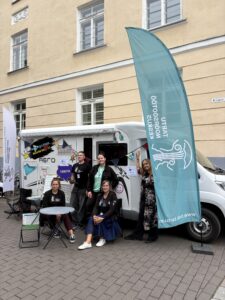

A Youth Worker's Best Friends: Self-Care and Professionalism 

Article author Sära-Sthella Tohv

Social professions, including youth work, mostly originated from 19th-century charitable work, often carried out by religious organizations and volunteers (Kötsi, 2017). However, today, youth work has developed into a science-based profession that is much more than merely 'babysitting and playing with children'. Nevertheless, a lot of work still needs to be done both within the field and in society at large to change the perception of youth work's seriousness. Furthermore, youth workers must also take great care of themselves to avoid burnout. 

A youth worker's daily life is, quite humorously, truly like having nine different professions. In our work, we acquire the necessary foundational education, learning youth work ethics, developmental psychology, counseling, pedagogy, including how to address special educational needs, community work, and more (Community Education and Hobby Activities, 2024). This ensures a professional and high-quality youth work service for both young people and the wider community. A youth center is not merely a pool table; in the broader picture, it encompasses the characteristics of a non-formal educational institution, a counseling center, and a leisure center.  

However, the foundation of youth work is self-management. The issue is not a lack of work or ideas, but rather an infinite number of opportunities. To avoid losing oneself in the daily hustle and bustle, it is crucial to find time for one's own activities and thoughts, even amidst the most exciting projects. It is quite cliche to mention all the mental health 'vitamins' such as sleep, exercise, and nutrition. This has become clear to many by now. More importantly, especially in a professional context, it is to truly notice and share difficult moments with colleagues, seek external support, and find real solutions to these problems. But how can the image of a youth worker in society be elevated to ensure an even more supportive environment from the state? In summary, this requires education and effectiveness. If we want to make youth work taken seriously, we must first speak about it seriously ourselves, highlighting genuinely demonstrable positive changes in the community. 

Every profession involving working with people is quite unpredictable and mentally exhausting for the worker. However, it also offers a lot of spiritual fulfillment and joy, an opportunity to support other people. To maintain oneself in this environment and gain broader recognition in society, self-awareness and a sense of purpose in one's actions are essential. Even playing billiards can be a deeply meaningful and effective activity. 

Used sources:
Kötsi, K. (2017). Youth Work as a Profession: The Professionalisation of Youth Work. Master's Thesis. Supervisor: PhD Ilona-Evelyn Rannala. Tallinn University, Institute of Educational Sciences.
Curriculum of Community Education and Hobby Activities at the University of Tartu Viljandi Culture Academy: https://ut.ee/et/oppekavad/kogukonnaharidus-ja-huvitegevus.  

Further reading:
Reflecting on youth work and the role of a youth worker: a collection of youth work articles. Editors: Tanja Dibou, Ilona-Evelyn Rannala, Author: Tallinn University, Estonian Youth Work Centre: https://www.digar.ee/arhiiv/et/raamatud/119656
news:

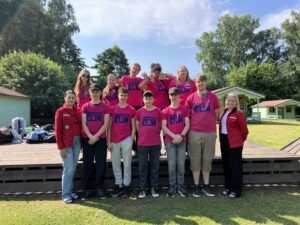
The Tartu Work Brigade is opening its anniversary exhibition today at the Tartu City Museum!

Today, April 17 at 4 p.m., the Tartu Youth Work Brigade’s 30th anniversary exhibition will open in the courtyard of the Tartu City Museum, bringing together brigade members from different generations and telling the story of how young people’s work habits have evolved over three decades. For many young people aged 13–19, the Tartu Youth Work Brigade has been their first exposure to working life. Over the course of thirty years, thousands of young people from Tartu have participated in the brigade,

Read more »

Diversity, Equality, and Inclusion — Our German Learning Mobility Program

Diversity, equity, and inclusion in youth work mean creating a safe and supportive environment where differences are not only acknowledged but also genuinely valued and encouraged. This means ensuring equal access, active participation, and a sense of belonging for all young people. This approach goes beyond merely taking into account differences in origin, gender, abilities, or orientation; it is aimed at removing barriers, expanding opportunities for marginalized and minority groups, and ensuring their full inclusion in all activities. Inclusion

Read more »

For Your Information: Sleep as a Superpower

With the arrival of spring—accompanied by birdsong and the awakening of nature—comes a period that is stressful and hectic for so many young people and adults alike. Whether it’s due to graduations, the final stages of various projects, or simply the anticipation of summer. During this time, it’s important to take care of your health and maintain your routines, one of the most important of which is a healthy sleep routine

Read more »

Connected internationally! A week in Latvia—fun, interesting, and memorable!

Eight young people from the Tartu Youth Work Center had the amazing opportunity to take part in the “Toolbox for Tomorrow” youth exchange in Latvia, which focused on digital tools, environmental development, design, and storytelling. Over 40 young people from Estonia, Latvia, Turkey, Italy, and Hungary took part in the youth exchange. On March 7, we set off with the group from Tartu train station toward Valmiera,

Read more »

The Erasmus+ project gave young people the opportunity to organize their own esports event

At the end of February, the A. Le Coq Sport Sports Center was filled with e-sports enthusiasts for the Game in Tartu 2026 festival, dedicated to gaming culture. Over the course of two days, nearly 500 people from across Estonia visited the event; 20 organizations showcased their activities; and more than 50 organizers and volunteers contributed to the festival’s success. As part of Game in Tartu 2026, there was

Read more »

The Tartu Youth Work Brigade is celebrating its 30th anniversary with a new visual identity

This year marks the 30th anniversary of the Tartu Youth Work Brigade. This is a significant milestone that demonstrates Tartu’s consistent commitment to providing young people with their first work experiences, fostering their independence, and developing their social skills. To mark the anniversary, the work camp has also received a new visual identity that uses vibrant colors to reflect the energy of young people and brings together symbols that are important to the camp participants.

Read more »

School Break City Camp – One Day, One Place, Lots of Fun!

We put together a varied program for every school break, but City Camp Day is the most special day of the entire break. On this day, Tartu’s youth gather at a single youth center. While all five centers are usually open, during City Camp, activities take place in just one location. This gives young people the chance to visit a place they might not otherwise go to on a daily basis

Read more »