
During the winter months, the days in the youth center become increasingly crowded, with young people bored, not in the mood for board games, but with no time for homework either. It is cold enough outside that no one wants to go out and play in the snow.
But what to do indoors when there's nothing to do?
First, you have to spend hours looking at the game shelf, thoughtfully tilting your head from one side to the other, touching at least three games from that shelf, and then moving on. If you now feel brave enough, you can ask in a loud voice if anyone wants to play something. Unfortunately, there was only one brave soul in our room and no one answered. Now there is a chance that the youth worker will take the bull by the horns and come and play with you.
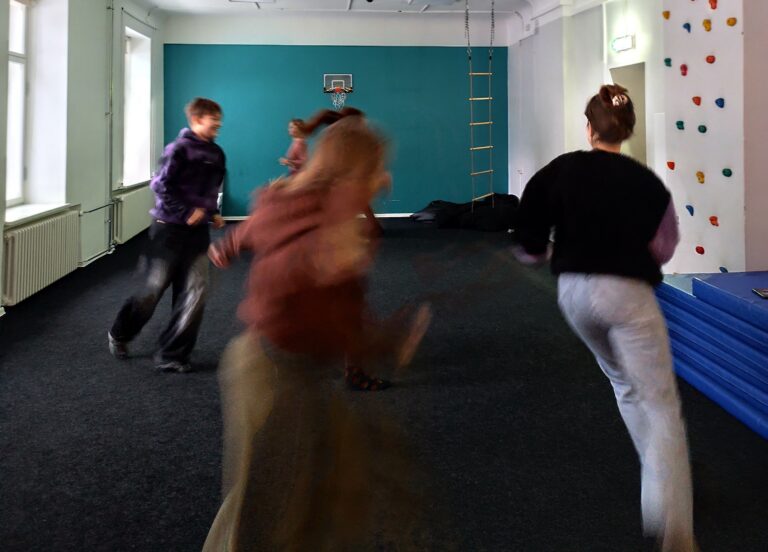
The more people there are in the youth room, the louder, more creative, and more active the atmosphere. So active, in fact, that someone might shout across the room, "Put that phone away! Come play!" This is how we've chased away "super boredom" and completely forgotten about it, playing the most classic childhood games like "Uka-uka," "Heeringas-heeringas," hide-and-seek, or any form of tag.
Young people have added modern nuances to these games. For example, “Heeringas-heeringas, üks, kaks, kolm” (Herring-herring, one, two, three) is known to young people as “Red light, green light”, which comes from the popular Netflix series “Squid Games”. Although young people themselves call it by this English name, they are aware that in our cultural space, a game with the same content is actually called “Heeringas-herringas, üks, kaks, kolm”. From this series, and also from various computer games, young people have brought games into the youth room that most young people in the youth room seem to know instinctively, and which we, as youth workers, also learn and play alongside them.
Working daily in the youth room, it's great to see how old forms of games persist and gain new variations – young people themselves modernize games that have remained popular for generations. This way, we can pass on and keep our heritage culture alive.
Liis Küpar
Responsible youth worker at Lilleke Youth Center