
Hello, girls! Who are you and where are you from? Which school and class are you in?
Elaisa: I am Elaisa and I come from Tartu.
Kamilla: I am Kamilla and I also come from Tartu. We both attend Tartu Kivilinna School, in class 8.A.
Where did you get information about NOA (youth self-initiative project)?
Kamilla: I was in the student council and found out about the NOA project for the first time maybe two years ago. My homeroom teacher is an activities coordinator, so she's aware of all these things, and she already mentioned something about the NOA project in the student council. Otherwise, we got [information] from our homeroom teacher and from the girls who did the exact same creative project last year. They explained and recommended that we also do the NOA project.
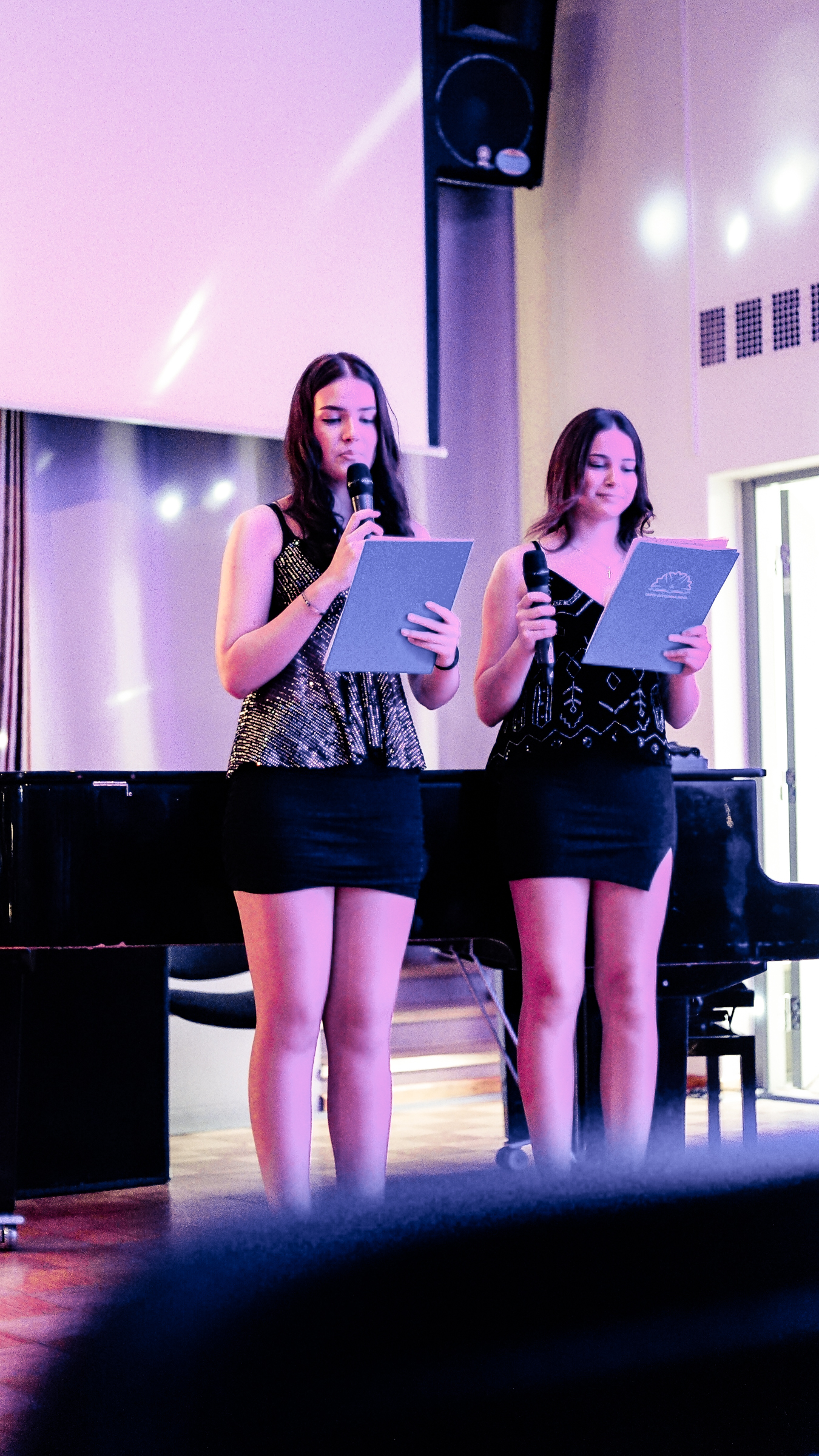
Tell us a bit more about your NOA project – what did you do within its framework?
Elaisa: Basically, I did the written part – I gathered all our thoughts and started to plan what we would do there.
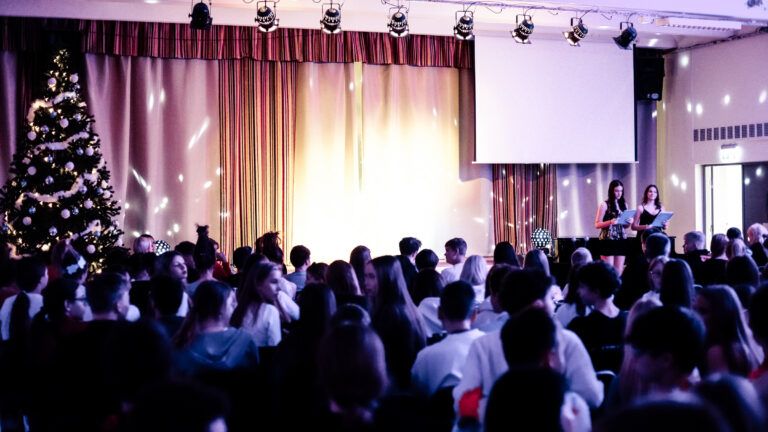
Kamilla: As part of our creative project, we organized our school's Christmas evening, which is a school tradition and takes place every year.
Elaisa: We did it for 7th-9th graders.
Kamilla: This is actually for us from 5th grade onwards, but usually our school organizes [the Christmas evening] separately for 5th-6th graders and 7th-9th graders. We chose 7th-9th graders as the target group, and the initial idea was KMV (Kivilinna Music Video Gala), but we received feedback from the ninth graders that the video idea was a bit boring. The same girl who did the creative project last year told us and our class teacher, who was also our supervisor [in this project], that we should do [the program] on stage every year. So we kept it as we had originally planned – one Estonian artist and one foreign artist and a 5-8 minute playback.
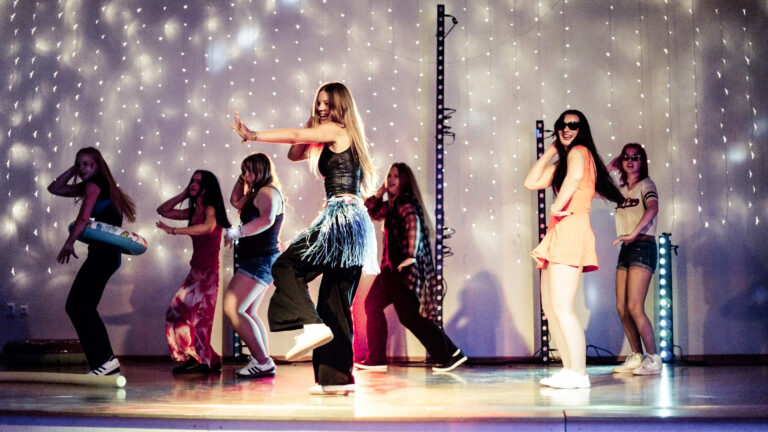
That's great. What did you use the money for in the NOA budget?
Elaisa: As part of this NOA project, we needed to do charity work. We chose to raise money through a lucky draw and donate it to the Tartu Children's Fund. We had to buy the lucky draw prizes and sold the tickets for 2 euros. People could draw a ticket and receive their prize.
Additional comment from TNTK mentor Aveli: in addition to the raffle, the girls' budget included lighting rental, printing materials for posters, gift boxes for the jury, and Astri gift cards for the performers.
How much money did you collect through the raffle?
Kamilla: So far, 68 euros have been collected, but we still have prizes left over.
Elaisa: Since our classmate is also organizing a party as part of her creative project.
Kamilla: There we will finish the raffle part.
How would you rate the success of the event on a scale of 1-10?
Kamilla: I'd say 8!
Elaisa: I'd say so too. In the sense that there are always things that can be better, but in my opinion, it went very well.
Kamilla: Everyone was always supportive, everyone was very happy, and every class did a really good playback. This year it was the hardest to choose who would win the top three places, because all the classes' playbacks were so good.
Elaisa: It never got boring. Everyone's [performances] were so different, so unique – it was just so cool!
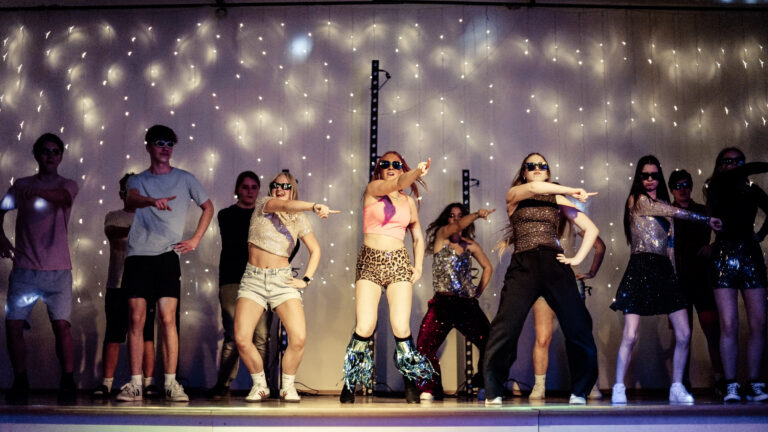
The young organizers also highlighted what could have been better. And a bit more about the playback plan.
Kamilla: The only thing was that our schedule ran an hour over. Initially, we thought that one class would perform their playback, leave the stage while the jury explained what went well and what could have gone better. At the same time, another class could have already gone on stage, but many classes didn't do that, or they only went on when the other class had left the jury. This already added 10 minutes to the program because they also had to prepare their presentation.
Before the playback, [classes] spoke a little about their foreign artists, about the music. For example, in what year the song was made, who the artist was, and that also took quite a bit of time.
What did you learn about yourself/the process?
Kamilla: From a creative work perspective, first, things always have to be done on time. With the jury, it was like this...
Elaisa: ...[inviting them] was left until the very last minute. We actually had people in mind whom we would have liked to have there, but when we wrote to them, and they even saw it, they didn't reply. We also thought it would be cool to have two alumni and two teachers. So we went to two teachers who agreed, and we also got two alumni.
Kamilla: In the end, everything still worked out, but yes, next time we should try to deal with them a bit earlier, not 1-2 days before the Christmas party (*laughter*).
Sounds like a good lesson for yourself, right? But did you learn anything more about the NOA project than you knew before?
Elaisa: Definitely! I had heard of [NOA], but I didn't even know what they actually did there. When I wrote [the project application form], I learned a lot of new things and what project design actually looks like.
If you could choose now, would you do the NOA project again?
E and K in unison: Absolutely!
Kamilla: This is a great opportunity for young people to try their hand at creating a project and, for example, organizing events.
Elaisa: This solution offers excellent support.
How do you rate the NOA application process – was it easy or difficult, or how would you assess it?
Elaisa: It was honest, including sending back [application forms/files] – that's how you learn. There was a lot to learn from it yourself. It was difficult, but doable.
Additional comment from TNTK mentor Aveli: At the beginning, the project writer sends the initial project form to the evaluators, and sometimes it is sent back to the project writer so that they can supplement it and make it more thorough or well-thought-out. This is always done with the aim of improving the project and encouraging the authors to think things through.
Who do you think a mentor is, and what are their goals/tasks?
Elaisa: We had our supervisor [from the school], who helped us with everything and was simply supportive. For example, when we needed sponsors, she shared her contacts with us.
Kamilla: From TNTK, you were our mentor (youth worker Aveli), who always wrote to us and found time to meet with us.
Elaisa: You are so kind!
What would you recommend to your past self who hasn't done NOA yet?
Elaisa: Start everything much earlier!
Kamilla clarifies: We started in November, and in the end, it turned out that in December [the event took place], when we met with the TNTK mentor, Elaisa fell ill with a virus.
What do you consider your biggest success within this project?
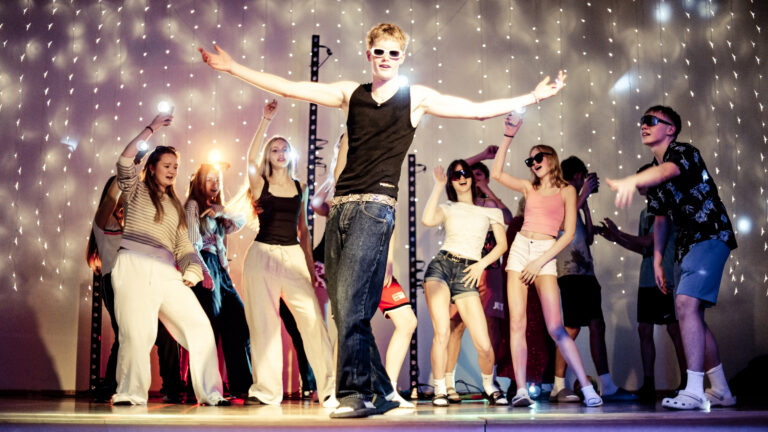
Elaisa: I would say the execution, because I saw that all the students were interested and satisfied – they were present and in the moment. Especially during the disco, everyone was dancing and singing along. It was clear that people enjoyed being there.
Kamilla: Over 200 students were present. In the organizing team, there were just the two of us, and our supervisor helped a little.
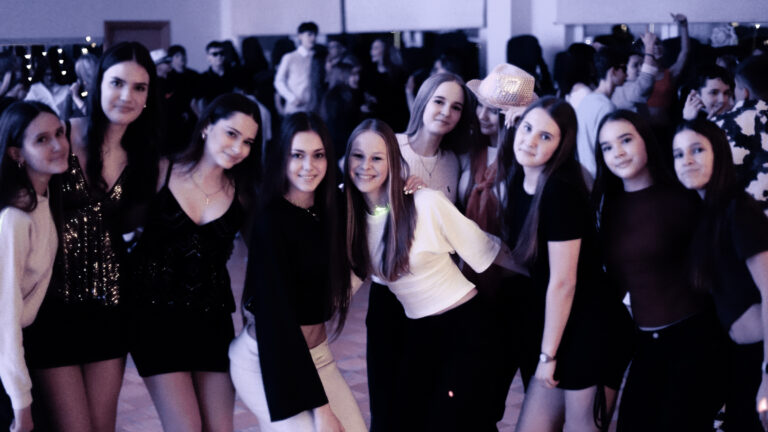
Youth Worker Aveli: Wow. This is no longer a small event – it's a major event, so you accomplished something huge! I hope you are proud of yourselves!
The girls smile and nod.
15. What else would you like to say to those who are still gathering the courage to do NOA?
Elaisa: You can do it! (The girls laugh)
Kamilla: Start working on it earlier, because (sometimes) the application form is sent back, not because there's anything wrong with it, but because it can be improved.
Elaisa: It's an experience!
Kamilla: Exactly! And learning.
A big thank you to Kamilla and Elaisa for sharing their NOA experience and for the pleasant cooperation! I wish you great success, valuable lessons, and continued courage for your next projects and endeavors!
More detailed information about applying for NOA and other important matters can be found here!
Article author: Aveli Otsa, Youth Work Specialist, NOA mentor described in the article by Tartu Youth Work Centre
*This was a NOA funded project "Kivilinna Christmas GALA 2025," with a project period from 2.12.2025 to 17.01.2026.
*Main photo source: Tartu Kivilinna School's website gallery.