
We have probably all encountered the stereotype at least once in our lives or heard in wider society that tattoos and piercings give an unprofessional impression and are not suitable for some job positions. Service industry positions often become a major point of contention, as company managers may fear that a service provider's or consultant's body modifications negatively affect their clients' opinion and trust in the company. Fortunately, over the last 10-15 years, we have actively started moving away from this stereotype and increasingly encounter people with different styles in various job positions. But what about youth work? What kind of example does a youth worker with tattoos and piercings set for young people?
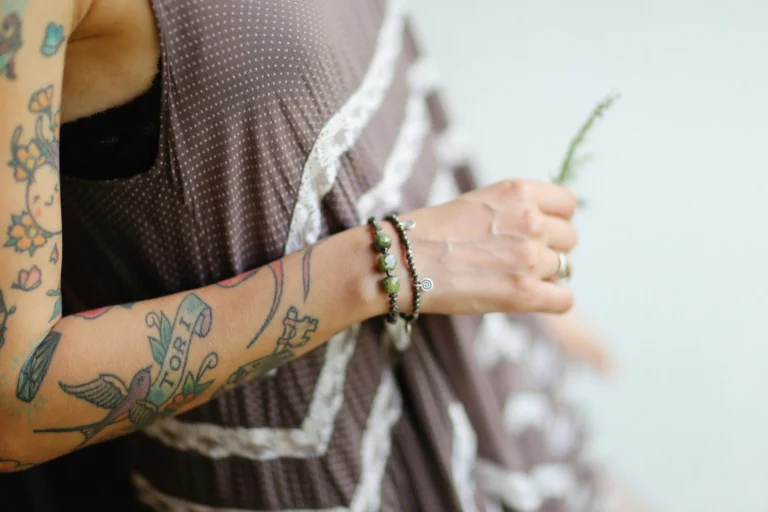
When I started working at the Tartu Youth Work Centre in the summer of 2022, I had 6 tattoos, 5 of which were visible, a brow piercing, and 8mm stretched ear tunnels. Since then, I've added 3 new, large, visible tattoos, a nose and lip piercing, and 2 earlobe piercings. Additionally, I almost daily wear clothes with a rather alternative style – trousers with band emblems and/or rock/metal band T-shirts. However, compared to a proper punk or goth, my appearance is rather more understated, or, colloquially speaking, 'emo'.
When I started working at an open youth center, I initially had a slight fear about how 'strongly' I could or should let my own style show. I had T-shirts that I deliberately didn't wear to work at first, fearing they might scare some young people away. After a while, however, I realized that this fear was entirely self-created. It dawned on me that the more boldly and authentically I represent myself, the more honest a message I can convey to young people: that they can and are allowed to be exactly who they are, and to create an environment for them where differences are represented and warmly welcomed, by being that 'different' adult myself. Over the last six months, the number of young people with alternative styles in our center has grown significantly, and simply based on style, making contact is much easier and more natural, as both parties immediately sense something similar in each other, which in turn provides a sense of security.
Coming to body modifications, my main message is this – they are excellent conversation starters. Young people very often ask me questions about both my tattoos and piercings, which allows for deeper, topic-based conversations. If the questions are 'Was it painful?', 'How much did it cost?', 'Which tattoo artist did it?', or similar, then we can discuss the topic of tattoo and/or piercing safety with young people and talk about the associated risk factors and precautions. Often, this conversation leads to the topic of why pen ink is not suitable for tattooing, which young people often try to 'tattoo' themselves with. I share information with them about what tattoo ink actually is, how it affects the skin and mixes with human blood, which is why it must have passed specific tests and met prescribed requirements, which can also vary by region (e.g., USA vs. European Union). This is one of the most important pieces of information I always try to convey to young people during these conversations, because it's not commonly discussed, and young people might not discover this knowledge on their own. Additionally, I tell them that tattooing and piercing MUST take place in a sterile and clean environment, with sterile tools and a professional practitioner – ignoring these precautions can result in a serious infection, which can lead to other severe health problems. We also discuss how the location of a tattoo/piercing affects the level of pain and what, in turn, this depends on – people's differing pain tolerance, muscle mass, and nervous system sensitivity in various body parts.
Another topic to dive into comes when young people ask, 'How many tattoos do you have?' or 'What do your tattoos mean?' Given that eight out of my nine tattoos are connected to my very personal stories and experiences, this provides a good foundation for getting to know each other better. I show them all my tattoos one by one, and depending on how well we already know each other, I explain their background stories. Very often, this leads to young people feeling emotionally safer to share something personal about themselves – either related to what I just talked about or something entirely different. After sharing these stories, you can almost feel a warmer, more empathetic connection between me and the young people, because often what I have experienced in life comes as a surprise to them, and it makes them truly think that adults have a past and may not be living in some 'rosy adult world' where there are no difficulties.
Tattoos and piercings make me a more professional youth worker. Being able to use them not only as accessories but also as tools that help me, as a youth worker, expand young people's knowledge on this topic, raise awareness about safety, and create positive contacts, is one of my biggest assets. Parents often believe that this 'emo' style and/or music is just a phase in a young person's life. Perhaps it is. I love being that 'emo' youth worker who never grew out of that phase; instead, it's exactly who I am. I give young people the opportunity to see a specialist who wears band T-shirts, loves screaming metal music, and comes to work with a new tattoo every now and then.
Article author Helen Voogla